Showing posts with label Atlas Shrugged. Show all posts

Monday, December 16, 2024

LIKE SOMETHING OUT OF ATLAS SHRUGGED

 In the opening scenes of Atlas Shrugged, Ayn Rand sets the conflict of values between the heirs of the Taggart Transcontinental railroad. James invested corporation rolling stock and his own money in a copper mining venture in Mexico. He relied on inside information from his friends in Washington and other corporate collaborators. Dagny has been withdrawing the engines and cars. Earlier this month, Caltrain sold 19 locomotives and 90 galley cars to the government of Peru for $6 million. The justifications for the sale are almost verbatim from James Taggart. 


“This agreement will help Peru embrace a more sustainable future while also bringing millions of dollars to help us keep Caltrain running,” stated Caltrain Executive Director Michelle Bouchard in a press release. “Our former Caltrain passenger cars and locomotives will enable the start of new commuter rail service in greater Lima, cleaner air for commuters and community members and the access to opportunity that great public transportation provides.”

As part of the state funding for the electrification, the F40 locomotives were supposed to be rendered unusable, per California state law. However, Caltrain was able to obtain a waiver from the Bay Area Air Quality Management District because of the environmental benefits of establishing a new commuter rail service in Peru. The deal was brokered with the Government of Lima, the U.S. Department of State, and the U.S. Department of Commerce." https://railfan.com/caltrain-f40s-gallery-cars-sold-to-peru/

Previously on Necessary Facts

Greg Browne’s Necessary Factual Truths

That Goddam Ayn Rand Book 

The Influence of Ayn Rand’s Objectivism 


Saturday, February 6, 2021

Rachmaninoff

My mother was more for Chopin and Liszt and we had a lot of that, especially as sheets and books, but also on 33-1/3 LPs, eventually in stereo. So, growing up, we had at least one Rachmaninoff, the Preludes and Variation on a Theme by Paganini, perhaps. And also the Second Piano Concerto. But I never knew that until I read Atlas Shrugged in high school and my 11th grade American history teacher told me that that particular work was one of Ayn Rand’s favorites. I listened to it often while reading Atlas Shrugged through twice. To me, it is the soundtrack for the book and the soundtrack that the movie should have had.

Rand mentions it and Tchaikovsky’s First Piano Concerto in The Fountainhead, at the beginning of Part IV. We see an anonymous young man in the woods. Recently graduated from college and seeking a path for his future, he responds to the beauty of the world around him and yearns for something within himself to answer the promise in the music. 


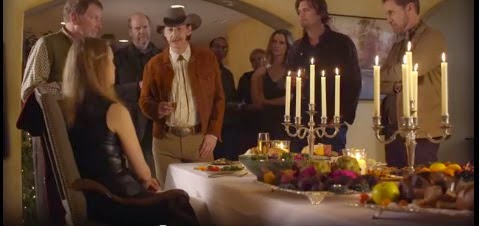
Rachmaninoff was an icon in the society in which Rand matured. In Dr. Zhivago, Yuri, Lara, Komarovsky, and Pasha are all at the very fine party in a sparkling home, while in the background, Rachmaninoff plays for the guests. 


It is not that I don’t care for music (see Hallelujah here), but that I have a slight hearing deficiency. The piano worked well enough for me because you hit the key and you get the note. As open instruments, the coronet and French horn were impossible for me. In the third grade, we took a “music readiness” test in which we had to identify higher and lower notes; and once they got close, I could not tell them apart. But music is a language; and I am good at languages, dialects, and accents. I have two cassette tapes, Rachmaninoff Plays Rachmaninoff and Gershwin Plays Gershwin. You can hear covers all over YouTube and the performers are accomplished professionals. But these are not just different performers with their own subtle interpretations. They are the right way to play the music because there is no substitute for creation.


PREVIOUSLY ON NECESSARY FACTS


Labor Day Celebrates Productivity 

Love, Loss, and Redemption in Atlas Shrugged 

Autobiography of a Worker 

Reflections on the Passings of Comrades 

Sunday, June 28, 2020

Austin’s Homeless: Laissez Faire in a Mixed Economy

Here in Austin, Texas, the reductio ad absurdum of the city government’s policies toward the homeless is that you (and all your friends) can take over any public space for your own use. The city council and mayor have declared de facto privatization. I want a school. They are not being used now and I can make good use of one. Once in, I will be hard to extricate because schools are defensible fortresses. (See, for example, The Girl Who Owned a City.) Perhaps you would like a park or a sports arena. Just find one that is not being used and make yourself a home. 


Menchaca and Ben White Jan 2020 and June 2020 

Austin Statesman

City Council rescinds measures that critics say criminalize homelessness

By Elizabeth Findell 

Posted Jun 21, 2019 at 3:36 AM

Updated Jun 21, 2019 at 6:14 PM


The Austin City Council early Friday rescinded city prohibitions on sitting or sleeping in public and panhandling — measures social advocates said wrongly criminalized homelessness — after hours of emotional testimony from passionate residents on both sides of the issue.


The decisions, made after 2 a.m. during a meeting that started at 10 a.m., capped a long day of intense discussion surrounding several homelessness-related votes at City Hall.


https://www.statesman.com/news/20190621/city-council-rescinds-measures-that-critics-say-criminalize-homelessness


Ben White opposite Target Then 

Summary of Changes to the Ordinances

On October 17, 2019, the City Council made several revisions to the city ordinance that prohibits camping in public areas.  Other ordinances, including those prohibiting obstruction on sidewalks in the downtown area and aggressive confrontation, remain unchanged.  The ordinance changes went into effect on October 28, 2019.

https://www.austintexas.gov/department/council-direction-and-policy


The Texas Tribune

Greg Abbott says TxDOT could remove homeless camps from Austin's highway underpasses

BY DAVIS RICH OCT. 18, 2019


The governor has vowed to use state resources to clear Austin's homeless residents from public spaces since city officials began changing local ordinances dictating where people can and can't camp.


Gov. Greg Abbott's office said Friday the Texas Department of Transportation could force homeless Austin residents out from under bridges and overpasses where some of them live or camp if recent changes to city ordinances don't result in less feces and fewer needles by Nov. 1.


https://www.texastribune.org/2019/10/18/greg-abbott-says-txdot-will-remove-austin-homeless-under-highways/

Ben White opposite Target Now 
 

KVUE-TV (ABC)

After more downtown stabbings, Abbott says Austin's 'reckless' policies on homelessness 'must end now'

Author: Drew Knight, Luis de Leon

Published: 5:16 PM CST January 24, 2020

Updated: 8:16 AM CST January 25, 2020

AUSTIN, Texas — After a series of Downtown Austin stabbings overnight left three people injured, Gov. Greg Abbott released a pointed statement for the Austin City Council on Friday.

"City of Austin leaders have allowed lawlessness throughout the capital city that is resulting in violence against Austin residents, including those who are homeless," Gov. Abbott said in a statement released to KVUE. "Last night’s tragedy, leaving three injured, is just the most recent instance of this violence. This rise in violence has corresponded with the revocation of the camping ban that the Austin City Council passed in June. Public endangerment and murder can no longer be tolerated because of the actions – and inactions – by City officials. Mayor Adler and the city council should re-instate the camping ban and restore the rule of law in Austin. The City’s gamble on these reckless policies has been a loser and must end now."

https://www.kvue.com/article/news/local/gov-abbott-calls-austin-homeless-policy-reckless-after-stabbings/269-fe1bd9ab-d65b-4cff-a013-3edb295c4c1f


Fox-7 TV

Gov. Abbott working to override Austin homeless camping ordinance

By Steven Sarabia 

Published February 7 [2020]

Homeless Crisis FOX 7 Austin

While talking about Austin's homeless issues Wednesday, Abbott said on Twitter, "Next step should be to reinstate the ban on camping and work with non-profit organizations to assist with shelters. That's exactly what I will ask the Texas Legislature to do."

https://www.fox7austin.com/news/gov-abbott-working-to-override-austin-homeless-camping-ordinance


Wikipedia provided this definition from the Communist Party of Texas

LUMPENPROLETARIAT - German for "rag proletariat." Generally unemployable people who make no positive contribution to an economy. Sometimes described as the bottom layer of a capitalist society. May include criminal and mentally unstable people. Some activists consider them "most radical" because they are "most exploited," but they are un-organizable and more likely to act as paid agents than to have any progressive role in class struggle.  See https://www.cp-texas.org/glossary


Previously on NecessaryFacts


Workers’ Paradise Promised an End to Money 

Timothy Snyder’s On Tyranny 

Karl Marx and the Dustbin of History 

Furloughs for Freedom: Downsizing Government 

Toxic Leadership 


Sunday, August 9, 2015

Love My Rifle More Than You

Kayla Williams writes from the gut, the heart, and the mind. She joined the army after college–and after marriage and divorce. Her early life was not easy, but “sons of the sinner, sons of the saint,/who is the child with no complaint?” She always was her own person, taking risks and accepting the consequences, even as she entered her teens. So, it was fitting (though not predictable) that ten years later, she joined the army, pretty much on a dare. She served in Iraq in 2003-2004 as an interpreter.

Shows young woman in combat uniform with large automatic rifle in front of a military vehicle
Love My Rifle More than You:
Young and Female in the U.S. Army

by Kayla Williams (W. W. Norton, 2005).
I found the book attached to her biography on the “Foxhole Atheists” tab (“Meet the MAAF”) of the Military Association of Atheists and Freethinkers.

Williams labels herself a “secular humanist” and she thanks the chaplains who provided emotional support for those in combat.

Her insights into adjusting to war are deep and meaningful. She speaks not just for herself, but from her observations of others. Even those who originally embraced the locals came to distrust and despise them, not for anything they did, but for being the cause of the soldier’s being in an untenable situation. 

In addition to Iraqis, Williams met two other groups who were then just footnotes, and who have since been catapulted to the headlines: the Peshmerga militia of the Kurds; and the hapless Yezidi.  

Williams maintained a vegetarian diet while in combat for a year. She lost 30 pounds, down from 145, but stabilized with food from the local Kurds. She also was able to get some halal and kosher MREs, but not without hijacking them. (No one was eating them. They were to be destroyed. But she was not Jewish, and “vegetarian” is not a recognized religion.)

Toward the end of her deployment, she discovered Atlas Shrugged, and it resonated with her. Focused and detailed, she often ran headlong into brazen incompetence. 

Much of the narrative is about the unrelenting sexual harassment. In small words and grotesque actions, the female soldier is barraged every hour of every day. 

Returning home, she soon retreated from unknowing (but sympathetic) family, friends, and acquaintances back to Fort Campbell. There, she was among others who had shared her experiences.  Eventually, she found her way out, and her new book is Plenty of Time When We Get Home: Love and Recovery in the Aftermath of War (reviewed here).

Previously on Necessary Facts
  

Tuesday, September 16, 2014

ATLAS SHRUGGED PART 3: WHO IS JOHN GALT?


It is not the movie that I would have made; but it was not my movie to make. If I had directed the effort, then other people would be criticizing my work.  It is easy to find complaints from fans.  Mine are below.  They stem from the fact that we all have had the film in our heads for years, even decades.  We all imagined it.  However, none of us actually realized our imaginings.  John Aglialoro did.  With productive investment from Harmon Kaslow, Scott DeSapio. Ed Snider, David Kelley and a large body of fans (among them my daughter), Aglialoro finally brought Ayn Rand’s masterpiece to the screen.
 
I watched it twice.
They strayed from the book for reasons other than the translation across media.  Catering to conservatives not only violated the philosophical premises, it actually denied them in real time.  To make the message acceptable, the essence was removed.  As delivered, Galt’s Speech was an amorphous expression of emotional individualism already known from
Ahead of me in line,
another generation of fans.
Anthem.  Galt’s Speech could have been cut to the necessary length and still developed its political message from the requisite metaphysics and epistemology.  Instead, they missed their real audience, and catered to old people and political conservatives when Atlas Shrugged in particular, and the works of Ayn Rand in general, always have and always will belong to the young. 

Ayn Rand taught that contradictory premises result in conflicting and unreconcilable conclusions. One example from AS3 was the mother in the Valley who said that she chose to homeschool her children, rather than hand them over to a school that did not teach them to think.  Was there an alternative?  Any kids in the Valley would be “homeschooled” one way or another. There was no  public school for them to attend.  

Even though the heroes of  AS3 had several reasons to escape an oppressive society, you do not need to go to Galt’s Gulch to homeschool your children. 

Would it not be a huge mistake for her to keep her kids "at home" when they could be learning arithmetic at the Mulligan Bank?  The very idea that children should not work but be in school was an interventionist political plan to keep them from competing for jobs against unskilled adults.  As the d'Anconia mine is delved by human labor, perhaps the children could put in 12 hours a day to benefit from the experience of learning first hand about the early industrial revolution.  Well, perhaps not...  

September 19. On the "Galt's Gulch" discussion board contributor LetsShrug pointed out that in fact, the scene is from the book.  I found it on page 730 of the New American Library paperback. The line about homeschooling was not an element from the work of Ayn Rand.  It was just another sop thrown to the conservatives. 
  • The coins obviously were not gold.  The props were brass.  Alongside Night had a real gold coin.
  •  We already met Jim Taggart before the marquee card identified him.
  • The names on the ceiling of producers who spent the first night in Galt’s home included many who were not in the book.  Among them was Ashish Gulhati, an open source hacker from India.  I am happy for him; and pleased that he was included. However, it was not canonical.  That being so, this was in fact a reward to contributors to the financing of the movie.
  •  Where did the Wyatt workers come from?
  •  Where did the d’Anconia workers come from?
  •  Cool as was his airplane – a Lockheed Electra? – Galt’s plane was not powered by his own motor.
  •  Dr. Robert Stadler was soft-pedaled, not identified as the government-funded researcher whose intelligence serves brutality, whose own contradictions made that not just possible but necessary.
  • When meeting Mr. Thompson, how did Galt have a cell phone in his pocket?  Why was he not searched? 
Also, contrary to the book, Eddie Willers was saved by the heroes.  In the book his fate was purposely left undetermined. Ayn Rand specifically intended that and explained it.
 
Every work is a matrix of trade-offs.
From Spaceflight Technology,  Howard Seifert, ed.,
New York: John Wiley and Sons, 1959.
The movie offered many more positives.  Kristoffer Polaha’s performance was masterful.  His facial expressions spoke volumes.  He “got” the part: he understood the context.  He carried Dagny into the bedroom and laid her down. “I can walk,” she said.  “I know,” replied.  In shot after shot, he is aware, intelligent, focused, and  yet envisioning a wider horizon.  In the scene where he is captured, he was amused by the mental simplicity of Mr. Thompson.  When Galt is being tortured and Dr. Ferris asks, “How are we doing?”  Galt’s facial reply is miles deep. 

Jeff Yagher as Jeff Allen was the capable, competent worker who is not an innovator.  When the switching system breaks down, he does not know what do to, and neither is it expected that he should.  But he understands what Dagny Taggart intends as soon as she speaks her first words of command.  Yagher was also the narrator.  That was a segue was from the story of the Twentieth Century Motor Company from Part II.  That, too, was a deviation from the book, but one acceptable as the translation across media.

The door scene was good.  When Dagny pleads with John not to return to the City, they are still symbolically separated by a gulf of misunderstanding. 

The scene in Galt's apartment when the Feds force the door to the motor was perfect, right out of the book.

The best choice was to present this as a love story.   Atlas Shrugged works on many levels.  The girl-finds-boy thread was a dependable trope for Ayn Rand.  Similarly, most readers easily see The Fountainhead as Howard Roark’s biography (which it is) but miss the counterpoint of Dominique Francon’s narrative.  Here, the female lead is front and center. 

Overall, this was a finesse.  The producers, director, actors, and cinematography team all achieved as much (if not more) on $5 million as the first installment (also a grand achievement) did on fifteen.  "Third time is the charm."    

ALSO ON NECESSARY FACTS

Saturday, September 13, 2014

There is no John Galt - and that's worse

There is a destroyer loose who is shutting off the motor of the world, slowing the engine of creation, tapping out the extra power of invention.  But it is not one person whose name is a question.  What you tax you get less of; and what you subsidize you get more of.  The brightest people in the world are making video games; and no one is on the Moon.  It did not take a genius to figure this out: it is a universal law of human action.


No law, no regulation or ruling says what a computer is or who is qualified to program one.  In a lifetime, we have gone from no computers to over a billion of them.  The poorest people in the world have cellular telephones; and they trade online minutes as an ad hoc monetary medium.  It is truly wonderful, a perfect demonstration of the power of open markets.  When criminal hackers seek to violate your financial security, they do not need supercomputers chilled with liquid nitrogen: they use gaming computers whose powerful processors outstrip anything planned by university consortiums. 

However, to be a civil engineer or a mechanical engineer, you need to attend a government approved college, take a government licensing examination, serve an industry mandated apprenticeship, and, as a professional, buy a ton of liability insurance.  Since 1945, on the advice of MIT's Vannevar Bush, the government has actively subsidized as many research projects as we, the people, (and our grandchildren) could afford.  So, we have the same roads, the same railroads, the same internal combustion engines and steam turbines as we did 100 years ago.  They are, indeed, better, but not different.  The jet engine is 70 years old.  So is nuclear power.  We have nothing better.  

All work is an act of philosophy.  
They subsidized education, but never bothered to measure learning.  Torrents of federal money only bloated the administrations of universities without rewarding the faculties or incentivizing the students.  They subsidized healthcare, but never investigated life extension.  The medical monopoly pursues a cure for cancer like 19th century doctors fighting consumption caused by miasmas. 

We all get along somehow...  

And that allows the lawmakers, the regulators, and taxers, and tax-eaters to believe that their actions have no effect, no deleterious consequences. They believe that human action - and human inaction - is impervious to reality, that the physical laws of the universe do not apply to their decisions.  They see the tax-revenues coming in. They spend the money going out.  They never discover the unbroken window.

Frederic Bastiat's famous analogy of the broken window is a law of the universe. As best as we can imagine from science fiction, any sentient, self-aware, rational being must of necessity act and respond just as we have. There is no escape.  Every decision of the government must be an economic loss because the basis of that decision is for power not for profit.  Economic losses are not impersonal: they take the food off your table.  You do still have food, for the moment, but you do not know what you do not have because it was not invented or discovered.  


Not everyone wants to be a video game designer.
What do you do if you cannot do what you love? 

But if obeyed, nature can be commanded.  New sources of energy will power the extension of humanity into new frontiers. We know from historical evidence that new arts can be invented and new artists will flourish.  We could  live longer and smarter, and more prosperously. To achieve that in every endeavor, we must only do what we have done to create the video game industry: nothing.  Laissez nous faire.  Leave us alone.  

Previously on Necessary Facts
Atlas Shrugged Opening Show (2011)
Love, Loss, and Redemption in Atlas Shrugged
The Influence of Ayn Rand's Objectivism
Atlas Shrugged Part 3

Sunday, April 6, 2014

Schulman’s Alongside Night Released

J. Neil Schulman’s Alongside Night is modern myth of liberation.  First published in 1979, in 1989, libertarian science fiction fans granted the novel their Prometheus Hall of Fame award.  After more than two years in production, it finally became a movie.  

(This review is based on a post intended for April 2, 2012, as I exchanged emails with Schulman about the script. He asked me to not write about the movie until it was finally released.  The March 5, 2014, issue of Liberty's Outlook from the Liberty Coin Service of Lansing, Michigan, made that announcement. The film was shown nationwide. It ran here in Austin, on June 18, bringing the author to the screening and to dinner with fans.

In the world of the present future, inflation is rampant.  The federal government has issued emergency scrip and vending machine tokens circulate as a convenience.  The pan-European currency is backed in gold; and the Europeans are unwilling to underwrite the U.S. Treasury.  Among the architects of Europe’s money is Dr. Martin Vreeland.  As the crisis deepens and the U.S. government becomes more desperate, Dr. Vreeland is among thousands targeted for round-up and perhaps execution.  Only his international status cushions him and his family, however briefly.  The Vreelands plan to escape. 

Our viewpoint character is high school senior Elliot Vreeland.  The family is separated.  Elliot is on his own in New York City with about 30 ounces in gold coins and some thin contacts with the underground economy of gypsy cab drivers and adult bookstores.  Elliot then discovers a literal underground, a free market utopia including comfortable hotels and luxury malls that sell whatever you want.  He also discovers a naked girl in a swimming pool.  Then, the federal government raids the place.

Evacuation is orderly, thanks to the firm but polite private security guards who know that the customer is always right. This scene and a couple of others were inspirational to me over the years, and still provide parameters for me when I work as a security guard. 

Later, Elliot finds his father in conference with the chief of federal security, but his mother and sister are still held hostage and must be rescued.  The Revolutionary Agoric Cadre comes to their rescue, though not without losses.  

Schulman was kind enough to share the present version of the movie script.  Written by the author of the book, the cinema adaptation is crisp and concise, a faithful translation from one medium to another.  Of course, there are updates:  Elliot has an iPod.  But very little needed to be changed because very little has improved for the federal government since 1979. 

Alongside Night is a worthy story and a craftsman's work.  Schulman was inspired when he wrote it in 1979; and his dedication has not slackened. 

The theory behind the book is more radical than Ayn Rand’s Atlas Shrugged.  Based on the works of Murray N. Rothbard, “Agorism” is attributed to Samuel Edward Konkin III.  Agorism holds that free market alternatives are so vastly superior that even building a secret city beneath an existing metropolis can be done for gold pennies on the hyper-inflated dollar.  When it was written, the theory that private security could replace the public police was unsubstantiated by evidence that we now accept.  (Generally, in the USA today, there are two private guards for every police officer; in California, three.)  In Atlas, the heroes hole up in a Colorado valley.  Here, they build and rebuild physical undergrounds which could be anywhere. At one point, Elliot quips to his new girlfriend that from what he has seen so far, they could be under the National Mall.  Actually, they resurface at Elliot’s private school in Manhattan. 

For over 30 years, Alongside Night has been an escapade for libertarians, a diamond flash to offset the sable of Atlas Shrugged.  If you have not read it – or not read it in a while – you deserve the reward.

In addition to Kevin Sorbo, the movie features Tim Russ and Garrett Wang (Star Trek: Voyager), David D. Friedman as the King of Sweden, and Dr. Ron Paul as himself. 

The newest trailer on YouTube is here.
The official trailer (2:25) on YouTube is here.
Alongside Night (book) site here.
Alongside Night (movie) near-mirror site here
“Soon to be a major motion picture” by Darian Worden here
A summary of the book at Wikipedia here 
Download the book as a PDF free here

Official "Teaser Trailer" here:

Fan Trailer with "Citizen, Go Back to Sleep" by No Really.

Neil Schulman's promotional video with music by Soleil on YouTube here:

J. Neil Schulman placed the entire movie on YouTube:

Also on YouTube are other fan works.

The book is available on The Internet Archive here:

Or buy the Kindle Edition at Amazon.
Find Alongside Night t-shirts, coffee mug, etc., at Cafe Press.
From the Liberty Coin Service Liberty's Outlook newsletter:In the movie, Liberty Coin Service has a cameo appearance as a kiosk store in an underground free market mall, staffed by LCS Senior Numismatist Tom Coulson. Four other LCS people have bit parts in the film.The private issue Gold Liberties used in the movie (and in real life) were provided by Liberty Coin Service. Lansing television station WILX NBC 10 and Lansing radio station 1320 WILS get credits in the film for services they contributed to the production. LCS General Manager Pat Heller is an Executive Producer. Alongside Night author J. Neil Schulman wrote the screenplay, acted in the film, and served as director and producer. Schulman’s daughter, Soleil O’Neal-Schulman sings the haunting theme song, which you hear when you view the trailer.
ALSO ON NECESSARY FACTS

Friday, March 7, 2014

The Public Good be Damned

On the "Galt's Gulch" website of the Atlas Shrugged movie producers, one of the regular writers asked about "Page 1069: What's Next?" (See here.) Everyone there knows that the paperback edition of the novel runs 1068 pages.  In other words, what indication (if any) suggests that the political agenda - or the wider philosophical program - of the strikers would be long-lasting?

The message of Atlas Shrugged is that the evils of taxation and regulation are the result of producers accepting an unearned guilt. If any previous generation had spoken the words of Rearden at his trial, d'Anconia at the reception, or Galt on the radio, the game of the looters and moochers would have been over. Only William Henry Vanderbilt is on record - and even so he was also proud of his philanthropy.
"In 1883, reporter John Dickinson Sherman questioned him about why he ran the limited express train: "Do your limited express trains pay or do you run them for the accommodation of the public?" Vanderbilt responded with: "Accommodation of the public? The public be damned! We run them because we have to. They do not pay. We have tried again and again to get the different roads to give them up; but they will run them and, of course, as long as they run them we must do the same." The interview was then published in the Chicago Daily News, but Vanderbilt's words were modified. Several accounts of the incident were then disseminated; The accounts vary in terms of who conducted the interview, under what circumstance and what was actually said. William received bad publicity and clarified his response with a subsequent interview by the Chicago Times. In that interview he was quoted saying: "Railroads are not run for the public benefit, but to pay. Incidentally, we may benefit humanity, but the aim is to earn a dividend." (Wikipedia here).  But an isolated instance is not enough to reverse a cultural trend. 
 Following Rand, many Objectivists claim to admire Ancient Greece, especially the Athenian Golden Age 480-400. But in fact, Athens itself was no friend of philosophy until after the death of Socrates, though it nurtured philosophy and art by attracting "metics", Greeks from other towns.Unable to speak in the Assembly, they wrote books and lectured in gardens. However, that launched a 500-year culture of open inquiry, learning, and exploration, both physical and intellectual. It was at Alexandria in Egypt that the word "cosmopolitan" was coined. No one was persecuted for questioning the existence of the gods, or asserting their own self-interest. Read about Aristippos of Cyrene. 

But it was not perfectly explicit or consistent. Merchants were still looked down upon. Slavery was accepted as an institution. Not the Cyreniacs, Hedonists, Epicureans, Peripatetics, Platonists, Stoics, or anyone else developed a consistent and complete philosophy of reason. But it lasted 500 years anyway. 

Rand's thesis was that once clearly articulated and demonstrated, the truths of Objectivism will endure like any other science.

Moreover, politics derives from ethics which rests on morality. In the story, Hank Rearden's oppression by the government is only the external expression of his exploitation by his family: his mother, brother, and wife all hate him - and he accepts their premises. That is most starkly evidenced in his own view (initially) of his romantic relationship with Dagny Taggart: he accepts the looters' view that sex is a base instinct - and that a woman must be protected from the shame of it.  Dagny, of course, has a more rational understanding.  

So, William Henry Vanderbilt's reply was salient, but not inclusive. It could not be: volition being as it may, we are born into our contexts; and he knew nothing of bobbed hair, bloomers, flappers, or women elected to the U.S. Senate.  So, even Vanderbilt could not articulate a post-Nietzschean egoism derived from Aristotle.  That mission is ours.

PREVIOUSLY ON NECESSARY FACTS
Capitalist Culture 
Entrepreneurship
Venture Capital
Freedom in an Unfree World