Showing posts with label scientific fraud. Show all posts

Monday, August 26, 2013

The Sokal Affair

The Sokal Affair was an important event in 20th century intellectual history. Nominally about the social basis of knowledge, the truths it revealed impact the foundations of our society.

In 1996, physicist Alan Sokal submitted an article to Social Text magazine.  The work was a hoax, a pastiche of doubletalk and nonsense supported by footnotes. Sokal was studious and diligent, only that he did not mean a word of it. His goal was to demonstrate that academic scholarship long ago slid and slipped into meaninglessness.  On the day that his essay appeared in Social Text, his revelation also was published by Lingua Franca.

shows mouse trap catching a manuscript article
 “While my method was satirical, my motivation was utterly serious. What concerns me is the proliferation, not just of nonsense and sloppy thinking per se, but of a particular kind of nonsense and sloppy thinking: one that denies the existence of objective realities or (when challenged) admits their existence but downplays their practical relevance.  At its best, a journal like Social Text raises important issues that no scientist should ignore – questions for example about how corporate and government funding influence scientific work. Unfortunately, epistemic relativism does little to further the discussion of such matters.” -- Alan Sokal, “Revelation: A Physicist Experiments with Cultural Studies,” Lingua Franca, May-June 1996.

Among the many ridiculous statements in the original essay was this:
“… the π of Euclid and the G of Newton, formerly thought to be constant and universal, are now perceived in their ineluctable historicity; and the putative observer becomes fatally de-centered, disconnected from any epistemic link to a space-time point that can no longer be defined by geometry alone.” Alan Sokal, “Transgressing the Bounderies: Toward a Transformative Hermeneutics of Quantum Gravity,” Social Text, Spring-Summer 1996.
 It would be amusing, but for the fact that people actually do harm and even kill each other,  and in most societies do come to trial for it.  In 2009, working toward a master of arts in social science, I had a class in Advanced Criminology Theory.  One of our textbooks was The Essential Criminology Reader, edited by Stuart M. Henry and Mark M. Lanier (Westview, 2006). My degree is from Eastern Michigan University where Stuart M. Henry was an associate professor of criminology from 1987 to 1998. 
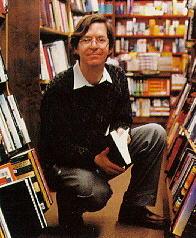
Man kneeling holding book amid shelves of books.
Alan Sokal (NYU Physics)

My classmates could not wait to jump on the subjectivist bandwagon.  They took turns agreeing that right and wrong are only social constructs.  I spoke up.  One of my peers worked for the sheriff’s department.  She was incensed that the crimes of Bernie Madoff resulted in the loss of funding for a local charity to help the mentally disabled homeless.  I had to insist: “If right and wrong are only a social narrative, then how could Bernie Madoff have committed any crime as his so-called victims were in fact other corporate fund managers at his own level? Many of them profited, some like the B'Nai Brith for thirty years.”  Silence.  We learned the mathematical babble of Gilles Deleuze who said that crime is a strange attractor becoming a torus.  That is not helpful to a jury.

The ins and outs of the Sokal Affair are important for everyone who cares about the apparent decline of the modern world. Listen carefully to President Barack Obama.  He was educated in the postmodernist method.  Conservatives claim that he is a Muslim or a Marxist, or both at once.  If he were either, he would not speak as he does.
“Ayn Rand is one of those things that a lot of us, when we were 17 or 18 and feeling misunderstood, we'd pick up. Then, as we get older, we realize that a world in which we're only thinking about ourselves and not thinking about anybody else, in which we're considering the entire project of developing ourselves as more important than our relationships to other people and making sure that everybody else has opportunity – that that's a pretty narrow vision.” (Obama and the Road Ahead: The Rolling Stone Interview,” By Douglas Brinkley; November 8, 2012.)
The key word is “project.” In the newspeak of postmodernism, the Enlightenment was a project. (It is on a global capitalist “trajectory”.)  Postmodernists “give space to voice” or complain that others deny it.  (See, for example, Feminist Political Ecology: Global Issues and Local Experience, edited by Dianne Rocheleau, Barbara Thomas-Slayter, and Esther Wangar. This is merely one out of many.)

The President is not the bad guy here.  He is just a man of his time, educated in a tradition, who thinks as he does.  A hundred others could have taken his place in the White House and in history.  The point is that postmodernism permeates our culture. This goes beyond the mere subjectivity of experience.  Even if I identify a car as “teal” while my wife calls it “aquamarine” the car still exists, as do absolute right and wrong.
  • Fashionable Nonsense: Postmodern Intellectuals’s Abuse of Science by Alan Sokal and Jean Bricmont, (Picador, 1999)
  • The Sokal Hoax: The Sham that Shook the Academy, edited by the Editors of Lingua Franca, (University of Nebraska Press, 2000)
  • Beyond the Hoax: Science, Philosophy and Culture by Alan Sokal (Oxford, 2008)
Previously on Necessary Facts

Saturday, May 12, 2012

Criminalistics: Science or Folkway?

Ahead of my May 8 talks to the forensics classes in the science department at Westwood High School in Round Rock, Texas, the teacher, Susan Seale, distributed a questionnaire of my own design.

Three intentions informed the instrument.  I wanted to prepare the classes to think about the science of crime scene investigation.  Second, how well could they correlate knowledge in general and about forensics especially. Also, I was fishing for an answer I did not have about the actual value of forensic psychology.

To take the last first: “In which cases did psychological profiling predict (or narrow the possible range) of the next victim and enable the capture of the criminal?”  The questionnaire (appended here), left this area blank. Any answer would do.  Of the 93 students, only one offered an answer not provided: “John Duffy (profiled by David Carter).” 

That sent me to the Internet. I discovered the case of John Duffy and David Mulcahy, the “Railway Killers” (or “Railway Rapists”), profiled by David Canter. (Dr. Canter’s website is here.)  In fact, Dr. David Canter only profiled Duffy. (“Much was made of the psychological profile constructed by Canter after the trial, as Duffy fitted 13 of the 17 observations made about the attacker's lifestyle and habits. Such profiling became immediately commonplace in policing thereafter.” – Wikipedia here.)   In fact, psychological profiling did nothing to capture George Metesky, John Duffy, or anyone else.  Psychological profiling is folkway masquerading as science. 

The students did a good job of identifying George Metesky, James Brussels, Fred Zain, and Joyce Gilchrist.  They also gave good summaries for the Daubert Test.  That said, though, they overwhelmingly believed that fingerprints, ballistics, and other perceptions are scientific.  In truth, only DNA meets the Daubert test.  

Kary Mullis received a Nobel Prize
for inventing PCR:polymerase chain reaction
which makes DNA typing cheap and reliable.
His website here.
It may well be true that a ballistics expert can match a bullet to a weapon. The methodology has never been statistically validated, or subjected to peer review, including the challenge of falsifiability. That holds true for fibers, hair, footprints, tire prints, or other evidence.  (Not only do you have have different kinds of hair all over your body - eyebrows, eyelashes, forearms, legs -  you have different kinds of hair on your head.) It may well be true that a perpetrator’s shoe can be matched to a print left at a crime scene.  But to what degree of matching? And how many other shoes would also match?  The reliability of fingerprinting remains the biggest lie in prosecutorial evidence.

I grant fully that I apply no scientific test to identify my wife. When I come home, I do not mistake her for a cousin of hers. Intuitive evidence is real.  But it is only evidence, not proof. And in a court of law, we demand more than gestalt feelings of lifelong familiarity.   

Now faith is the substance of things hoped for, the evidence of things not seen. Hebrews 11:1 ( Ἔστιν δὲ πίστις ἐλπιζομένων ὑπόστασις, πραγμάτων ἔλεγχος οὐ βλεπομένων.)

Tallies.  These are raw scores. I accepted most close answers. In some cases, the respondents missed the essence, for instance identifying correctly Joyce Gilchrist’s 3000 criminal cases and 20 years of service, but leaving out the charges of misconduct. Three caught my error in listing ”Fiber evidence” twice.

Take Home Survey
Prepared for Forensics classes at Westwood High School
By Michael E. Marotta, BS, MA.
May 8, 2012

Instructions: Do not put your name on this paper. It is an anonymous survey for statistical reporting.

Identify these:

George Metesky
92
James Brussels
91
Fred Zain
89
Joyce Gilchrist
77
Daubert Test
84


In which cases did psychological profiling predict (or narrow the possible range) of the next victim and enable the capture of the criminal?
George Metesky and/or James Brussels 75
Fred Zain 4
Joyce Gilchrist 15
Other Correct (Duffy/Canter; but others also generally correct) 9
Blank no answer 9 (No way to know if blanks indicate that the student believes psychological profiling to fail the Daubert Test. As Ellen Johnson famously noted: "The invisible and the non-existent look a lot alike.")
Other Incorrect 9

Which of these is an example of a scientific crime scene investigation method?
□       Hypnosis          9
□       Fingerprints      87
□       DNA    87
□       Hair Identification         87
□       Fiber Identification        87
□       Graphology 38
□       Fiber Identification        (N/A)
□       Shoe prints       80
□       Tire prints         83
□       Ballistics matching         83

Friday, January 27, 2012

Teaching Ethics to Student Engineers

Ayn Rand observed that for most people, “integrity” is not putting your hand in your neighbor’s pocket, when, in truth, integrity is having no conflicts between your morals and your ethics, between the ideal and the practical, between what is and what you want.  Rand’s Objectivist ethics derive from a primary consideration of human nature.  Plants and animals do not choose, therefore for them, morality cannot exist.  For us, every choice, by definition, is a moral choice.  Rand identified the fact that in building a bridge, every girder is designed in answer to one question: Right or wrong? 

Every teacher knows – contrary to the claims of political commentators left and right – that there is no way to open a student’s head and pour in the answers.  The door to learning swings from the inside.  Ideally, any book on ethics for engineers would be written from the rational-empirical (objectivist) foundation of the scientific method.  The reality of university learning requires that we admit to the existence (if not the validity) of pragmatism, contractarian ethics, deonotology, existentialism, and other limited and limiting offerings.  Students come to the classroom with these assumptions – and others: many kinds of Christian interpretation are common in the English-speaking world.  Generally, we use these formal structures to defend the opinions we bring to the classroom, and take out into the working world. 

When I was in the 9th grade, our civics class had a debate on capital punishment.  Two of the class were girls from the same Pentecostal church.  They took opposite sides.  Forty-five years later, I took both sides of that debate for a criminal justice class.  While I believe that objectivism offers a better set of tools for analysis, I have to admit that no system can resolve all the conflicts, or even state all the questions, unambiguously.  Ethics is harder than mathematics.

On that basis, 4Es: Ethics, Engineering, Economics & Environment by John St. J. S. Buckeridge (Annandale NSW: The Federation Press, 2011) is a convenient platform for delivering the opportunity to bring students in science, engineering, and technology to the task of asking the right questions about professional ethics.  The book is essentially an outline, 128 pages in all, that opens the door to the lectures, papers read and written, and discussions engaged. 

Because morality is choice, ethics is all about problems.  How do we identify and reconcile competing interests or conflicts of interest?  What consequences will follow? Which of them is important?  To what degree is each relevant? This book begins with ethical problems common to the news.  After a brief discussion of morals, ethics, values, and profession, the first chapter offers case examples of moral and ethical conflicts.  Among them are the Stanford Prison Experiment, the Marsupial Mouse, the rights of indigenous peoples, and the debate over fur and leather garments.  Chapter 2 begins the formal investigation of theories of morality and ethics: Aristotle’s virtue ethics; egoism, John Stuart Mill’s utilitarianism, and John Rawls’ contractarian theory; deontology; and existentialism.  Chapters 3 and 4 return to the problems.  Examples such as the new mandates for fluorescent lamps are from the recent news, though others such as the fishing of common waters have been continuing for generations.   Most important are the cases of Andrew Wakefield, Peter Davis, and Vishwar J. Gupta involving research misconduct, conflict of interest, and research fraud, across national borders and within national politics.

While intended for upper division university students, the book could easily serve a high school class.  The writing is clear and direct.  The problems are timely.  The treatment can serve an important purpose in providing a foundation for the same investigations later at university and at work.

From my point of view, it would have been better to provide an authoritative source for the section on egoism, just as Mill, Rawls, Kant, and Heidegger were cited in the other presentations. 

The book came to my attention because the author relied on a vignette I wrote about the Athenian “owl” tetradrachma, “Of Owls, Wooden Walls, and Flower Girls.”  Buckeridge uses the reverse of the coin (the owl side) with his own inscription EOS standing for both the Earth and Oceanic Systems Research Group at the Royal Melbourne Institute of Technology, and, of course for the Greek word for “dawn.”

ALSO ON NECESSARY FACTS
Gregory M. Browne's Necessary Factual Truths
More on Necessary Factual Truths
David Harriman's Logical Leap
David Harriman's Logical Leap Almost Makes It
The Sokal Affair
Reflections on the Sokal Affair
Misconduct in Scientific Research

Sunday, December 4, 2011

Inconvenient Questions about Global Warming

Al Gore’s An Inconvenient Truth (Paramount Classics, 2006) suggests many questions about basic facts. 

From about 20 minutes in to about 25 minutes in, the presentation faltered from confusions of color and graphics. At about 00:20:34 the former US Vice President showed a graph of “temperature” over the past 650,000 years in Red.

I assume that this is Earth’s average surface temperature, but that was not explicit, nor was it explained how he knew. How CO2 was determined is also not clear. During the middle of the Pleistocene there was no US Weather Bureau to read thermometers. So, how do they know, perhaps from fossil trees or maybe from coal or peat bogs? I agree with the apparent fossil record, but it includes huge extinct beasts like the megatherium and glyptodon and little evidence of hominids and their campfires. What caused the end of the previous ice age if not anthropogenic global warming.

The first graph shows CO2 in blue. It gives Temperature in degrees F, showing a dramatic increase. The scale is 0, 0.5, 1.0 and the line rises from 0.0 to above 0.5.

Then the legend changes. The color scheme inverts. At about 21:00 minutes, the display shows 650,000 years of CO2 in Red. Temperature is in blue.

At about 00:21:35 the uncalibrated temperature over 650,000 years is shown together with with CO2. Then from 00:22:34 to 00:22:49 the Red CO2 at our current measure or level or amount goes up and off the scale but the blue Temperature does not. Should not the temperature have increased dramatically by half a degree or more?

If CO2 is increasing at alarming rates, that can only be important to us if temperature is also increasing, melting the ice caps, bringing citrus to Michigan, and so on. Apparently that is not the case. Even if atmospheric CO2 is increasing, Earth’s nominal average surface temperature seems not to be.

Saturday, February 26, 2011

Misconduct in Science and Research

Recent news about procedural misconduct by scientists is easy to find.  However, searches of JSTOR uncovered zero articles about misconduct in scientific research from 1900 to 1950.  From 1950 to the present, 40 articles addressed the related problems.  An obvious upswing occurred after 1987. Gale CENGAGE yielded 56 titles, many of those reports of headline news about Jan Hendrik Schön and other immediacies.  On the other hand, if you search via Google or Bing for "research misconduct" or "misconduct in science" etc., there is no shortage of popular news stories and formal reports.  This summary from The New York Times is from 1991.  In fact, the NYT Articles database offers embarrassingly many such stories (link here).

Police chiefs know the easy generalization that 80% of your problems come from 20% of your addresses regardless of the neighborhood.  Crime is a universal problem. Nonetheless, variations in crime statistics show that predation and fraud are more common in some cities and states and nations than in others.  Harms flourish where they are wanted. 
So, while fraud in science research is known across all studies, it is now most common in health and medicine.  Tremendous funding is one factor.  Willy Sutton robbed banks because that's where the money was.  

And to be fair, living things are more complex than rocks and stars, so experimental results can be harder to duplicate. Not all researchers have the same finesse; and it is easy to believe that you have it, but your critics do not.

These same factors cause fraud in forensic science.  Joyce Gilchrist, Fred Zain, and Pamela Fish made headlines when their counterfeit lab reports were exposed.  [Annie Dookhan is added to the list.] The problems with fingerprinting go deeper (NecessaryFacts here).  As with other instances, the causal factors may be the pressure for results, the huge and easy funding for such work, and a desire to believe your own results, coupled with a faith in altruistic ends that justify any means.  But the rational choice theory of crime stands against such excuses and denials. 

According to the theory of crime based on objective psycho-epistemology, criminals act from the lack of thought.  When pressed later, words come out of their mouths, often generated by an intuitively correct feeling for what the interrogator wants to hear.  They don't mean it. 

The Office of Research Integrity of the U.S. Department of Health and Human Services reports on its findings.  Defrauding the federal government is a federal crime, no surprise in that.  Every university has some similar "institutional review board" for human and life science experiments.  No similar agencies assure integrity in the physical sciences.  None exists for criminology. 

New age and post-modernist professors teach future police officers that there is no such thing as right and wrong.  According to Stuart Henry, Bruce A. Arrigo, Christopher Williams, and Mark M. Lanier, taking their cues from Paul Feyerabend and Jacques Lacan, the Enlightenment was a Euro-centric, phallo-centric conquest.  They claim that the senses are invalid, that logic has no validity.  Such assertions are the deepest expression of academic fraud. 

ALSO ON NECESSARY FACTS
Four Books about Bad Science
Criminalistics: Science or Folkway?
Junk Criminology as Pseudo-Science
Science Fair Science Fraud
David Harriman's Logical Leap
Great Scientific Experiments
Fantastic Voyages: Teaching Science with Science Fiction

Wednesday, January 12, 2011

THE FALLIBILITY OF FINGERPRINTING

The easy truth is that fingerprints are not reliable. The deeper facts are necessarily more complicated. Whether and to what extent fingerprints - or, ultimately DNA, retinal scans, and other biometric identifications - may be putatively "infallible" there remains an underlying desire to segregate good people from bad, to control the latter for the benefit of the former. 

Suspect Identies: A History of Fingerprinting and Criminal Identification  
by Simon Cole (Cambridge: Harvard University Press, 2001).

However, an admittedly unscientific poll by CNN Money in 2004 found that 21% of Americans cheat on their federal income  tax.     A story in the New York Times for May 1, 2010, claimed that 20% to 30% of the wealth in Greece is off the books in undisclosed transactions.   That number might reflect American realities as well.  (Prof. Liqun Cao told our criminology classes that perhaps 20% of the goods on the market have no clear title.)  Furthermore, according to the social taxonomy for "anomie" presented by Robert King Merton, "innovators" are those who seek socially-approved goals in unapproved ways.  You might think that defines robbery (and it does), but it also defines the "pirates of Silicon Valley" who created new computer resources otherwise denied to them: they were hackers before they became inventors.  Even if we could tag everyone, do we want to?  What is achieved by criminalizing young people for thinking outside the box?  

The basic problem here, of course, is that such tagging is not reliable.  It does not work.  Experts who study fingerprints know the problems.  Worst of all, they deny, minimize, and obfuscate their different interpretations of the facts in order to present a united front to the world, claming that fingerprints are certain, not probabilistic. Simon Cole's work has a few weak points.  He presents the same information twice, in the absence of giving new data to substantiate a new claim.  With that caveat, it remains that this book is an excellent history of the attempts to measure and identify criminals. 

Cover of book shows large thumbprint
Suspect Identities: A History of Fingerprinting
and Criminal Identificaion by Simon Cole,
Harvard University Press, 2002, 2009.
Though with several other roots as well - India under British rule in 1858, for instance - "Anthropometry" began in the 1870s with Cesare Lombrosco. Again, both motives were active.  First, criminologists thought that law-breakers were physically different from normal people.  The criminal could be detected by the geometry of his skull and the ratio of his legs to this torso. Calling themselves scientists, they developed complex taxonomies for ear shape.  In theory, if they could measure everyone, they could cull the criminals from society and prevent if not eradicate crime.  Second, the police and courts (and the military) had a large body of repeat offenders. Identifying them would facilitate processing -- and prevent wrongful pleas for mercy from self-defined "first time offenders."  Similarly, the U.S. Army needed to keep out those it threw out but who came back via another recruiter. 

Anthropometry was hard work. Special calipers applied to the unclothed body provided raw numbers for the calculation of ratios and proportions.  And it only worked with males.  In the 19th century, despite hand-wringing over the evils of prostitution, few were willing to measure a woman in the same manner.  And the numerical models were lacking.  Anthropometry had limitations, of course; and Coles tells (pp. 140-142) the famous case of the two William Wests carefully measured and then confused by Leavenworth Prison.  That hallmark case is a classic justification for the reliability of fingerprinting.  It appears in college textbooks for criminal investigations.

Fingerprinting solved a lot of problems, not the least of which was differentiating the two Misters West. Fingerprints are easy to get -- from men or women, living or dead. 

Meticulous cataloguing suggested that no two people had the same set of prints.  That may well be true.  We do not know for sure.  This is an empirical truth only.  Like primitives for whom the sun has always come up in the east, but who have no knowledge of astronomy, we can take all the measurements we want, but we do not know the genomes and alleles for fingerprints; we know the what, but not the why.

We could live with that.  But in a few decades from the 1920s to the 1940s, fingerprinting devolved to the point where trained examiners claimed under oath that a partial print unabiguously identified a perpetrator.  Comparing good "native" prints from each of ten fingers was reduced to accepting claims about partial latent (secondary) prints.

Fingerprint examiners never disagree with each other in court.  They only agree that the prints identify or are "inconclusive."  Coles tells the story (pp. 264-266; 272-274; 282) of experts in disagreement all of whose certifications were revoked because that was the only way for the International Association for Indentification to maintain the fiction that experts do not disagree about fingerprints.  Today, fingerprints are unassailable.
cover shows gun and computer circuit board with other images
The Numbers Behind NUMB3RS by
Gary Lorden and Keith Devlin,
Plume Books, 2007

The fact remains that fingerprints have been forged by several methods by police and by criminals.  (The FBI first found a forgery by a law enforcement officer in 1925.)  And of course there is politics.  J. Edgar Hoover and New York City Police Commissioner Richard E. Enright both had strong claims that their agency was best suited to be the central clearning house and repository.  Suspect Identities is a dense book that covers a lot of ground in 350 pages, but the index is an exemplary epistemological map to this complex presentation.

The epistemological and methodological problems in fingerprinting are not taught to law enforcement professionals.  After completing a BSc in criminology in 2008, I was watching a rerun of NUMB3RS, the CBS drama series (2005-2010) about mathematician Charlie Eppes and his brother, FBI Special Agent Don.  The first season show Identity Crisis centered on fingerprinting.  Prof. Eppes identified the key difference between DNA and fingerprinting, asking rhetorically, "But prints don't have odds?" A fuller treatment of the problem can be found in The Numbers Behind NUMB3RS by Keith Devlin and Gary Lorden.  (Dr. Devlin teaches at Stanford and is NPR's "Math Guy."  Dr. Lorden teaches at CalTech and was the technical advisor for the series.) 
The case of Brandon Mayfield may become paradigmatic.  You can google him and find the Wikipedia article.  As Mayfield is an attorney, the National Association of Criminal Defense Lawyers has an insightful summary on their website.  Mayfield was wrongfully accused of being an Al Qaeda operative, in large part because FBI fingerprint examiners refused to disagree with their boss.  The evidence - such as it was - began with a single latent fingerprint.


ALSO ON NECESSARY FACTS
Employee Theft
Junk Science in the Courtroom
Eyewitness Testimony: Popper, Wittgenstein, and the Innocence Project
Forgery and Fraud in Numismatics
William Sheldon: Psychologist, Numismatist, Thief
Is Physics a Science?