Sunday, April 28, 2024

Remembering the Slide Rule

This came up as a thread in the “Off-Topic Observatory” of the Cloudy Nights discussion board for amateur astronomers. People have all kinds of hobbies and among the stargazers are skiers, rally racers, runners, and rock climbers, though understandably many more bird watchers, radio hams, and numismatists. Several of us collected slide rules accidentally or on purpose. In response to the topic, one poster just bought a circular slide rule to add to the collection. Aside from the engineer’s slipstick, my circular calculators are all for publishing to reduce or enlarge images and paper pages. 


Calculators - and I do use my phone, holding it sideways for the technical functions - give us a false sense of precision, when all you need is accuracy. In other words: will it fly? will it overflow the container? will it carry the load? For backyard stargazing, given that the atmosphere is a roiling ocean, what is the (approximate) limit of observable stellar magnitude with a 115 mm versus 102 mm refractor? The difference between pi=22/7 and pi=3.141 is 0.0018: two thousandths. Not much in life is that close. 

The one at the bottom was special because about 1988 or so, Pickett
(or their inheritors) found a large number of them in a warehouse
and in a publication (Scientific American or Science News or similar)
announced that they would give one (one) to everyone who
sent in a letter asking for one. (Email was not common back then),
after which, the instruments would be no longer available.
The one down from topmost came in a leather scabbard
with a fastener on the back so that you could wear it on your belt.
Long after those days, I wore it in to work.
"What's that?"
"This is the formal computing device of a Jedi,
from a simpler, more elegant time."

Clearly, the slide rule has been eclipsed by devices with storage and memory. Back in the 70s, I joined a round-robin newsletter called The Libertarian Connection, which was based on the medium known to science fiction fanzines. We sent in mimeograph stencils; the editors ran them off, collated the magazine, and mailed it out. Back when one ounce first class was 3 cents the saying was “a penny a day from coast to coast.” Then they went to photo-offset, which I enjoyed immensely. And here we are in the age of George Jetson, with a somewhat better BBS via integrated fiber optics into the house instead of a telephone dial-up at 300 baud. 


 The device is based on logarithms which allowed the transformation of multiplication and division into addition and subtraction. With a five-place or six-place tables of logarithms and trigonometric functions, you could achieve 100 times the precision of daily life. (Consider common retail pricing, for example.) That, in turn, allows efficiencies in engineering and production. Compared against working with tables, the slide rule traded speed for precision. You only get three places, but it is much easier, with the likelihood of errors reduced. If you need more precision, there were the books of tables, and an adding machine, then, later a comptometer.


The slide rule shows ratios and proportions so that you do not need to recursively enter numbers 4.1, 4.2, 4.3,… And it is designed to address basic problems involving circles and square roots. 


Even in the 1990s, engineers had AutoCAD and its competitors that let you draw something and the program would show the calculations off to the side. Would you rather start a fire with a BiC lighter or two sticks? Still, it is nice to get away from the computer, sit on a couch or chair, and move the numbers and see what is under the cursor or at the index


23 squared times Pi.
Set the Index to 23 on the D scale and
read the square at the Index on the A scale.
Set the cursor to Pi on the B scale and read the answer on the A scale.


For the telescope of diameter 115 mm, set the index on the D scale, read the square on the A scale and then set the cursor to pi, and you get 417 or close to. The calculator says 41,547.562843725015579. Ignoring all the noise, 415 is within half a percent. The 102-mm refractor has an area of about 327. Set either the AB or CD scales to 415/327 and the larger telescope has 127% the area of the smaller—and the calculator agrees: 1.27114… But you could do most that in your head anyway. 


In astronomy, the paradigm shifts in understanding the so-called “expansion of the universe” i.e., the Hubble Constant has been measured in orders of magnitude, not decimal places. 


PREVIOUSLY ON NECESSARY FACTS

Claude M. Watson (1922-2013) 

The Rational Optimist and The Grand Complication 

Celestial Mechanics 

Measuring Your Universe: Alan Hirshfeld’s Astronomy Activity Manual 


Saturday, April 27, 2024

ChatGPT and the Historical Forms of Academic Dishonesty

 In one criminology class, our professor said that 80% of people are honest 80% of the time; about 20% of the goods on the market have no clear title. 

Back in 1968, at my small liberal arts college, at the end of the school year, several of my classmates found themselves faced with a final paper in world history that some of them could not complete. At least one of them had done (most of) the work. He gave his pals his paper to copy, which they did, apparently verbatim in small or large passages. However, our school had an Honor Code, a Pledge, which was to be written in full at the top of each examination or paper. (Usually, for quizzes and such, we just wrote "Pledged" at the top.) Also, as it happened, the center of the conspiracy copied a section directly from the assigned textbook without attribution. The textbook was a reference for our benefit. We never read from it in class; we had no assignments from it. So, at least one of my classmates may have assumed that the professor would not recognize the passage or passages. In any case, it did not occur to them that their nearly identical papers would betray them. Of course, they should have been expelled and of course they were not. The story is not unusual in any way.

We have one day a month assigned away from the workplace and on that day, we receive a task from a manager. They call this "Mental Spa Day." My work away from work included completing an introductory class about ChatGPT and then having ChatGPT write a story. "Use a favorite character from two of your favorite tv shows/movie/book – so, you have two characters; Have them meet while on vacation in ____________(location of your choosing);  Have them describe the location surrounding them;  Have them go on two adventures." This is the result.

My instructions to ChatGPT: Write a story in which the character of Temperance Brennan from the televisions series "Bones" meets the character of Sherlock Holmes as played by Benedict Cumberbatch in the television series "Sherlock." They are separately on vacation in Austin, Texas. They meet on a tour of the Lady Bird Johnson Wild Flower Center. While admiring the plants and other wildlife, they see a foot under a bush and discover a body. Call this "Intro One."

Title: Botanical Bones: An Unexpected Encounter

Intro One: Lady Bird Johnson Wildflower Center

In the heart of Austin, Texas, the Lady Bird Johnson Wildflower Center sprawled with vibrant colors and the fragrant scents of nature. Temperance Brennan, a forensic anthropologist known for her meticulous attention to detail, found herself on vacation in the Lone Star State, seeking solace amidst the blooming wildflowers.

Meanwhile, Sherlock Holmes, the enigmatic detective with a penchant for deduction, had chosen Austin as his destination for a much-needed break from the hustle and bustle of London.

Their paths converged unexpectedly on a guided tour of the Wildflower Center, where they found themselves admiring the indigenous flora and fauna.

[Edit in: 7 June 2024. I rarely edit entry to this blog after a work has been posted. I sometimes fix typographical errors such as "its" for "it's" though most errors survive because that is the record. In this case, I removed the story so that I can edit it and post it on 8 June as "Fan Fic by ChatGPT: Part 3."] 

The work needs editing. Among the weaknesses was the use of the same key word in a sentence: "...they forged a bond forged in the crucible of investigation..." However, it is a good beginning for someone who does not want to create and needs to fill a requirement. I have several books of newly published science fiction like this purchased last summer on a whim. I got through half of one and cannot read the others. I did read two novels by Marion Zimmer Bradley and four short stories by H. G. Wells. To produce literature at that level would require training ChatGPT, which is the intent of its creators: you recursively teach the program to develop what you want. At that level, you might as well do all the work yourself, or, at least you will have the learning experience of teaching the subject. 

In 2008, I had a class in symbolic logic. Our first exercises were to program a logic engine to produce certain truths. After a few weeks, we were on our own: the homework was to solve this or show that or demonstrate some other. Well, I had the logic program to do that. I just entered the Boolean expressions and turned the handle. That worked fine until the problems got harder. I had to do a lot of paper-and-pencil to know what to give the machine. Eventually, although there was one that took me five hours, it was easier just to do the work myself. 

I recently read some discussions on Reddit among professors who were worried (or not) about how to test their students in the era of interactive AI. Here at the University of Texas Austin, they have large lecture classes assigned to teaching assistants: your "professor" is some kid two years older than you. At Eastern Michigan University, we did not have TAs. If your name was in the book, then you were the person in front of the class. Granted, you might not know every freshman in an auditorium of 200, but you should know every senior in your seminar.  

Addendum: April 28. 11:23 AM. For the more recent topic here on the slide rule, I was going to add a comment about calculators. Then, I realized that my phone will do that, of course. I seldom use an actual calculator any more. But how about math class? If you have a phone, you do not need to do any calculations. You enter “Bill can mow the lawn …” in your search engine and you get lots of answers. 

PREVIOUSLY ON NECESSARY FACTS

Goofing to a Meltdown? 

Engines of Creation 

Lost in Translation 

Invisible Cheating and Visible Rights 


Sunday, April 7, 2024

Hermann Zapf on Alphabets

Hermann Zapf's legacy remains today in the typefaces offered by Microsoft Word: Optima, Palatino, and Zapfino. Other platforms deliver Melior and Linotype Aldus. Searching Google for Hallmark Jeannette will not take you to the font he designed for the greeting card company. The Blogspot platform is woefully underpowered for typography. We make do with what we have.


The whole duty of Typography, as of Calligraphy, is to communicate to the imagination, without loss by the way, the thought or image intended to be communicated by the Author. – Thomas James Cobden-Sanderson. (Frontispiece.) 

[Thomas James Cobden-Sanderson (nĂ© Sanderson; 2 December 1840 – 7 September 1922) was an English artist and bookbinder associated with the Arts and Crafts movement. ... He was the godfather of Bertrand Russell. -- https://en.wikipedia.org/wiki/T._J._Cobden-Sanderson]


“While visiting the United States in 1954 and 1957, I often talked with friends about printing types and modern industrial design. It seemed odd to find ultra-modern folk there for whom a plane that needed nineteen hours to fly from Frankfurt to New York was already a hobbling vehicle, but who in their own printed works preferred the most old-fashioned types of the 19th century. How one wished to ask these fanatics of ‘progress’ whether they still drive cars built in 1900, or furnish home or office in turn-of-the-century style. […]

The type of today and of tomorrow will hardly be a faithful recutting of a 16th century roman of the Renaissance, nor the original cutting of a classical face of Bodoni’s time—but neither will it be a sans-serif of the 19th century. It will surely be said that most book printers and their customers demand the historical forms. But on the other hand most of the public, too, demands cheap imitations of Chippendale furniture, Renaissance writing tables and romantic reproductions. Nor is it always the little people for whom the modern forms lack appeal, since taste only too often fails to keep pace with the growth of the bank account. Progress always demands courage; and as the powers of conservatism were and are always in the majority, they will not stop the entire development, they can only retard it. But where do we stand today? There is much talk of modern design, but if we study the catalogues and promotional printing we often find late 19th century printing types used to promote these ‘modern forms’. Just to which point in the 19th century do our lives and endeavors seek to return? Can the second half of the 19th century, the time of stylistic confusion and historicism, offer any basis for a future development? One has only to think of railway stations with Doric columns of iron, and of neo-gothic churches, or simply the ample beards of our great-grandfathers.” – pg. 36-37.


And is it not an anachronism when Albert Einstein’s relativity theory, or works by Bertrand Russell, Pasternak, and other such are printed with types of historic design? Pg. 59-60


See also Hunt Roman: The Birth of a Type,
George H. M. Lawrence, ed., Pittsburgh Bibliophiles, 1965.
Zapf designed this face for the Hunt Botanical Library.
(See also 
https://typographica.org/typeface-reviews/hunt-roman/)

PREVIOUSLY ON NECESSARY FACTS


Words into Type 

Start the Presses! 

For the Glory of Old Lincoln High 

Money as Press and Speech 

Sunday, March 24, 2024

HOW TO KEEP TEENAGERS FROM READING AYN RAND

The Ayn Rand Institute created a guide book for high school teachers who want to bring Anthem into their classroom as an assigned reading. I can think of no better way to make sure that no one who deserves to read it actually will. 

Appendix: Teaching Anthem: A Guide for High School and University Teachers

Lindsay Joseph -- February 16, 2024 -- 24 min read

How can we help students understand Anthem with greater depth and clarity?

https://newideal.aynrand.org/appendix-teaching-anthem-a-guide-for-high-school-and-university-teachers/

“This essay is intended as a guide for teachers as they help their students understand Anthem with greater depth and clarity.

“Once students have achieved an integrated understanding of Anthem, they should be encouraged to relate their newfound knowledge to the world around them. Their knowledge is not useful if it is compartmentalized. The third part of this guide is designed to help students apply Anthem’s meaning to other areas of study, the real world, and their own lives.”

First of all, if the essay is a guide, then that is what it is. To say that it is intended as a guide denies the premise: perhaps it will not be accepted as a guide or be understood as a guide. If so, then the writer of the guide failed. More to the point, no one who reads Anthem needs to have it explained. If they do, then the writer of the story failed—and she did not. 


Back in the ‘60s, sometime after I read Anthem, I saw a social commentary comedian on Ed Sullivan. He said that people are upset at campus protests. He said that some people think that kids should spend more time in church. He said that perhaps the way to get kids into church is to put tanks in front of them and order the kids to stay away. That sort of sums up the message in Anthem. I did not need it explained to me. No one did. In fact, just as a classmate of mine had passed the book to me, I handed it off to a girl who took great exception to its message and marked it up with counter claims. Turns out, she was a Christian who understood the message quite well and disagreed with it quite clearly. She also did need not a study guide.


You want to keep kids from reading Ayn Rand? 

Order them to do it.


PREVIOUSLY ON NECESSARY FACTS

Anthem as a Graphic Novel 

The Girl Who Owned a City 

“Star Trek: Discovery” and the Conflict of Values 

Firefly: Fact and Value Aboard “Serenity” 


Sunday, March 17, 2024

Fossils and Stars

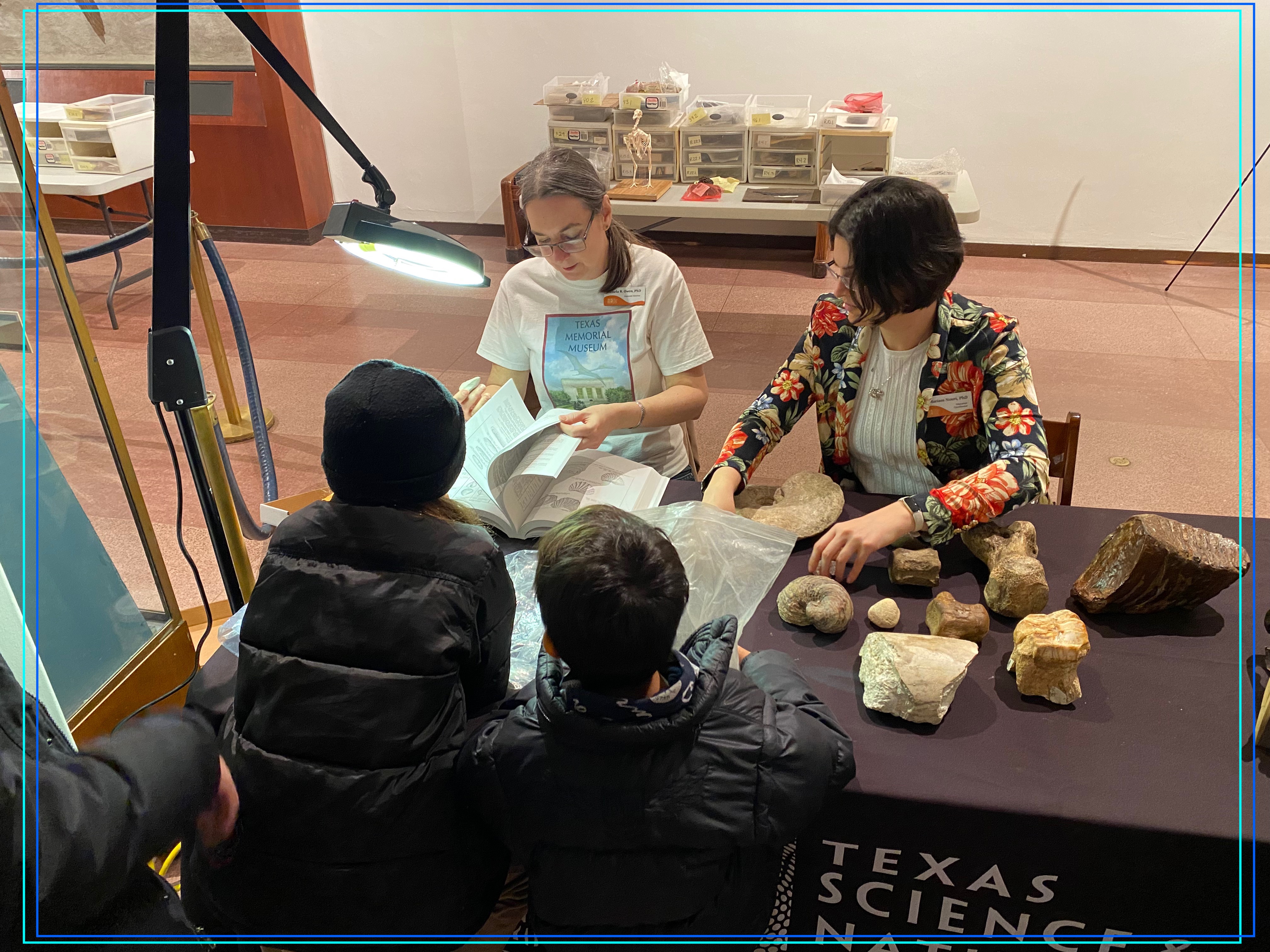
FOSSILS AND STARS

The Texas Science and Natural History Museum
held its 85th anniversary birthday party
on Sunday 21 January 2024 and we were happy to attend.
Invitees were encouraged to bring
their fossils and many did.
Museum Assistant Director Pamela Owen and
Education Coordinator Miriam Nouri identified them for us.

I bought the ammonite (black) at the Cincinnati Museum
of Natural History and Science back
in the 20th century. I lost the tag long ago and
did not know what it was. I was surprised to learn that
this is something that I know in its more common format.

On 27 January 2024, I found Messier 79 in Lepus.


Orion is a rich area of the sky and is near the meridian
for most of the winter from late November to mid-March.
Here, I sketched the stars marking the head of the Giant.

PREVIOUSLY ON NECESSARY FACTS

Fossils and Behaviors 

Before Darwin 

Pedernales Falls Public Star Party 

Globular Clusters 


Sunday, February 11, 2024

Goudy by Bernard Lewis and Goudy in His Own Words

Twice Frederic W. Goudy lost his life work to fires that destroyed his offices and workshops. Disheartening as they must have been, we have not much in his own words about the affects. He regained his equilibrium by focusing on the immediate work and then continuing with the projects that had been interrupted. 

Much of Behind the Type: The Life Story of Frederic W. Goudy 

Behind the Type:
The Life Story of Frederic W. Goudy
 
by Bernard Lewis . 
Issued by the Department of Printing,
Carnegie Institute of Technology,
Pittsburgh, 1941.
by Bernard Lewis would be considered creative non-fiction today. It was the style of the times for biographers to add dimension and color to the recorded facts. Born on March 8, 1865, Goudy’s early life lessons came in small towns in Illinois and the Dakota Territory. Even before he left home, he was a salesman, an impresario, an entrepreneur. So, some of this story came from contemporary newspaper accounts written by Goudy or about him but there is little of that in the opening scenes that introduce us to the child and the teenager.
 

“The year before [when he was seventeen], he had exhibited a copy of a wood engraving from one of the current magazines in the Shelbyville County Fair and had won first prize, earning an award of three dollars and a blue ribbon. To any who congratulated him he observed that there was little competition, but he admitted that he had a good eye and copied well. And to prove it he repeated another prize performance at the next annual fair.” (p. 14-15).


He often worked as a bookkeeper typically for real estate companies that were transient themselves, even when he was not. He had little patience for ineptitude or idleness and until he discovered typography, he let his natural curiosity take him to an array of ventures, such as the Anglo-Dakota Loan and Trust Company when he was 23. All of those experiences eventually served him well when he matured into the career that made him famous to us. Even so, his path in printing and typography was halting with changes in direction at each station. His sense of personal purpose complemented his artistic sentiments and Goudy continued to develop the aesthetic motives that defined his commercial projects.


“In printing the Chapbook Goudy engineered a simple stunt that amazed printers and made him the subject of much discussion. He at first could find no type suitable for printing the Chapbook because of its small size, but after taking measurements he ordered nine point “Original Old Style” cast on an eight point body, achieving admirably close fitting type.” (p. 36-37). 

The Alphabet and Elements of Lettering
by Frederic W. Goudy.
University of California Press, 1942.

That success changed the name of his firm from Booklet Press to Camelot Press when he moved to the center of the printing district in Chicago. 


Goudy is remembered for adapting the line weights, curves, stems, and serifs of Renaissance hand lettering to modern printing. That is shallow and wrong. He was not a copyist. Goudy studied the best of the previous designs in order to understand why they worked. In his essay, “The Ethics and Aesthetics of Type and Typography: An address delivered at the Carnegie Institute of Technology, Pittsburgh, February 12, 1938,” he said: 

“There was a time in the golden age of type design when a page decoration, a head-piece, a fleuron, a new type face might have proved a key to typographic distinction because it was recognized as the work of a master and respected accordingly. But by this I do not intend to imply that deference must necessarily be given to old types or old work of little merit because they are old. Many, unfortunately, possess shortcomings even as those of later vintage. Yet even the best of the old types should not be revived, imitated, adapted, reproduced, or copied for present day use with camera-like fidelity—prima facie evidence of modern poverty of invention (or mental laziness). The originals had matchless charm because they were stamped with the personality of their makers. The reproductions invariably lack the spirit of idealism of the originators and cannot fail to betray the fact that the faker can never do entire justice to the distinctive qualities that made the original designs great.”

Goudy could have been speaking for his contemporary, Ayn Rand's Howard Roark, when he complained of typographers who produce copies of copies of copies (The Alphabet, page 50n.) 


PREVIOUSLY ON NECESSARY FACTS

On Second Thought 

The Universe of 1962 

My Armadillocon Presentations 

Regimental Public Affairs Officer 


Tuesday, January 30, 2024

Frederic W. Goudy by Peter Beilenson

I wish that this story were more interesting. I am willing to believe that the life of Frederic W. Goudy was prosaic and yet could be made heart-pounding. In this case, the complete lack of examples only delivered a dinner speech for those already in the know. Fonts and faces are cited by name and they are described as heavy or full but not strong and so on, none of which delivers a tenable image.


Composed in Village No. 2 by
the Lanston Monotype Machine Co.
of Philadelphia. Printed by Walpole Printing.
Paper from Quincy P. Emery. Bound by 
Russell-Rutter. 300 copies made.

Attribution: American Type Founders.
Digitisation is public-domain.via Wikimedia Commons

PREVIOUSLY ON NECESSARY FACTS


Armadillocon 45 

Armadilloncon 44 Part 2 

Armadillocon 40 Part 1 

Armadillocon 39 


Sunday, January 14, 2024

Words into Type

Sir Robert worked hard and well to make himself a king and then wanted to unite his realm under a single banner. So, he called his vassals into his great hall where they stood with their shields, escutcheons, and crests. Looking out over the array, he said, “The nice thing about standards is that there are so many to choose from.” (That fable was in a computer magazine from about 1987.) 


A.T.A. Type Comparison Book by Frank Merriman.
Advertising Typographers Association of American, Inc. 1965.

I consider The Chicago Manual of Style to be the baseline. It is easy, direct, and common for American English. That volume is in my wife’s office. She edited over a hundred books for Bantam-Doubleday Dell and has several other style guides on her shelf. I have Chicago’s origin, A Manual for Writers of Term Papers, Theses, and Dissertations by Kate L. Turabian, fifth edition revised and expanded by Bonnie Birtwistle Honigsblum, University of Chicago Press, 1987. Unless otherwise directed, I turn to that first.


A.T.A. Type Comparison Book by Frank Merriman.
Advertising Typographers Association of American, Inc. 1965.

When I worked at Coin World newspaper, we were given our own copies of the Associated Press Stylebook and Libel Manual. It was a revelation to learn what a newspaper can be sued for. The truth is not always a defense in a court of law. In Michigan, it is and that was written into the state constitution.


Microsoft PowerPoint

For science writing, I have the Publication Manual of the American Psychological Association, Fourth edition, 1994. 


The book that taught me first was Strunk & White’s Elements of Style. I still open it for random reminders and I pick up used copies to give to people who tell me that they want to be writers. But OMG it is over a century old. OTOH, the best style is conservative. Of course, YMMV. 


A.T.A. Type Comparison Book by Frank Merriman.
Advertising Typographers Association of American, Inc. 1965.

On that basis, I was happy to find Modern English Handbook, Third Edition by Robert M. Gorrell and Charlton Laird, Prentice-Hall, 1962. I bought it for 50 cents in 2001. It was the textbook for 12th graders at Cleveland’s Lincoln High School when I was in the ninth and tenth grades 1964-65 and also on the staff of the school newspaper. My first journalism class was an eighth grade elective, but junior high pupils were not allowed to work on the Lincoln Log. At that time, I also had printing as a shop class elective. The Lincoln Log was not a school product but was contracted to a commercial printer which produced other school and community newspapers. With large ethnic communities, Cleveland had weekly papers in German, Hungarian, and other languages.


A.T.A. Type Comparison Book by Frank Merriman.
Advertising Typographers Association of American, Inc. 1965.


I actually never used Words into Type. It is in Laurel’s office. I just liked the phrase as a descriptive title for this blog entry. 


Accepted as an assistant editor for This Month in Astronomical History, an online publication of the Historical Astronomy Division of the American Astronomical Society, I was promoted early to editor in the wake of the Covid crisis. Considering that my degrees are in criminology and social science, and that I am an Amateur Affiliate member of the AAS, it is an honor and privilege to be responsible for fact-checking, as well as grammar, syntax, and style. I collaborate with subject matter experts, researchers, faculty, and other astronomers. I recruit writers and also write features to fulfill the editorial calendar of monthly columns. I report to a senior editorial team that is chosen biannually. Find the series here: https://had.aas.org/resources/astro-history.


A.T.A. Type Comparison Book by Frank Merriman.
Advertising Typographers Association of American, Inc. 1965.
 
I developed a style guide for HAD’s TMIAH. (Use endnotes not footnotes. The ampersand is not a word.) For AAS writing, the foundation is the style guide of the American Physical Society. However, Subrahmanyan Chandrasekhar amended that when he served as editor of the Astrophysical Journal (1952-1971). That perturbing force sent the AAS into a different path. Just for one example, we do not require that manuscripts be submitted in TeX/LaTeX.
 

A.T.A. Type Comparison Book by Frank Merriman.
Advertising Typographers Association of American, Inc. 1965.

I learned Donald Knuth’s programming language for typesetting mathematics publications back in 1985 when I was taking computer classes and teaching technical writing at Lansing Community College. The Arts and Sciences Division acquired a DEC VAX 11/785 and interactive terminals, overcoming the objections of the Business Division with their IBM 360 mainframe and punched cards in Cobol and RPG. I served as the editor of the newsletter of the DECUS chapter. I then worked as a technical writer for a medical information firm whose previous technical writer had the insight to acquire TeX. Consequently, I have almost 40 years of experience with HTML.

PREVIOUSLY ON NECESSARY FACTS

Start the Presses! 

Art & Copy 

Art as Ordered Narrative 

Innovation and Discovery 

For the Glory of Old Lincoln High


Saturday, January 13, 2024

LOST IN TRANSLATION

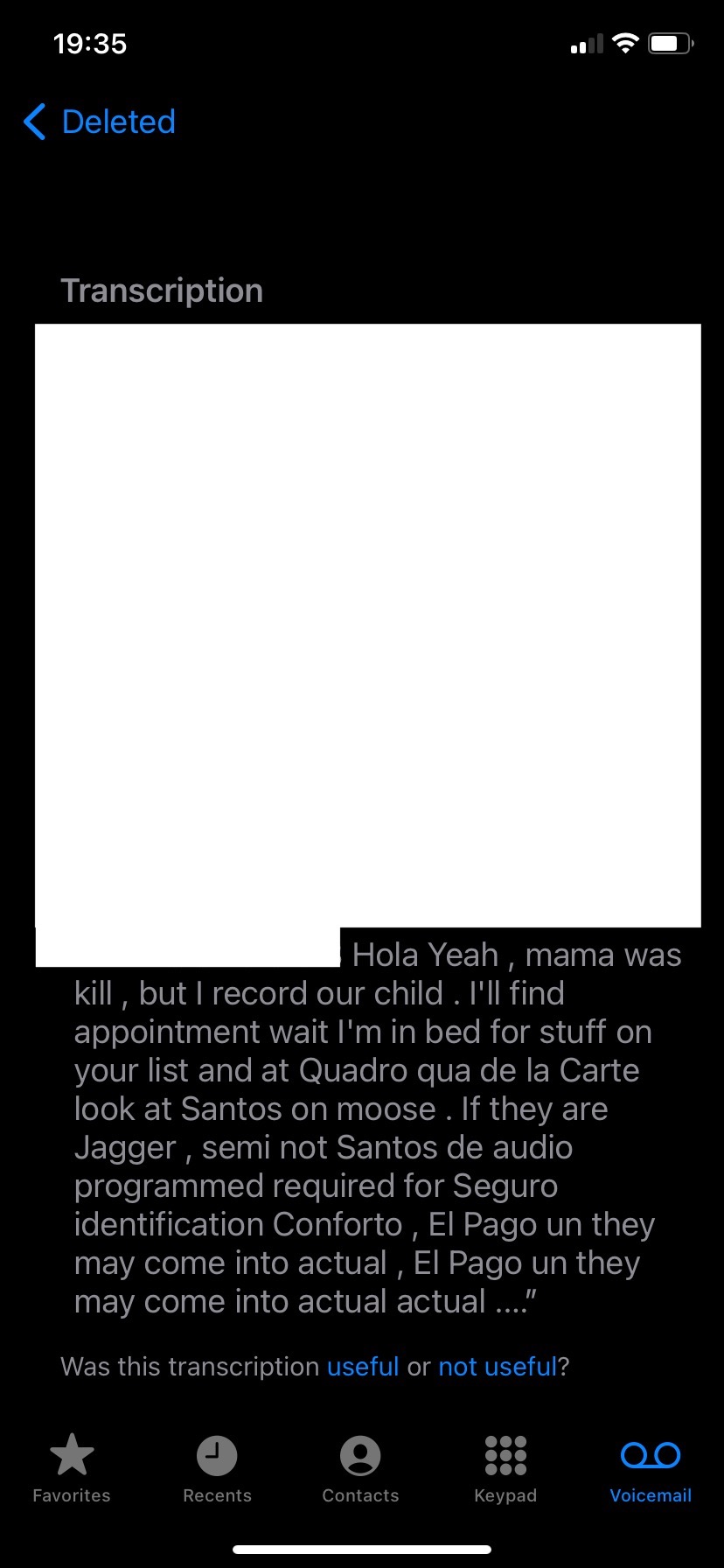
Hola Yeah, mama was kill, but I record our child. I'll find appointment wait I'm in bed for stuff on your list and at Quadro qua de la Carte look at Santos on moose. If they are Jagger, semi not Santos de audio programmed required for Seguro identification Conforto, El Pago un they may come into actual, El Pago un they may come into actual actual

Was this transcription useful or not useful?

(This was the Spanish translation of an original voicemail message with an accurate English transcription. It was from a doctor's office confirming an appointment. The only glitch in that, going back three years, is that it speaks "Covid-19" as C-O-V ... I-D nineteen.") 

Machines that mimic life originated in Alexandria about 100 BC to 100 AD. The initial input was a coin dropped into a slot and the result was a spoken prayer. In the Middle Ages, certain entrepreneurs seeking patronage built mechanical chickens that ground grain and water into exrement. Windmills and water mills worked at more productive tasks. (See L. Sprague de Camp's Ancient Engineers.) 

The Jacquard machine and the steam engine created the context for Edward Bellamy's Looking Backward, Thea von Harbou's Metropolis, and then Aldous Huxley's Brave New World. The dream was the nightmare.

On the Cloudy Nights discussion board, which is mostly dedicated to chat about observational astronomy, in the forum for “Science! Astronomy, Space Exploration, and Others,” a topic title was the question “What can’t artificial intelligence do?”  The introductory post started: We have made machines that can play chess better than we can. We are close to making machines that can write novels better than we can. Threshold question. Is there a limit? I can see no reason that there should be. The interesting question. What happens when we can make machines that can do everything better than we can?” In 100 replies, I was the only person who pointed out that while an AI could write a better novel, the novel itself was an invention. I received just one "like" for the comment. (On NecessaryFacts here.)

The Eliza computer program took your input, parsed it into a question, and then carried on a conversation with you. The program was created in the mid-1960s by Joseph Weizenbaum as an example of what natural language computing could be capable of. He was shocked to find people actually conversing seriously with the program, opening up to it about their personal lives. (See Computer Power and Human Reason.) 

PREVIOUSLY ON NECESSARY FACTS


BSides Austin 2023 

Documentation is Specification  

Ruby Methods the Ruby Way 

John Kemeny Knew: We Shall Have Computed 


Saturday, January 6, 2024

A Musical Joke

I found the book by serendipity, misshelved among works on Typography in the UT Fine Arts Library. I brought it home and then opened it to read:

“I often find that the humorous, joking aspect of music is missing in many performances, even in those of accomplished artists. It seems that people feel uncomfortable allowing the great work of music to be anything but sublimely serious.”  

“… crescendo does not automatically mean either agitato or accelerando. In many cases, quite to the contrary crescendo is an indication of the music becoming broader, more majestic, more dignified. If an alteration of timing is justified, such instances may call for allargando rather than an accelerando. Similarly, diminuendo should not always be taken as an indication of calming down, connected with rallentando. I can think of many examples of diminuendo that indicate, in fact, an increase of activity, albeit of a fantastic, visionary order, sometimes accompanied by an accelerando (see passages in a variety of works by Scriabin, for example).” Boris Berman, Notes from the Pianist’s Bench, Yale University Press, 2000,  pages 146-149, passim.

About 1988 or so, as a local newspaper reporter, I attended a concert duet for harp and voice. It was nice and all, a range from “classical” (perhaps Bach and others much later), and at least one modern piece, probably two. The last was “The Owl & the Pussy Cat.” I did not know the piece then and had to search for it now. It was the Edward Lear poem. I am not sure if the music was Stravinsky or another. The audience did not entirely suppress its giggles as the soloist sang about her lovely pussy. Not knowing the Lear poem, I, too, was surprised but having grown up with the Cleveland Orchestra under the baton of George Szell and his assistants, Louis Lane and Robert Shaw, I learned well to suppress all emotions while in the audience. After the concert, the harpist replied something like, “Nonsense. After all doesn’t ‘scherzo’ mean ‘joke’?”  A light went on – Es gang mir ein Licht an: In German, das Scherz means “joke.” The word must have come from Italian because the Germans would never have invented the word on their own.

Well, that’s not quite fair. Google “Haydn joke” - https://www.therightnotes.org/haydn-s-humour.html Other composers also used the unexpected to surprise the audience. For one thing, from the chamber music of the Enlightenment to the huge civic halls of our time, many of the listeners are players if not performers themselves. When the Beethoven Sonata op. 31. No. 3 opens with a cadential harmonic progression, they get the joke, or so wrote Boris Berman. I don't understand it. 


Previously on NecessaryFacts

Rachmaninoff 

Music Makes You Braver 

Austin at Night 

World War II Sweetheart Dance 2019 


Sunday, December 31, 2023

Books Read and Not Read in 2023

This past summer, I read The Left Hand of Darkness and The Dispossessed. I also read The Time MachineThe Invisible Man, and The War of the Worlds in quick succession. I just finished Their Eyes Were Watching God by Zora Neale Hurston. Between those markers are several other science fiction novels left unfinished including The Iron Heel. James Joyce’s Ulysses was quickly abandoned. 

Curious Books in East Lansing.

Hurston was recommended to me by a co-worker, a garage attendant with a degree in English. I had no idea who Hurston was and reading about her was as compelling as her work. She was complicated. So, she is a Rorschach inkblot to every biographer. I will not add my uninformed opinions. I like Huston’s narration. 


“Seeing the woman as she was made them remember the envy they stored up from other times. So they chewed up the back parts of their minds and swallowed with relish. They made burning statements with questions, and killing tools out of laughs. It was mass cruelty. A mood come alive. Words walking without masters, walking together like harmony in a song.”


“They sat in the fresh young darkness close together. Pheoby eager to feel and do through Janie, but hating to show her zest for fear it might be thought mere curiosity. Janie full of that oldest human longing—self revelation. Pheoby held her tongue for a long time, but she couldn’t help moving her feet. So, Janie spoke.”


“Sop and his friends had tried to hurt her but she knew it was because they loved Tea Cake and didn’t understand. So she sent Sop word and to all the others through him. So the day of the funeral they all came with shame and apology in their faces. They wanted her quick forgetfulness. So they filled up and overflowed the ten sedans Janie had hired and added others to the line. Then the band played, and Tea Cake rode like a Pharaoh to his tomb. No expensive veils and robes for Janie this time. She went on in her overalls. She was too busy feeling grief to dress like grief.”


The City of Dreaming Books by Walter Moers (Harvill Secker, 2006. Set in Stempel Garamond), is a fantasy. As parody, it is a spoof and quickly became cloying. And yet, it remains interesting as I read night after night. It is a story about books, writing them, printing them, buying, selling, and collecting them. Our hero, Optimus Yarnspinner, is a dinosaur. This world is also inhabited by many other fantastic creatures. Their images were drawn by the author. 

Inhabitants of Bookholm.
 

Not being steeped in literature myself, many of the allusions went over my head. About halfway in, the anagrams leapt out at me because of a parody of “The Bells” written by Perla la Gadeon whose anagram I deciphered on sight. Much else fell into place. I already understood the bookstores and the other avenues of commerce and the inelegant pathways of earning a living by writing for readers. 


Bibliophiles who live underground.


I also found something that the author did not intend with his description of a book hospital where devoted cyclops creatures repair old books. “It’s where we restore worm-eaten or damaged books. We reconstruct texts and reprint them or repair the bindings. Books can be damaged in many ways,” explains the guide. It sounds benevolent but we just attended "The Long Lives of Very Old Books" at the Harry Ransom Center and among the displays were forgeries in which stolen books had been cut apart, pages reproduced (sometimes by hand lettering), and the books rebound, and sold to collectors. The British Museum bought a large inventory of its own former shelving.


Addendum 21 January 2024

I finished the book. I thought that Moers wrote it in English because I did not believe that the translator, John Brownjohn, is a real person. He is. Moers himself is secretly famous. 

Walter Moers on IMDb
Walter Moers in LibraryThing 
Walter Moers in TVTropes 
Walter Moers in Wikipedia 
The City of Dreaming Books in Wikipedia 

PREVIOUSLY ON NECESSARY FACTS

Start the Presses! 

For the Glory of Old Lincoln High 

ArmadilloCon 45 

Firefly: Fact and Value Aboard Serenity 

Libraries of the Founders