Thursday, November 30, 2023

30 Minutes with Dinosaurs

I made time during my campus patrols to visit the Science and Natural History Museum at the University of Texas at Austin. The collection is impressive, far surpassing what I grew up with the Cleveland Museum of Natural History, and also what I have seen over the years at other museums. It is emblematic of Texas that the museum had to be closed because it ran out of state funding. I am happy that it is open again.

Clearly, not my field. Judging by the rocks revealed by excavations at
construction sites here in Austin, I thought that this all was underwater
for the last 500 million years. 
The specimen drawers are arranged to encourage exploring.
For a good picture, you really need to stand far enough back
that it could not get you.

Just saying "Dimetrodon" is half the fun.

Who knew? Xenophora clean and attach to themselves random
bits off the floor. 
We have a rule in the house against more bric-a-brac
but the Selenite was calling to me.
So, I bought two. I also got a coffee cup for myself.

Previously on Necessary Facts

The Unremarkable Origin of Species 

Epigenetics and Evolution 

The Origin of … (What?) 

The Philosophical Breakfast Club

The Map that Changed the World 


Thursday, November 23, 2023

AFK: Parking Enforcement

Working as a University of Texas parking enforcement officer since 11 September has allowed me easy access to the libraries that I use most often, even though I have not been able to pry away time to visit more. (I did see the Gutenberg Bible at the Harry Ransom Center.) The morning drive to work takes one hour (40-50 minutes) and the commute home can take two (45 to 90 minutes). I am working tomorrow’s football game against Texas Tech from 6:30 AM to 7:30 PM. (The pay is great: with game day overtime and event bonus, it comes to the same as being a technical writer.) 

Some Saturdays have been devoted to the City of Kyle Public Library Astronomy Club and others to the Austin Astronomical Society and I still edit (and sometimes write) a monthly column for the Historical Astronomy Division of the AAS (here: https://had.aas.org/resources/astro-history). Something had to give. 

I try to find whatever personal rewards that I can for self-actualization and transcendence (from Maslow’s Hierarchy). Meanwhile, I now watch the clock and looked forward to Friday. The advantages include semester-long checkouts at the libraries, healthcare insurance, as much walking as I choose to do (and I love walking), along with the light physical challenges of wrestling 22 lbs. of iron around an SUV’s tires to immobilize a scofflaw.  

I also have the opportunity engage in
philosophical discussions about semantics.


At the snack bar here,
the food is not labeled correctly
and they do not give out receipts for purchases.


This is still my favorite.

 Waiting to be written are these researches.


Like the problem of the tree that falls in a forest when no one is around, the fact is that there is sound in space. Stellar events create shock waves that cause compressions and rarefactions in the particles that comprise what we too easily call empty space.

NGC 6231 is easy to see in the lower body of the Scorpion. It has not been easy for professionals to sort out which stars are bound in the open cluster, which are background and which are foreground. I sketched it several times.


IC 1296 is a barred spiral galaxy that often appears in amateur photographs of the more famous M57 Ring Nebula in Lyra. In fact, I believe that it is an easy claim that amateurs have produced more photographs than professionals. I ran a literature search on the Harvard NASA database of articles and found some references. 


Messier 30 appeared here in October. I would like to recast those as a single magazine article. The cluster is moving opposite to the inertial frame of the Milky Way. So, professional astronomers believe that it was captured in a collision with another galaxy.


PREVIOUSLY ON NECESSARY FACTS

AFK: Away from the Keyboard

AFK: Hurricane Harvey

Minimizing the Likelihood of Bad Cops

Junk Criminology as Pseudo-Science


Saturday, October 21, 2023

TOMMY JAMES AND THE SHONDELLS AND THE MOB

You are known by the company you keep. When Thomas Gregory Jackson became Tommy James of the Shondells, he was already on a career arc that included the most popular musicians of his (our) generation at that time and also drew him into the circle of Morris Levy’s Roulette Records which was a subset of the Mafia crime families of New York and New Jersey. 

Though his own family moved in his early years because his father was a hotel manager, basically, Tommy James came from Niles, Michigan. So, this could be the story of Bob Seeger and the Silver Bullet Band or of Joe Walsh and the James Gang, or a dozen others from the 1960s who lived anywhere between Pittsburgh and Chicago. I did not know all of his gold records. Some I had to listen to on YouTube. His early hits echoed in my memories of times and places over the two weeks in which I was immersed in reading this. 


Tommy James’s autobiography is unassuming and revealing. 


Me, the Mob, and the Music:
One Helluva Ride with Tommy James
and the Shondells
 
by Tommy James with Martin Fitzpatrick,
Scribner; Simon & Schuster, 2011.


The title comes from a statement by Morris Levy after the first hit song: You’re in for a hell of a ride (pages 62-63). In the wake of that chart topper, Thomas Gregory Jackson became Tommy James. The name “Shondells” had no special meaning except that several pop groups had similar names: Rondels, Del-Tones, Delfonics, etc.


For much of his career, he lived in residence hotels and apartments. And of course, he was often touring, playing in town after town, city after city. I was surprised that even though he grew up in the hotel business, he seemed never to have used any special knowledge to garner a room upgrade, off-hours room service, or anything else. 


It took him a long time to come around to being a parent and he did not do very well at it. Abandoning his wife and child, it took about 90 pages before he called home, even though his wife was living with his parents from the very first. (Her family was opposed to the marriage because they were opposed to the pregnancy.) 


It was interesting that he absorbed the Mob mentality. After several scenes in which Morris Levy threatened people, Tommy used the same language and tone when he felt that Gene Pitney had taken his music. 


Hubert Humphrey wrote the liner notes for the album Crimson and Clover (page 165). This was a time of protest and very few young musicians were aligned with the Establishment, not even with the Democrats and certainly not with the Republicans. On another matter entirely, I once read that Barry Goldwater said that listening to Hubert Humphrey was like trying to read Playboy with your wife turning the pages. So, the story here of Tommy James giving Vice President Humphrey amphetamines struck a responsive chord. Humphrey said that he got a lot of work done that night. I can only imagine. 


I have to confess that I did not know until I read it here that Mayor Richard Daley of Chicago arranged for ballot boxes to disappear, thus swinging the electoral college votes from Illinois into the Republican column, contributing to the Nixon victory. Daley was furious because at the convention, in a speech nominating George McGovern, Sen. Abraham Ribicoff denounced Daley's administration for the "Gestapo tactics" of the Chicago police department.


Some years after that, eventually, Tommy James found his religion, realized that he was always a Christian, and had himself placed at the Betty Ford Clinic. 


Hit Songs I Know

Hanky Panky 

I Think We’re Alone Now 

Mony Mony 

Mirage

Crystal Blue Persuasion

Draggin the Line


Mentioned in the book, these songs I did not know but found on YouTube. 

Ball of Fire

Say I Am

She

Sweet Cherry Wine


PREVIOUSLY ON NECESSARY FACTS

Austin at Night 

South by Southwest 2013 

Rachmaninoff 

Music Makes You Braver 

State Guard Song “Texans Serving Texans”

Friday, October 20, 2023

Messier 30 and a Nearby Star

I made a project of viewing globular cluster Messier 30 again over three nights.

I located the object by drawing a triangle from Delta Capricorni (Deneb Algiedi - tail of the Goat), and Zeta Capricorni and the expected position of Messier 31 which was not visible. I found that dropping vertically not from Delta Capricorni, as recommended by Sue French in Celestial Sampler but from Nashira (Gamma Capri) to the same altitude as Zeta Cap worked better.  M30 is as far east from Zeta as Delta is from Gamma. I found Messier 31 in the field of view. 

Last night I investigated the star to the east of M30, which according to the Sky & Telescope Pocket Sky Atlas (Jumbo Edition) is a double. I could not split it. I used these oculars (eyepieces):

Meade 5000 14 mm. = 47X

Tele Vue 7 mm = 94X

Stellarvue 4mm = 165X

Tele Vue 7mm + 2X Barlow = 188X


That last did make the center of M30 a little sparkly and showed more of the elongaged shape of the cluster, but the overall view was poor at high magnification.

PREVIOUSLY ON NECESSARY FACTS

Globular Clusters

Two Deep-Sky Targets

The Andromeda Galaxy

Binocular Highlights (Book Review)


Sunday, October 15, 2023

Messier 30 and Other Views

Last night and this morning was my first time out since 30 August. I used the Celestron AVX mount and AstroTech 115 mm Apochromatic refractor to get reacquainted with familiar objects. However, for me the big win was a new target, Messier 30. M30 is likely an outside visitor. A  globular cluster attracted away from a satellite galaxy, it moves retrograde through the Milky Way disk.

(This was originally a post in the Observation Log IV on Cloudy Nights.)


I also set up my Explore Scientific 102 mm doublet refractor on the Twilight 1 mount. This is something that I do for learning, so as not to be totally dependent on the computerized goto AVX. The AVX found M30. Then, I located it in that telescope's red dot and found it again in the manual mount. It took some panning and scanning but was worth it, of course. I spent about 20 minutes with Messier 30 and the two telescopes. Planning my night, I found it in Sue French's Celestial Sample and logged it as my first goal. 


These were viewed with the 115 mm f/7 and a 14mm 82-degree Meade ocular:


14 October from 2130

(I re-ran the calibration because going from Vega to Altair, the mount wanted to drive the telescope into its own leg and I had to hit the power switch and start over. Never jog a robot without covering the E-stop.)


2208 - Dabih beta1,2 Capricorni

2214 - Algedi alpha 1,2(a,b) Capricorni

2225 - Epsilon Lyrae (Not split at 57X, I changed eyepieces to an AstroTech 5.5 mm Premium Flat for 151X and it was perfect. Also discernable at 102X with a 7 mm Tele Vue. I know that we all can achieve the double-double with less aperture and magnification, but a lot depends on the sky. My sky was good for the city, which is why I hauled out the AVX and AT-115 but it is very urban for a nominal suburb.)

2232 - M57 Ring Nebula. 5.5 mm. Large and almost colorful.


15 October 0550 AM

0556 - Messier 41

0607 - Venus almost first quarter, fuller crescent. Used 90% Moon filter.

0614 - Messier 31 Andromeda Galaxy - almost elliptical, large fuzzy patch over the hospital to my north.

0622 - Messier 1 Crab Nebula: many stars but no joy.

0628 - Messier 35 open cluster in the foot of Gemini

0634 - Rosette Nebula: many stars but no joy.

0642 - Castor - 14 mm (51X) not quite split. 7 mm split well.


PREVIOUSLY ON NECESSARY FACTS


Focus on Simon Georg Ploessl 

Measuring Your Universe: Alan Hirshfeld’s Astronomy Activity Manual 

Austin Under the Stars 

Meteorites 


Annular Eclipse 14 October 2023

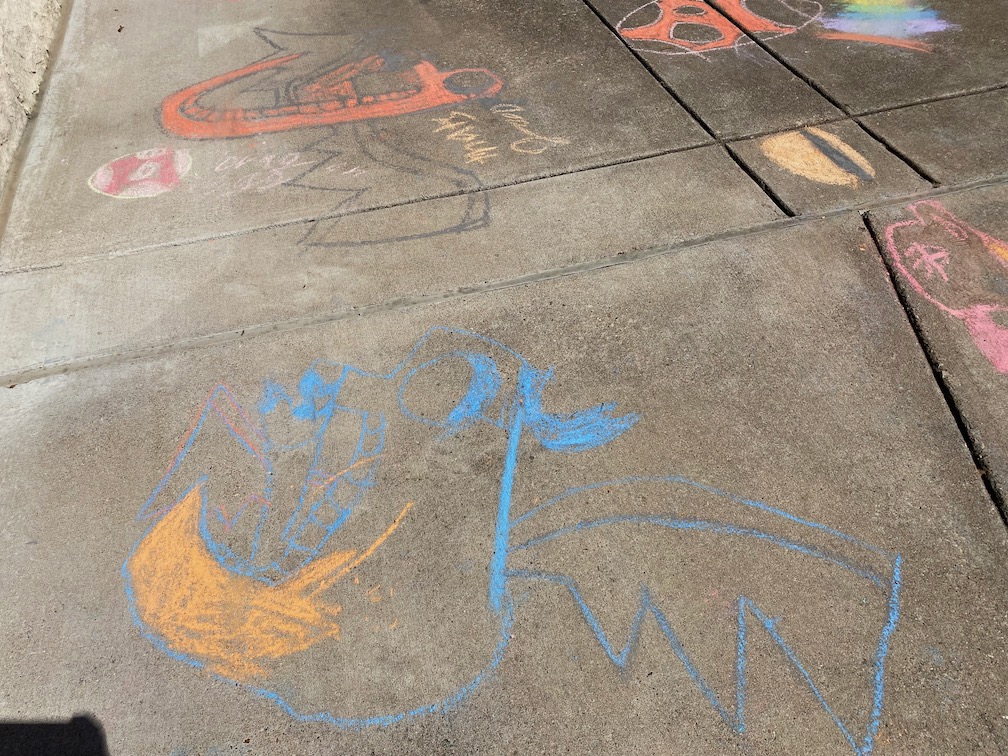
The City of Kyle Public Library Astronomy Club hosted viewing of the annular solar eclipse of 14 October 2023. The Library also pitched in with extra viewing glasses, a case of bottle water, and a bucket of sidewalk chalk. We gave out 22 pairs of glasses, 12 from the club and 10 from the library. About 30 people attended, many staying up to an hour past maximum.


From Kyle, Texas, we were not on the "Ring of Fire" path, but one of the viewers reading her cellphone reported that we would be at 88.9% coverage. 

Helping the crowd, I never got to take a photograph with my 102 mm refractor.


PREVIOUSLY ON NECESSARY FACTS


Lunar Eclipse 8 November 2022 

Jupiter-Saturn Conjunction 2020 

Redshift: Six Years with Astronomy 

Cursing the Moon 

Eclipses? 

An Amateur Astronomer’s Credo 

When Worlds Collide 


Saturday, September 9, 2023

Stem Cell Collection

In preparation for autologous blood stem cell transplant after 2024, I had my red blood stem cells harvested. The procedure was successful and that is the bottom line. That final tally was the result of very many debits and credits. Even though we had this planned months ago, when I was wheeled from the transplant clinic to the main hospital to be taken to radiology for the placement of a catheter, the main desk asked if I was a walk-in. It took them a couple of hours to find a file folder with papers that then were entered into a computer file. That was just one event.


I went to the Sarah Cannon Clinic at Methodist Hospital in San Antonio about 68 miles from home because the Sarah Cannon Clinic at St. David’s Hospital in Austin about 18 miles away will not harvest and store. At Methodist they were proud to tell me that they store stem cells for the other clinic. I do not know why that treatment was denied to me in Austin but it was. “We do not harvest and store. If we harvest, we use them.” So, we scheduled treatment down the road. 


I met Methodist Hospital last year, after my initial diagnosis because the arithmetic of chance favors the second opinion. I have been happy to be treated here in Kyle because the office of Texas Oncology here is a short walk through a city park. It is very convenient. Even so, the second opinion has been helpful. (See “The Monty Hall Problem” on Wikipedia and elsewhere.) It validated the treatment regimens and provided additional insights. So, I have been back half a dozen times for lab tests and consultations. 


All along, I have taken as much charge of my treatment as I have bandwidth for. I bought textbooks and a microscope just for orientation because I never paid much attention to life sciences. I got a book from the UT library on oncology nursing just to read twenty pages on myeloma and Revlamid® (lenalidomide). You really have to ask the right questions to get any answer and many doctors control the flow of information according to their own standards. My primary oncologist assured me that this will not require chemotherapy and we will do it with monoclonal antibodies. He sounded like Dr. McCoy. Well, it is chemotherapy; I just don’t lose my hair (yet). And right now the FDA approves monoclonal antibodies only when two other courses have failed. So, OK, I got over that last year.


This time, the sugar coating was on the collection catheter, a Quinton line. I should have looked it up. “Oh, we’re just going to put a tube in your neck to collect blood...” In my neck, indeed, it went into my jugular and down to my superior vena cava. That much was fine, after all. It took two imaging systems (CT and fluoroscope) and an MD to place it. (I enjoyed listening to him cluck as he drove the twisty turny lane. I knew that he could do it.) “So,” I asked, “they can just take this out at the clinic?” Oh, yes, I was assured, after they remove it, they just hold the place shut for five minutes. Well, it was ten minutes and 30 minutes no talking lying flat to make sure that it is not bleeding out and I have dressings to wear for 72 hours and I cannot lift more than five pounds. All of which is going to impact my first day of work on a new job Monday. Who knew? 


All in all, there are worse outcomes. I am reminded of a comedian I saw on a late night show who told of a woman seated next to him on an airliner, on a telephone, telling her friend about having “the worst day of my life” while reclining in a cushioned couch at 38,000 feet, traveling 80% the speed of sound. 


My daughter reminded me of Adm. William H. McRaven’s parable of the sugar cookie. (See "Make Your Bed.") Other people tell it differently but for McRaven the point was that being chosen to be hosed down and rolled in the sand and spending the rest of the day covered like a sugar cookie has nothing to do with any choice you made. You could not have seen it coming and you could not have avoided it. It just happened to you. Sometimes, life is like that. So, get over it.


And on the assets side, every one of the nurses and assistants who were my direct caregivers were capable, informative, engaging, and supportive. I enjoyed talking to all of them. Not only do I like talking about myself but I am pretty good at interviewing and I ask a lot of questions. One of my radiologists was injured in college sports and went back for a second degree. One of the consulting oncologists was a Navy doctor. I had at least a dozen great interactions over the past three months.  


I have been told that there are many ways to view multiple myeloma. “This is not like breast cancer. You don’t have a lot of options here. This thing is just going to run its course.” On the other hand: “Think of it like diabetes: just something you have to manage for the rest of your life.” When I was diagnosed my initial research warned me that almost half of patients have an expected end-of-life of less than one year. It is also true that the other half, 52% or more, live ten years and more. The statistical tail on the right is getting longer. 


PREVIOUSLY ON NECESSARY FACTS


Microscopy (Again) 

A New Microscope 

How Do You Make God Laugh?

Epigenetics 

Disruptive Diagnostics and the Business of Science


Saturday, August 26, 2023

The Cultured Carrot at Wheatsville Co-op

The Cultured Carrot was founded by Palak Sadarangani, a health coach practicing an Ayurvedic lifestyle and Kristin Simpson, a pharmacist with a holistic lifestyle approach. Both busy moms of young kids were blown away by the research and study of the microbiome. Up to 80% of our immune system is found in the gut. Eating fermented foods adds good bacteria to our guts to help maintain the balance we need for a healthy immune system.  -- https://theculturedcarrot.com/pages/about-us


https://theculturedcarrot.com


We pick only the best organic veggies and preserve them like grandma used to, with salt and time. We transform these little jars of sunshine, mixing with herbs, quality oil and pure love. 

Each is bursting with color from the diversity nature gives us and loaded with a unique biodiversity of nutrition and microbes. Getting your daily dose of prebiotic-probiotic packed nutrition has never been easier. -- https://theculturedcarrot.com/pages/our-process


I bought the Beleafing with cabbage, turnip, and herbs. We generally eat salad for dinner and the leafy foods often benefit from a helpful dressing. I am just not a foodie. I do not remember a moment when I lost interest in it, but like smoking tobacco and drinking alcohol, food just got less and less compelling. 


Right now, my best meal is probably a handful of mixed vitamin pills and five or six tablespoons of yogurt. Well, that, and pizza. I hardly remember a bad slice. I really wish that Whole Foods found some skilled people to work their ovens. I look at the pies and slices and just shake my head and walk away. We have a new vendor here in Kyle promising "313" style, but I have not tried them out yet. (313 is the area code for Detroit and I miss that style of deep dish pizza heavy on the mozzarella and no skimping on the sauce. So, we'll see... And Detroit pizza beats Chicago pizza.)


Be that as it may, I have never commented on the ingredients or processes of any Wheatsville vendor. I understand that there are constraints to commercial food production. That said, my challenge here was to find a blend that did not have water as its second ingredient. $10.99 for a significant fraction of 8 ounces is a lot to pay for water. I have the same problem with mustard. Some years back, I finally bought ground mustard and began mixing it into commercial preparations such as Sir Kensington, Annie's, Woodstock, etc., etc. But you are looking at a guy who tips the scales at 60 kg and never crossed 70 kg. Then, again, there's that 313 pizza waiting for me.


PREVIOUSLY ON NECESSARY FACTS

(Just put "Wheatsville" in the Search box for more.)

Bayou City Hemp Company 

Daysmith Coffee 

Coffee at the Co-op Tradition and Novelty

High Brew Cold Coffee

Sunday at the Co-op 

Awesome Austin Foods at the Wheatsville Co-op 

Cultured Carrot Fermented Foods (2021) 


Sunday, August 13, 2023

Pedernales Falls Public Star Party 12 August 2023

About a dozen of us Austin Astronomical Society club members were there with instruments. The Perseid meteor shower was the main event. Advance publicity across social media promised the best live sky spectacle of the year; judging from the oohs and aahs of the crowd starting at first darkness, the promise came true. I left at 11:15 PM. As a regular backyard enthusiast, I see meteors all the time in my telescope, binocular, and naked eye. And, I own several meteorites. So, my focus was on talking about the stars while standing at my telescope. 

Brian Lippincott explaining eyepieces to guests.
A good fabricator, Brian has been the Equipment Chair.

Brian Lippincott was first on the field when I arrived, all set up with his solar viewing binocular rig and large Dobsonian reflector. He went off to place the entrance signs and I set up my Explore Scientific 102-mm achromatic refractor on a Celestron AVX computerized (“go to”) tripod and mount. At home, I rely on a much simpler and easier Explore Twilight 1 manual altitude-azimuth (“alt-az”) mount but the AVX with automatic tracking and menu selections supports public engagement very well. The only ocular (“eyepiece”) was a 14-mm 82-degree Meade 5000 for 47X. It was sufficient. Soon after Brian returned, other club members trailed in and found their places.


I stopped counting visitors at 125, and I estimated 200 overall, which was the headcount that Joyce and Jim Lynch at the greeting table said that they expected. At the Sky Theater mini-megalith Ed Labelle and Jim Lynch welcomed our guests. In the growing darkness, Ed devoted about an hour to explaining our local Stonehenge and highlighted the basics of viewing the sky, measuring distances with your hand,  the general mechanics of celestial motion, and how to dim your cell phone. 


Austin Astro Outreach Chair Ed Labelle at the
Obelisk talking to the visitors.

I began a four-star alignment and soon had guests. For most of my audiences for most of the night, I was focused on Messier 22. It is large and bright and I was able to talk from memory about the astronomy and physics of globular clusters without getting lost in the narrative while showing people where to look and how to focus for themselves. Over the course of the night, stargazing from the scopes of other members, many guests got to view the Hercules Cluster, (Messier 13) and they remarked on that view while visiting with me.


Overture! Curtain! Lights!
This is it: the night of nights!

But I started with Messier 11, the Wild Duck cluster because I aligned on Arcturus, Antares, Vega, and then Altair; and it was a short drop to Messier 11. For myself, this was a first sighting. I had tried two nights before from my backyard, but the view was unremarkable and I did not log it. This time, I could see the cluster and its red and orange stars. The guests were also happy. “Wild Duck” is a cooler name than “Messier 11.” 


Fixin' to Start: Many club members brought
large Dobsonians.

A steady stream of people in small groups and families, came and went and lined up again until about 11:00. We also looked at Beta Scorpii (Graffias) because some had seen Albireo at another instrument. They easily remembered the stunning yellow and blue pair. I explained that this is not as pretty, but these stars are truly gravitationally locked whereas Albireo is an accidental arrangement. I then talked about the 200 years between Galileo and William Herschel when it was assumed that the stars are more or less randomly arranged and are more or less alike with differences in color perhaps relating to their temperatures by analogy with an iron bar heated in furnace. Then, about 1810 William Hershel changed our paradigm. My groups viewed  Messier 7, Messier 80, and Messier 4. After I pointed to Mizar and Alcor naked eye, we viewed the system in the telescope, and I indicated Mu Scorpii, the Eyes of the Lion, another naked-eye double. I suggested that club members with larger instruments could show them that Polaris is also a double star.


Then, I went searching for Messier 51 (another first light for myself). My three guests agreed that they could see the small grayer patch in the middle of the field of view. And, again, I recommended that more aperture would be rewarding. Finding myself alone, I packed up.


PREVIOUSLY ON NECESSARY FACTS

Austin Astro Public Star Party

Kyle Astronomy Club Observe the Moon Night

A Good Entry-Level Telescope

Images from SXSW 2013