Sunday, February 3, 2013

Indian English: Totally Legend Like Anything


The numbers speak.  12. 5 crore Indians use English, whereas only half as many in the UK do the same.  When the USA invaded Iraq, I distrusted the American news media and sought international coverage.  India’s English language newspaper websites provided some objectivity.  One of them also delivered this:  “Bush Ploy Foxes Pundits.”  I could put the foxes in a bush, but I knew that “he pundits” is incorrect: pundit is a noun.  So, I reparsed the sentence. 

Totally Legend Like Anything: Indian English as a Global Standard

We think that our vernacular is the standard, but Jews who speak Yiddish have an old joke: “What is the difference between a language and dialect?  Dialects do not have armies.”  The so-called standard language is only the local dialect of the capital city.  See, for example, The King's English by Henry Watson Fowler and Francis George Fowler (Oxford: Clarendon Press, 1906), which was published at the height of the British empire.  But Rudyard Kipling was the first English language writer to be honored with the Nobel Prize in Literature (1907) and he was born in Mumbai. 

Now, India has an army (with nuclear weapons) and a space programme; and “all our young men go to America to work in IT.”  (See She’s Such a Geek! reviewed on Necessary Facts here.)

 More than computers draw Indians to the second-largest democracy on Earth. NASA astronaut Sunita Williams (Sunita Pandya Krishna;) is the daughter of neuroanatomist Deepak Pandya. The family moved from Euclid, Ohio (outside Cleveland) to Needham, Massachusetts, where she passed out of high school. She did her graduation at the U.S. Naval Academy and earned a master’s in engineering management at FIT, always a popular school for those with a cantonment at the Cape.  Williams holds the records for longest space flight and most space walks by a woman.  She served on ISS expeditions 14, 15, 32, and was the commander of expedition 33. India’s first astronaut was Rakesh Sharma who served eight days aboard the Salyut 7 space station in 1984.   The Indian Space Research Organization (ISRO) oversees five major centres. The launch site is at Vikram Sarabhai Space Cente at Trivandrum. This year, the Indian Institute of Science, Education and Research received government funding for a new Centre of Excellence in Space Sciences in Kolkata.  “Science and technical education is mostly undertaken in English and, as a result, most university graduates in these sectors are fairly proficient in English.” (See Wikipedia here.)

 That Wikipedia article on Indian English goes into grammar, phonology (consonants and vowels and spelling pronunciations), and vocabulary and colloquialisms. British English still exerts a historical influence and many idioms are common to both.  However, American English is also global, and you will find both “programme” and “program” in the same news presentation, especially online.

Curiously, perhaps, that article inventories the word “flyover” (“as in BrE, overpass or an over-bridge over a section of road or train tracks”).  However:
AUSTIN (KXAN) - The Texas Transportation Commission has approved the funding of two new flyovers connecting Mopac and US Highway 290.
Published : Thursday, 24 Sep 2009, 12:29 PM CDT. 
 When conversing, Americans find Indians difficult to understand because the two varieties – not yet dialects – stress syllables and words differently.  Americans stress by time, emphasising only certain elements to show importance.  On the other hand, Indian English is syllable-timed, as are Spanish and Italian, which is why those languages sound rapid or sing-song to a North American ear.

If an election were held, America’s huge English-speaking population would overwhelm all other candidates.  But this is not a zero-sum game.  As in the marketplace (rather than the legislature or court), the nice thing about standards is that there are so many to choose from. 


Sudhir Nagaraj and his wife, Bidisha, live in the mini-India that is Bangalore. She, a Bengali speaker from a family hailing from India’s east, heads marketing for a social networking start-up. He, fluent in the native Kannada tongue of Bangalore, runs a subsidiary of a multinational telecommunications company. Between them, they speak and understand half a dozen Indian languages.Quite ironic then that their daughter, Ahana, six-and-a-half, growing up in a country with a profusion of tongues, speaks only one language: impeccable English. And English is the common tongue that binds the Nagarajs as a family.  ...  In the lower socioeconomic strata, where learning English is aspirational, the language is trickling down quickly. Neighborhood private schools have unstated admission requirements: at 3 and 4, the child is required to be toilet-trained and speak English.  ...  Rimjhim Chakraborty is 9. Her mother, Pinky, a realtor, speaks Sindhi, a language from the northwest. Rimjhim’s father, Apurba, who heads sourcing for a sporting goods multinational, is fluent in both Punjabi and Bengali. Rimjhim, despite learning Hindi at school, refuses to answer when spoken to in anything other than English. So that is the language that rules the Chakraborty household.  India Ink: Notes on the the World's Largest Democracy India’s New ‘English Only’ Generation NY Times India Blog June 1, 2012, 7:18 am here.
ALSO ON NECESSARY FACTS
India Two Point Oh
She's Such a Geek!
Profits and Benefits in Learning a Foreign Language
Gaudeamus Igitur

Tuesday, January 29, 2013

Systemic Injustice

We know the factors of failed justice.  Often, they form a syndrome.  No single correction or remedy will address them all.  The cures cannot be legislated.  Like all crime, ultimately it comes down to the individual who makes the choice.  Scandals are rooted in bad society, when injustice is rewarded because of willful corruption or careless disregard for consequences.  That may be easier to fix. 


Tucker Carrington, the director of the Mississippi Innocence Project, says he and his colleague Will McIntosh decided to pursue Mabry's killer themselves after they attempted to bring the case to the attention of the prosecutor in Humphreys County, and then to Hood's office, and received no response from either.

“When you take on a case and it reveals a glaring injustice like this -- something that could easily be taken care of if someone would just give it some attention -- you can't just turn a blind eye to that," Carrington says. "In the end, I guess we saw this through because no one else would.”

“In fact, the way forensics are handled in the courtroom has become a persistent problem across the country, not just in Mississippi. Forensic scandals have been erupting at crime labs nationwide over the last decade. Most recently, there was a scandal at the state drug lab in Massachusetts that could affect thousands of convictions; another drug lab scandal in Nassau County, N.Y., that could also hit thousands of cases; and misconduct at the state crime labs in Connecticut and North Carolina that have led to reviews of hundreds of cases, including murder convictions. Currently, there's an ongoing controversy involving the FBI's crime lab, in which analysts were found to have vastly overstated the significance of hair and fiber analysis while testifying in court. That too has spurred a review of thousands of cases going back more than a decade. The FBI lab had been considered one of the most elite crime labs in the world.”
Solving Kathy Mabry's Murder: Brutal 15-Year-Old Crime Highlights Decades-Long Mississippi Scandal by Radley Balko
Posted: 01/17/2013 1:42 pm EST
Updated: 01/17/2013 9:44 pm EST
http://www.huffingtonpost.com/2013/01/17/kathy-mabry-murder-steven-hayne-michael-west_n_2456970.html


A decade later, more-advanced DNA testing determined that there was semen from two men inside of Jackson, and neither of them was Kennedy Brewer. The state Supreme Court ordered a new trial. Despite the test results, Allgood planned to prosecute Brewer again. When The New York Times asked him why he hadn’t bothered checking the crime scene DNA against the state’s DNA database, Allgood replied that the state doesn’t have such a database. This came as a surprise to the man who had been running it.
“Bad Boys: A rogue’s gallery of misbehaving prosecutors, plus three worth praising” by Radley Balko from the July 2011 issue
http://reason.com/archives/2011/06/27/bad-boys

On LinkedIn
On 01/27/13 4:30 PM, Lettie McSpadden wrote:
--------------------
I've written an actual case study that has examples of most of the procedural errors that can be made by law enforcement officials.  It began with the murder of a girl, the arrest and trial of three men two of whom were convicted and sentenced to death.  Later the Illinois Supreme Court overturned the convictions and the prosecution tried the individually two despite the admission of guilt by a third party. During two new trials, convictions, and two subsequent Illinois Supreme Court appeals, the prosecutors refused to admit error even when the third man’s DNA proved his guilt. (Meanwhile he committed two other murders.)  After a preliminary hearing where one policeman’s previous testimony proved erroneous, a new judge ordered the release of the accused.
Unlike other prosecutions full of procedural errors, this one resulted in the investigation, indictment, and trial of three policemen and two prosecutors who were found not guilty. Nevertheless, a new prosecutor ordered an examination of the facts and subsequently indicted and tried the real killer who was found guilty and sentenced to death.  He has not been executed as Illinois has a moratorium on the death penalty.
Meantime the convicted men filed a civil case in federal for wrongful imprisonment, and it was settled by the county where the criminal trials took place for three million dollars.

“Mistakes Were Made:  Prosecutorial Mistakes or Misconduct?
Download on Amazon.com to Kindle  Or Createspace for hard copy.
Lettie McSpadden, Professor of Political Science, Emerita, Northern Illinois University; maclettie@gmail.com

A checklist of factors is all too easy to construct.
ü      Mistaken eyewitness identification
·        At the scene
·        Police Lineups
ü      False confessions
·        Coerced pleas
·        Faux perpetrators
ü      Unreliable informants
·        Street
·        Jail, prison
ü      Prosecutorial misconduct
·        Withholding evidence, especially exculpatory evidence
·        Theorizing the existence of unidentified assailants
ü      Flawed forensic science
·        Laboratory fraud
·        Laboratory misconduct
·        Junk science
·        Pseudo-science
ü      Ineffective legal counsel
·        Physical resources
·        Courtroom community
ü      Prejudices, especially racism
·        Presumption of guilt
ü      Authoritarianism
·        Subjectivity of Policing

Based on Wrongly Convicted:Perspectives on Failed Justice by Saundra D. Westervelt and John A. Humphrey, eds., Rutgers University Press, 2002.

Wednesday, January 23, 2013

ART & COPY

The Energizer Bunny, the Apple iPod, “Just do it.”, the Me Generation, Perrier, Ronald Reagan, “I Want My MTV.”,Tommy Hilfiger, “Got Milk?”, the Budweiser lizards, Netflix, “I Love New York”… 


Products become icons because of the insightful and compelling work of advertising.  Fifty years ago, advertising agencies were run by and for account executives, men in gray flannel suits.  The artists and writers – the “creatives” – worked behind the scenes, far from the client.  The art director and the writers may not have been even in the same room.  Like much else in the sixties, that changed when bold and aggressive creatives advocated for a new paradigm.  The goal was no longer to tell your customers about the five key features of your product.  Advertising now made your product integral to their self-identification.  That ultimately changed how companies saw themselves. 


Art & Copy (2009), a film by Doug Pray, is available from PBS and iTunes.  I borrowed it from the city library.   

 “Everything that was done to launch that product is now done differently because of that product. […film editing, sound and music editing, all the production tools of print…] Every computer company on the planet does their ads on a Mac.” – Lee Clow, creator of the Macintosh “1984” ad.

  
Mary Wells Lawrence rebranded Braniff Airlines
and became  the first woman to paint a jetliner.
Her autobiography is A Big Life in Advertising.
Hal Riney found Crocker Bank needing to replace its aging clientele.  He hired Paul Williams to write "We've Only Just Begun." The Carpenters took it to the top of the charts. Today, it is a standard at every wedding reception. 

Also on Necessary Facts
The Genius of Design
Objectified
Start the Presses two films about typography
Documentation is Specification


Thursday, January 17, 2013

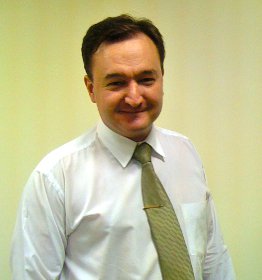
Sergei Magnitsky


Sergei Magnitsky was a lawyer who investigated the agencies of the Russian government that looted the British firm Hermitage Capital Management.  On June 4, 2007, police from the Ministry of the Interior raided the offices, taking all the records and the corporate seal.  They then turned over all the assets to various criminal gangs.  Hermitage hired Sergei Magnitsky from the law firm of Firestone Duncan to investigate.  Magnitsky was arrested and held in prison without charges until he died in 2009, after 359 days, one day short of the legal maximum that you can be held without being charged in Russia.  Now, although dead, Magnitsky is being tried for embezzlement.
Sergei Magnitsky
8 April 1972 - 16 November 2009
 

The Magnitsky Affair is why Russia canceled adoptions by Americans.  The Magnitsky Affair is why Russia condemned large lots of US beef as “unfit for sale.”  The Magnitsky Affair is the reason for the U.S. Senate bill called the “Sergei Magnitsky Rule of Law Bill” which was eventually made an amendment to H.R. 6156 normalizing trade with Russia, which President Obama signed into law on December 14, 2012. 

Unlike the Cold War, the present hostility between Russia and the United States is not in the minds of most Americans.  It should be. We knew then that Communism was inhumane. Islamic terrorism has our attention now, but in the past ten years, Russia has changed very little. The fall of the Berlin Wall and the collapse of Communism hardly affected the deeper culture of Russia that made Communism possible there in the first place.  Karl Marx expected the workers in Germany, the United Kingdom, or France (and perhaps America) to rise up first.  But Marx misunderstood history and it was in Russia which hardly knew any democratic institutions or dynamic pluralism that made Communism possible.  Today, the President of Russia is Vladimir Putin.  Born in 1952, he joined the KGB in 1975 at the age of 23 and rose to lieutenant colonel.  In 1991, after the collapse of Communism, he entered politics. In eight years he rose to Prime Minister of Russia (1999-2000 and President (2000-2008).  He held these posts again by manipulating the constitution to rule without interruption today.


The doctor who refused to treat him in prison was found not guilty of killing him. (The Independent UK here.)

Russia puts dead lawyer Sergei Magnitsky on trial. (Perth Now here.)


Friday, January 11, 2013

Four Books About Bad Science

When Science Goes Wrong: Twelve Tales from the Dark Side of Discovery by Simon LeVay (Plume Penguin, 2008).  LeVay lays out his facts in careful narratives.  In many cases, he interviewed the key actors, albeit some years after the events.  He marshals the pros and cons before stating his final conclusion.  The cases come from a several sciences, including volcanology, criminology, meteorology, microbiology, genetics, and nuclear physics. 

In 1993, geologists attended a conference in Columbia where the Galeras volcano had become active. They visited the calderon, climbing down into the crater. When it erupted, most of them were killed.  Among the survivors was the only scientist actually wearing the protective gear mandated by the National Science Foundation.  Some of the victims were in jeans and sneakers. 

The case from criminal forensics about Josiah Sutton of Houston, Texas, took DNA evidence past the confines of even the Innocence Project.  In this case, the so-called gold standard of physical criminalistics proved to be fool’s gold.  The police lab had committed a series of mistakes, some perhaps accidental and careless, others apparently purposefully fraudulent.  The victim wrongly identified two men as her attackers.  When the DNA samples matched neither man, the prosecutor insisted on their guilt, and posited the existence of a third unidentified attacker.  This is a common ploy with prosecutors who refuse to admit their mistake. 

Embargoed Science by Vincent Kierman (University of Illinois Press, 2006).  Major academic journals such as Nature, Science, the New England Journal of Medicine, and a hundred or so others, have a policy of announcing important publications by sending press releases to major mainstream media on the condition that the reporters not publish until the journal does.  The result is loud bursts of astounding science stories breaking on our awareness ... which then fade … until the next time.  The true costs include the loss of reflection and review, as contradictory findings roll out over the years without in-depth comparison and contrast.  Another cost is the loss of independence both of the news media which will not pursue a story beyond the press release; and also among the scientists who are constrained to divulge only what they publish in peer-reviewed journals. 

Yes, We Have No Neutrons: An Eye-Opening Tour Through the Twists and Turns of Bad Science by A. K. Dewdney (John Wiley & Sons, 1997).  Dewdney took over from Martin Gardner in Scientific American, and this book is a modernization of Gardner’s Fads and Fallacies in the Name of Science.  The stories here about N-rays, intelligence quotients, Freudian psychotherapy, cold fusion, Biosphere 2, and SETI (the Search for Extraterrestrial Intelligence) are exemplar warnings to avoid the known dangers of confirmation bias, arrogance, and ambition. 

Dewdney offers the model of the sorcerer and the apprentice for his narrative analogy.  It is the familiar story from Goethe as delivered by Disney.  We all make mistakes, even sorcerers.  It is when the apprentice presumes beyond his true abilities that disasters unfold.  In these stories, disasters come from scientists who should be sorcerers acting like mere apprentices, forgetful of the full canon of the scientific method, from the creation of testable hypotheses to publication and peer review. 
Yes, We Have No Neutrons does not address fraudulent science, but mistaken science. The appropriate persona, therefore is not the con artist, but the bumbler: the apprentice if you will.” (Page 2) “What is bad science? To begin with, whatever it means, bad science must be distinguished from fraudulent science.  Apprentices, by definition, honestly believe that they are sorcerers. Fraudulent scientists (and would-be scientists) know that they are cheating when they fudge experiments, steal ideas, or make false claims. They are more like evil magicians than apprentices. …  Bad science happens when someone strays in a fatal way from the scientific method.” (Page 17).
Dewdney takes the reader through three doors to explore the castle of science.  First, he differentiates technology from science.  “Technology consists of objects that have specific purpose. Science consists of methods and results.”  This is important because in the mass media the equipment of science – antennae, computers, reactors, satellites, etc. – stand for science.  Dewdney points out, however, that these are not essentially different from other examples of our material culture such as bicycles, dental floss, lawn mowers, refrigerators, and telephones. 

Indeed, I add here that in the book Biopunk: DIY Scientists Hack the Software of Life by Marcus Wohlsen (reviewed on Necessary Facts here), the author points out for 100 years, scientists from Pasteur to Salk worked without apparatus that we have in our kitchens. The same applies to our garage and basement workshops.  The point is that the mass media presentations of the gizmos and gadgets confuse technology with science, which Dewdney carefully delineates.  Science is a method.

However, Dewdney falls into the analytic-synthetic dichotomy. His second door delineates deductive from inductive science.  He does not unify the two, though, indeed, they must both identify the same reality.  Behind the third door is the getting and testing of ideas.  Scientists observe, ask questions, formulate hypothesis and perform experiments.  The goal of the experiment is to challenge and pass the theory.  This is where most of the fallen sorcerers reveal themselves to be mere apprentices.  Sigmund Freud built his wonderful theories from six case studies and no statistical samples or blind tests. 

Junk Science: How Politicians, Corporations, and Other Hucksters Betray Us by Dan Agin, Ph.D., (Thomas Dunne St. Martin’s Press, 2006) repeats many of the known stories of Piltdown Man, eugenics, phrenology, and Lysenko.  As a working biologist, he also offers cases that are less well known to the general public, such as Emil Abderhalden’s “defense enzymes.”  Agin also writes about the recent cases (1997-2004) of Marion Brach, Friedhelm Herrmann, and Roland Mertelsmann who conspired to publish at least 37 and perhaps 100 papers for which the experiments and data were entirely fabricated.

“There are two prevalent myths concerning scientific fraud.
The first myth states that most scientific experiments are replicated by other laboratories, that science is self-correcting because the discovery of fraud involving the fabrication of data is inevitable.
 The second myth is that scientific papers involving fabrication of data are extremely rare, with only a few fraudulent papers published in any one year." (Page 39)
In fact, given the huge body of published papers, even a small percentage of fraudulent cases – perhaps only 0.04% according to the arithmetic of published cases from the Office of Research Integrity of the U.S. Department of Health and Human Services – means that from the 5,600 significant scientific journals come 400 fraudulent papers each year.  However, by the metrics of criminologist Liqun Cao, (see previous posts on this blog) the number might be closer to 200,000 given that the intentional harms might be small: rounding up or rounding down, dropping inconvenient data, etc.  The median guess might be the most accurate. “In one survey published by American Scientist in 1993, between 6 and 9 percent of scientist respondents said that they were personally aware of results that had been plagiarized or fabricated within their facilities.” (Page 40)

The downside is that Dr. Agin has his own political views which color his diagnosis and remedies.  Corporations can be evil in selling us what we demand – such as junk foods and the fad diets to counter their effects, to say nothing of cigarettes – but the government is only unresponsive when politicians give in to the “wrong” pressure groups, such as Christians who were opposed to embryonic stem cell research.  Agin accepts all of the claims of anthropogenic global warming. He agrees with its fundamental reality. He falls in with the inevitable consequence that governments must do something immediately, no matter how severe. 

Dan Agin’s politics aside, the book is nonetheless an outstanding expose of many instances of bad science, much of it going on right now.

Friday, January 4, 2013

Criminality and Scientific Research:Why Scientists Go Wrong; and Why the Wrong People Become Scientists

“Crime knows no neighborhood” is an axiom of criminology. In other words, every population contains members who stray from folkways, violate norms, harm others, break laws, ignore contracts, and betray trusts.  Occupation, avocation, ethnicity, nationality, language group, religion, philosophy, ideology, age, sex, gender, height, weight, body mass, and shoe size are all irrelevant. 

So, of course, some scientists are criminals.  They falsify data; and they embezzle research funds. They also harass coworkers and subordinates, discriminate on the basis of race, age, religion, and gender. And they cheat on their spouses, beat their dogs, and kick their cats.  But not every scientist who falsifies data abuses their aged parents. In fact, very few do.  The arithmetic of intersecting sets limits the count.  If 20% of scientists publish phony findings and if 20% of researchers carry non-existent students on their payrolls, then only 4% of research scientists do both.

At the same time, criminality is a way of life.  The criminal researcher does not round up the value of a single point on one graph to make the curve smoother.  And the vagary is not the first lapse after 35 years of devotion to truth.  If a complete and nearly omniscient investigation could be conducted, it would most likely show falsified lab reports in ninth grade biology. 

Of course, “most likely” is not “certainly.” When the case of Jan Hendrick Schön was finally resolved, the University of Konstanz revoked his doctorate, even though his dissertation was above reproach. 

Revocation of degree is perhaps the most serious punishment any scientist can face. 
See “Another Case of Fraud in University Research” here.  Even though Dr. Eric Poehlman was sentenced to a year and a day in prison. he kept his degrees.

It seems that in the instance of Jan Hendrick Schön the pressure for results was his motive for crime.  The pressure for results has been cited as a cause of research fraud.  However, it is also true that truck drivers also labor under a call for results and that does not justify crime for them.  Basically, everyone whether in a market economy or a centralized state is called upon to produce.  At the end of a sabbatical, a professor is expected to show more than a sun tan.

Given all of the above, the research enterprise that does not engage independent investigation jeopardizes its funding and its social status.  Which loss would be the worse is hard to say.

Whether all crimes are evenly distributed across all neighborhoods is another question.  It remains an easy assumption that life sciences are more susceptible to deviance than physical sciences.  Tons of public money are thrown at both; but as living entities are more complicated than subatomic particles, experimental results may be harder to quantify rigorously.  Confirmation bias may be a greater danger when we want to believe that we are helping other people live longer and better.  Another explanation is that the US Department of Health and Human Services actually has  an active Office of Research Integrity, while the U.S. Department of Energy has none. 

On 6 April [2011], a federal district judge in Boston, Massachusetts, dismissed a lawsuit that I had filed in 2009 under the US Freedom of Information Act. He concluded that the US government does not have to release a report on an investigation into a case of alleged scientific misconduct at a national laboratory. The ruling was disappointing but liberating: I finally had occasion to write about a case that has shown how the US Department of Energy (DOE) takes a strikingly hands-off approach to the oversight of such investigations.
"Misconduct oversight at the DOE: Investigation closed" by Eugenie Samuel Reich
Nature 475, 20-22 (2011)
Published online 6 July 2011 here
University oversight committees focus on human factors. We seek to protect individuals from unintended harm during experiments and surveys in psychology and sociology. But you cannot hurt a chemical or a star.  Short of serendipity, we only find what we seek. 

Previously on Necessary Facts

Monday, December 31, 2012

20% of Scientists are Crooks

At university in both "Introduction to Criminology" and the "Senior Seminar in Criminolgy", our professor, Liqun Cao,  liked to cite an easy claim of “twenty percent.”  For instance: 20% of goods on the market have no clear title.  The exact numbers did not matter and neither did the specific study or survey.  The teaching point was that criminality is not unusual.  Heinous crimes are rare.  Daily harms are all too frequent – and we all engage in one or another of them whether speeding or padding expense accounts.  So, too, in science is it important to realize that fraud and misconduct in research are not rare.
  
Book cover FALSE PROPHETS by Alexander KohnFalse Prophets: Fraud and Error in Science and Medicine by Alexander Kohn (Oxford: Basil Blackwell: 1986), is a classic work that remains important. It sets a baseline for understanding fraud and misconduct in research.  Kohn repeats famous cases such as Margaret Mead, Robert Millikan, and Trofim D. Lysenko.  He also tells of N-rays, the Allison Effect, the Davis and Barnes Effect,, and polywater. From there, Kohn focuses on his special interest, clinical research.  The book closes with chapters on broad and deep issues in ethics and science. Kohn offers no solutions.  He does say that whistleblowers should not be fired. He also quotes a university ethicist who cautions scientists not to engage in any research activity that they would not commit as laity.  That is largely unsatisfactory, especially as this philosopher (Prof. Michael Riese, then of the University of Guelph) calls ethics “a shared illusion of the human race.” I believe that a more objective standard is required.

Marshall Thomsen of Eastern Michigan University has been teaching “Ethical Issues in Physics” for over twenty years.  A search of “ethics physics” and similar items will return citations to Dr. Thomsen’s work at websites from the Illinois Institute of Technology, the University of Illinois, the University of Massachusetts, and Physics Today, among many more. When I had the class, he was on sabbatical and our professor was Patrick Koehn.  The class also has been taught by Prof. Mary Elizabeth Kubitskey. Dr. Kubitskey’s master’s thesis was Teaching Ethics in a High School Physics Class.

The Office of Research Integrity of the US Department of Health and Human Services investigates and acts on cases of fraud in research when federal grant money is involved.  You can find Case Summaries, ethics tutorials, an interactive video “The Lab”, and much more here.

What remedies are available when private money rather than public funds are at stake?  I believe that revocation of the university degree can be appropriate.  See my paper here.

Thursday, December 27, 2012

From Texas to the Moon with John Leonard Riddell

John Leonard Riddell was the first working scientist to publish a science fiction story, Orrin Lindsay’s Plan of Aerial Navigation, with a Narrative of His Explorations in the Higher Regions of the Atmosphere, and His Wonderful Voyage Round the Moon! (Rea's Power Press, New Orleans, 1847). The story was based on a presentation to the People's Lyceum of that city on April 30.

Riddell catalogued plants. He served as chief melter and refiner at the New Orleans Mint from 1838 to 1849. He was a medical doctor, completing two different degrees, one of which he renounced. He advocated for the germ theory of disease at time when the miasma theory was more widely accepted.

While teaching at the Louisiana Medical College (now Tulane University), Riddell invented the binocular microscope. He carried out two geographical and botanical surveys of Texas.
Portrait of John Leonard Riddell from the Herbarium of Tulane University
Tulane Herbarium Portrait
of John Leonard Riddell

Born in Leyden, Massachusetts, February 20, 1807, he was the oldest of ten, After completing a bachelor of arts degree in 1829 at Rensselaer School (now Rensselaer Polytechnic Institute), Riddell taught in his own grammar school. But it was not for him. Moving to Ohio, he completed his first medical doctorate at the Ohio Reformed Medical College in Worthington (March 31, 1834). He then earned a second at the Medical College of Ohio in Cincinnati, March 5, 1836, and discarded the first, calling the curriculum useless. 

Riddell was an herbalist. He collected rare plants for many reasons but always in search of those that heal and prevent sickness. Perhaps the best validation of his scientific acumen is that fact that he sold his collections by subscription: people paid him to find flowers.  In fact, his work in Ohio in the 1830s is still considered significant today. Ohio was a state by 1803. The frontier was fast retreating. Riddell sought, gathered, and identified plants that were disappearing as civilization erased untamed wilderness. In addition to pressing plants, Riddell created accurate portraits of them. Riddell’s status as a scientist is known to botanists. Several species are named for him. His work is still the basis for new examinations in our time.
Riddell's microscope. Another device made later 
for someone else is incorrectly cited in
two biographies.
Riddell then moved to New Orleans.  An active Democrat, he won an appointment as chief melter of the New Orleans Mint. He published A Monograph on the Silver Dollar, Good or Bad (E. Shepard, 1845; and Soxiedad Numismatica de Mexico, 1969.)  The reprint is based on the fact that in 1845,the “silver dollar” was the Mexican peso; US federal dollars were rare patterns and low mintages. Mexican silver circulated as legal tender in the USA until 1857. While at the Mint, he improved on the machineries; his rotary ingot machine was in use as late as 1904.

 In 1839, Riddell came to Texas.  He published Observations on the Geology of the Trinity Country, Texas in the American Journal of Science and Arts, November 1839.  Riddell’s diary was republished as A Long Ride in Texas: The Explorations of John Leonard Riddell by Jo Breeden, editor, (Texas A&M University Press, College Station, Texas: 1994).

John Leonard Riddell was acknowledged as brilliant – even without peer – among his contemporaries, for instance by Edward H. Barton, then also of the University of Louisiana, who debated against him on the germ theory of disease. Though given to no end of professional quarrels – even convicted of assault while at the Mint – Riddell was a favorite with his chemistry students. Riddell was uncompromising, flamboyant, even violent. His debates in the pages of newspapers wore out at least one editor. 

Riddell rejected the “miasma” theory of disease, the claim that unhealthy vapors cause sickness; and believed firmly that diseases are caused by “animiculae” or “germs.”  (Although microscopic “animiculae” were known from 1670, they were thought to be a consequence of the illness. Most people, including doctors, believed that sickness is caused by a miasma, hence "malaria" or "bad air.") In arguing for this theory, he engaged every tool and trick known to rhetoric and debate.

Cover of booklet titled "On the Nature of Miasma and Contagion" by John Leonard Riddell, Cincinnati, 1836 explaining that diseases are caused by germs, not by vapors.
On the Nature of Miasm and Contagion
by John Leonard Riddell, 1836
On the evening of April 30, 1847, Riddell delivered to the People’s Lyceum of New Orleans, a story of aerial navigation.  On May 8, from the Branch Mint, Riddell answered a note sent by nine of those present asking him to publish the adventure.  He agreed to bring out Orrin Lindsay’s Plan of Aerial Navigation with a Narrative of his Explorations in the Higher Regions of the Atmosphere and his Wonderful Voyage Round the Moon! (New Orleans: Rea’s Power Press Office, 55 Magazine Street; 1847).  I found this lost work archived in the microforms at the University of Texas LibraryThe full text runs 33 pages. Being Riddell presenting Lindsay’s story, it begins with several pages of background, including his own disclaimers and endorsements. 

Orrin Lindsay was a student of natural science whom Riddell knew in Cincinnati where Riddell taught chemistry.  Lindsay invented a means of screening out gravity.  Like a space opera of the 1950s, Riddell goes into detail on the theory, though remaining vague on the material of the screen.  Even Newton did not theorize about what gravity “is” and Riddell’s questions suggest the thinking of modern physicists.  Gravity cannot be itself a material substance. (We would say that no graviton particle exists.) Gravity cannot be “pure motion.”  It cannot be “quiet and inherent in matter” because any body would use up or give up all of its inherent gravity.  In short, Orrin Lindsay’s better understanding of gravity’s true nature allowed his invention.

Lindsay created a screen from “well prepared steel, after being superficially amalgamated with quicksilver, and then strongly magnetized.”  Lindsay carefully experimented with models to determine that he could build a spherical “balloon,” outfit it with suitable supplies, and journey to the Moon.  The wonderful material prevented gravitational attraction.  Where the material was not, attraction occurred.  Thus, by opening a view port in the direction of the Moon, Lindsay traveled there – but not before carefully testing the device in a trial ascent.

The story is remarkable for its scientific accuracy.  Not only is it footnoted with laborious algebra to prove its points, but Riddell possessed the ability to imagine the physical consequences of space travel. “An indescribable sensation seized me.  I could not tell up from down.  I had lost all bodily weight. … The slightest springing effort, sent me slowly from one side of the balloon to the opposite.”  He accurately described a candle flame in zero-g: “The flame of the taper became globular and less luminous; -- the heated air from it, seemingly not knowing which way to rise, diffused itself slowly in every direction.”
Interior of Lindsay's space "balloon"
by Brad W. Foster for this presentation

Instruments based on air pressure showed his altitude as he rose.  He grew uncomfortably colder, the same experience well known to private pilots in small craft in our time.  Also known by experience in our time is this description of the sky: “The higher I ascended, the deeper became the blue of the sky until at my greatest altitude, it became almost black… My breathing became quick and laborious from the rarified condition of the air. … I resolved to commence my descent. For this purpose, I increased the lower opening, and looking down, far below me, I beheld a mass of fleecy, sun-light clouds, of pure white appearance, like giant locks of the finest cotton.” 

Before the second ascent, the balloon was made air-tight with sheets of lead and rubber.  Better prepared with insulation, tanks of compressed oxygen, and chemicals for cleaning the air, Lindsay and his companion – Abner Jossilin of Cincinnati, a maker of “philosophical instruments” – took off for the Moon.  (The recycling of air and water was another prescient feature of this story and the calculations are provided for the reader.)  They saw meteors in the upper atmosphere, to corroborate the theory that these are indeed bits of interplanetary stone attracted to the Earth and glowing by friction with the atmosphere.

At 100 miles above the Moon, their orbit took “one hour, 54 minutes and 17 seconds. … We were everywhere presented with the evidences of former volcanic action.”  On the dark side of the Moon, they saw an active volcano.  “Respecting the appearance of the earth before starting from the moon, it is proper to relate that she looked like a new moon but fifteen times larger.” As they traveled back to Earth, the view changed. “She looked like an enormous moon, almost in her first quarter. …A delicate blue ring mottled with flakes of white… The prevailing green of fertile islands and continents, the pale sands of arid deserts, the naked rocks of mountain ranges, the glistening ramifications of rivers, and the polished convexity of the oceans all were clearly to be discriminated. … Brilliant beyond description were the icy regions about the South Pole, illuminated as they were by the sun.”

The balloon entered the atmosphere and the description could have come from The Right Stuff.  “We felt a slight shock, and perceived a flash of light as we passed through the aerial billow; the friction of the balloon upon the air being sufficient to produce that effect.  In a few moments our meteoric light ceased … and again the light reappeared accompanied by another slight shock… These singular phenomena, I presume were produced by the balloon’s rebounding from the aerial billows, just a cannon ball will ricochet along the surface of the water.”

After circumnavigating the Earth they land back at the launch site and the story ends.

Like other scientists from Thomas Huxley to Isaac Asimov and Rudy Rucker, Riddell wrote science fiction.  Unlike anyone else, however, he was the first.
His uncompromising forensics finally felled him. President Buchanen appointed him post master before secession (August 1860); and he exercised his duties even during the war. With the Union army in the city, Riddell arranged for his election as governor of the state, a sham that did stand up.  At a caucus on October 2, 1865, he berated his Democratic Party compatriots on the folly of secession. Hounded from the hall, he retreated to his library to write his rebuttal, but he suffered a heart attack and died on October 7.

In all, using JSTOR, Google Scholar, Gale Cengage, and other databases, I compiled over seventy separate references and citations to Riddell and his scientific work, primarily in botany.  These four substantiate the modern acceptance of his contributions.
·        Walp, Russell Lee, "Riddell's Notice of Vegetable Productions Growing Spontaneously in Washington County, Ohio," The Ohio Journal of Science 51(6): 320, November, 1951.
·        Dorr, Laurence J., "The Identity of Riddelia Raf. and Remarks on Corchorus L. (Tiliaceae), " Taxon, Vol. 41, No. 1 (Feb., 1992), pp. 80-83.
·        Wilbur, Robert L. and Margaret K. Whitson, "The Identity of Riddell's Seven Validly Published but Over-looked Pteridophytic Binomials" American Fern Journal, Oct 2005 95(4), pp. 160-170.
·        Wilbur, Robert L. and Maggie K. Whitson. “Taxonomic Assessment of the North American Taxa Published by John L. Riddell in 1853,” Rhodora, 109:938, (2007) pp. 161-186.

See also: Bleiler, Everett F., “John Leonard Riddell, Pioneer,” Science Fiction Studies, #108, Vol. 36, No. 2 (July 2009), pp. 284-299.