Showing posts with label warrior's way. Show all posts

Wednesday, January 13, 2021

Music Makes You Braver

That is a tag line for the music of Two Steps from Hell founded by Thomas Bergersen and Nick Phoenix. When I was working as a clerk-typist (information specialist) for the Texas Military Department editing, distributing, and sometimes writing plans, procedures, and policies, I searched out music on YouTube to put in my headphones in order to keep out noise while I tried to concentrate. I found their album Battlecry. I signed up for the channel and bought access and then a download for that, Skyworld, Invincible, and Unleashed.

Katica Illényi delivered a full-bodied performance of Vittorio Monti’s “Csárdás.” (I find it acceptable that the best Hungarian dance would be written by an Italian.) It is just the first half of this YouTube video:  https://www.youtube.com/watch?v=BF9uQI-SRv4
She also has a violin performance of Liszt’s Hungarian Rhapsody No. 2 a work usually scored for the piano. (At least, that was Liszt’s intent.)  https://www.youtube.com/watch?v=yMU4SO7rp5w


Speaking of things Hungarian (such as my maternal grandparents), serving in uniform, I identified with this guy, whatever his mission was that day. 

“Ide Születtem” by Hungarica

https://www.youtube.com/watch?v=IC53QRC-jjw


My brother’s band, Styrenes, recorded “Minstrel Boy” as a mock, but I liked the energy (and Paul’s brogue). 

https://www.youtube.com/watch?v=0IgRq4AZXcg

I think that the Hans Zimmer version is the best modern instantiation. Written for Blackhawk Down, it goes well with a similar yarn, Battlestar Galactica. We were fans of the first three seasons, though Ron Moore’s post-modernist sense of life took the plot and theme  into entropy. Minstrel Boy/Battlestar Galactica

https://www.youtube.com/watch?v=KdVN1P16L8o


The performance of “Men of Harlech” from Zulu is iconic. “Very good, mind ye, but they have no top tenors.” Of all the versions I listened to, Charlotte Church’s performance takes the prize.  https://www.youtube.com/watch?v=hZmrS_w6s7s


One May Day, I went looking for The Internationale and following links, I ended up at “Minka.” It was a song that we learned (in English) in grade school. Our neighborhood was very ethnic. When the teacher passed out the sheet music, one girl said, “Our dog’s name is Minka!” and another girl rejoined, somewhat saddened, “My mom’s name is Minka.” 


Minka with Ukrainian lyrics and English liner notes.

https://www.youtube.com/watch?v=bYrGI0FncYc

A more modern theatrical rendition here:

https://www.youtube.com/watch?v=u3EwoLkwq_o


Arturo Toscanini conducts The Internationale

https://www.youtube.com/watch?v=2OPvWFDzDlA

Billy Bragg version

https://www.youtube.com/watch?v=yAw0Ri4FSdM

Oddly enough, in We the Living, Ayn Rand describes the song in positive words. What she hated about communism was communism. For her the October Revolution was a betrayal. She was all for modernism, globalism, and an end to nationalism and racism.


Also misunderstood, I believe, is our own national anthem, The Star Spangled Banner. We sing it as a dirge. It drags the hearse down the street and the carriage is a travois. It should sound like this: 

1814 Version

https://www.youtube.com/watch?v=lvVtFD9Na0I

It was set to a drinking song for a reason. We celebrate a victory. Drink to it!

“The Anacreontic Song” Soloist: Jacob Wright Conducted by Jerry Blackstone from the University of Michigan’s American Music Institute.  “The myrtle of Venus with Bacchus’s vine!” here: https://www.youtube.com/watch?v=3l-n64NWHS4


When I was very young my heroes were cowboys, of course, and they were men on their own, not members of large groups. I liked Gene Autry. (“Whoopee-tie-aye-ay! I go my own way ... Where you sleep out every night and the only law is right.”) “Back in the Saddle Again.”

https://www.youtube.com/watch?v=Bt18gd6OSHk


“The Ballad of Paladin” here: 

http://www.youtube.com/watch?v=tgvxu8QY01s


Being on your own is fine until it is not. Of the very many versions of “The Yellow Rose of Texas” I sent this one to Laurel. 

https://www.youtube.com/watch?v=izz0_qEl_-E


Previously on Necessary Facts 

Postmodernism 

After Action Report: Heartbreak Ridge 

Financing a Revolution 

Rebels: A Well-Regulated Militia 
 

Monday, June 29, 2020

This Knife Might Not Work Once

This Northwest Trail knife is built wrong. Clipped into your pocket, when you take it out, you have to flip it around before you can open it. You get what you pay for.

My neighborhood Walmart is my pharmacy and I enjoy walking the store while waiting for my presscription. The abundance of stuff speaks to our deep, broad, and wide prosperty, a direct consequence of the market economy. Free markets = free minds. Usually, as much as I like looking, I seldom buy. However, over the years, working in physical security and serving in the Texas Military Department, I have bought extra gear. I learned that lesson from a classmate in criminology. She looked into the trunk of my car and said, "You only have stuff for yourself. I always carry extra." 

And you can always use an extra knife. I never leave home without at least one knife and at least one way to make a fire. That was a lesson from a team-building exercise when I worked for Coin World. We had a series of monthly Monday morning meetings to get to know each other in order to improve our quality of worklife. There were about 40 of us from Coin World, Linn's, Scott's, the press operators, and pre-press at about six or eight tables. The last exercise was a survival scenario.

You are coming home from a vacation in South America with the team mates at your table. Your plane hits a storm and you go down. You crash land. The pilot is killed. The plane is unflyable. The radio does not work. You are all mostly all right. You have to come out together. This is an inventory of what you all packed on your vacation. Golf clubs... a bottle of rum... a .38-cal handgun with six bullets... a Christmas candle... and a bunch of other stuff I don't remember. Not everyone got out. One team gave up right away and decided to settle in place for the rest of their lives. The one press operator on our team said that she was going out on her own. I said that in real life I would join her and leave them behind, but we all have to come out togther, that's the rules. I told my team mates to leave the gun and the rum or not everyone is going to make it. They ignored that. One guy said to bring the gun so that we could fire it into the air to attract natives who would help us. I thought that was a bad idea on several levels. He asked why I wanted the Christmas candle. I replied, "To help make a fire." He said that we are in a jungle and can build a fire anytime. He said to bring the golf clubs. "Whatever for?" I asked. "To make a stretcher and carry someone who is wounded or to kill small game." The others saw the wisdom in both of those plans. You see, this guy was obviously the de facto leader, well known and well liked. It went on for about 45 minutes. Then they gave us the answer from the back of the book.

According to the Army Rangers, you stay with the plane for 72 hours. Someone knows you are missing. They will come looking for you. The plane is unflyable. If you hear help coming you can set it on fire as a signal. In any case, after 72 hours, set it on fire anyway and head out. Find a stream and follow it downhill. Somewhere near the water's edge, probably at the mouth of the river, you will find a village. Whatever you took, you always need a knife and a way to make fire.

Since that day in AD 2000, I never leave home without at least one knife and at least one way to make a fire. 

How many knives do you need? How many can you carry? As the public affairs officer for the Maritime Regiment of the Texas State Guard, I went out with our dive team several times. One time on shore, one of the divers was fussing with some line and needed to cut his knife free. He reached around left and right and went for the leg he was sitting on and then tried to lean over his tanks to grab his pack. I handed him one of mine. His unit leader saw that. "Don't you always have three knives?" he barked. "Well, yeah, but this one is tied up and ... " His leader shook his head and walked away. 

I do not know what I will do with the Northwest Trails knife. I won't toss it out, but I cannot have it for an everyday carry. My Victorinox is my EDC. When I retired from the TXSG, I stopped carrying the Benchmade that I always clipped to the right pocket of my ACUs. The Benchmade works the way a knife is supposed to. I still need a replacement for civilian life. (See, also Gibbs's Rule #9 from NCIS.) You can always use an extra knife; and in the worst case, it only has to work once.

When I was learning to fly, I was coming in a bit low, and the instructor pushed the yoke forward for a little more airspeed and lift. When we were done, he asked, "What you have done if you had come down in the bean field at the end of the runway?" I replied, "Stay with the plane 72 hours, then set it on fire and walk in to the terminal." 

PREVIOUSLY ON NECESSARY FACTS

Friday, November 29, 2019

Donating to the USO

The USO is the only military service charity that I donate to. Soon after I joined the Texas State Guard, I began getting solicitations from military and veteran charities. I ignored them all, as they are typically shot through with fraud, corruption, and self-serving executives and marketing staffs. When I was assigned to work as an operations analyst in the Texas Military Department, I asked my National Guard buddies about charities. They all endorsed the USO. 

The United Service Organizations, Inc. (USO) dates from 1941. It was founded as a civilian effort in preparation for America's entry into the world war of that time. Its history is famous. 

In our time, among its many services to those who serve, the USO maintains safe spaces in civilian airports where military personnel in transit can billet while they wait for connections. Sometimes, that can take days. Orders change. Orders lag. You wait. You text; you email; and you wait. And the USO is there for you and your buddies  in a lot of places around the world. 

I just sent $50 to Wikipedia for the first time in seven years. And as a professional writer, I depend on Wikipedia. I am much more generous far more frequently in answer to the solicitations from the USO. I do not respond to all of their requests. Some needs seem less immediate than others. Ask your own serving Soldiers, Sailors, Airmen, and Marines what they think.

PREVIOUSLY ON NECESSARY FACTS

Do You Know Your Military?
A Critic Meets the Military
President Trump and the Military
Thoughts on "Soldier's Heart"

Saturday, September 15, 2018

The Market is Always Right – About the Market

“Employee Salaries versus Contributions to Society” was a recent poll of 1013 people conducted by CreditLoan dot Com. The survey was not rigorous, but it was not all that bad. At least they had a large number of respondents in their convenience sample. The flaws in the poll reflect common errors in philosophy within our broader culture. 

“Hardly a week goes by where we don't hear about a CEO, professional athlete, or celebrity who's scored a multimillion-dollar salary or bonus. Maybe their talent or skill set is worthy of a hefty paycheck, but considering the small amounts paid to teachers, soldiers, and first responders, it makes us wonder if we are underpaying those who perform outside the spotlight.”  

The survey is long and involved. It ranked eleven occupations:  teachers, scientists, social workers, police officers, military, legislators/elected officials, journalists/reporters, transportation security screeners, artists, clergy, and chief executives. It considered Republicans versus Democrats, Baby Boomers vs. Gen X vs. Millennials. So, it is worth looking at for its detail, again, given some warning about its not being perfectly aligned to the standards of sociology research. They do close with an open explanation of their methodology. For one thing, they grouped occupations so that actors, designers, singers, photographers, writers, and dancers are among the “artists” as are sports figures. Nine kinds of “scientist” are listed, as are four types of “military.” Note that security screeners are considered apart from police and military.


The More You Do for Other People the More You Earn


Generally, as the aggregate data shows, the more you do for other people (in their own aggregate estimate), the more you make. That’s how markets work. So, it is erroneous to say that “most people think that teachers are underpaid.”

More to the point, teachers knew the markets before they went to college. They chose teaching anyway.  The same is true of the military. They are not in it for the money—though the money is there if you stop to think about it. 

Occupation
Actual
“Should”
Military
$40,217
$92,033
Farmers/Ranchers
21,076
70,101
Scientists
70,510
109,956
EMT Paramedic
39,675
71,765
Teachers
38,181
70,248

That is one of the problems with this survey. Military people get great healthcare for some ailments such as bullets and burns. Psychological problems have been less well attended. But they get food, clothing, and shelter. On the downside, female Navy officers pay much more than their male colleagues for uniforms. Home mortgages are cheaper; and they can get Basic Allowance for Housing, and Bachelor Officer Quarters subsidy. And housing is determined by cost of living at your home of record. I met a “special forces” kind of guy who was always on the road and whose HOR was Anchorage, Alaska. (Good thinking, Sarge!) After twenty years of military service you can retire and start another career. If you move to another federal agency, you take a lot with you. Even if you go into the private sector, you can cash in on college degrees and other untallied benefits – assuming you live through your employment, a very real untallied cost for many protective services. 
  
And if we could magically triple the pay of teachers or soldiers, what would be the consequences of that? Conversely, if we capped the pay of executives at 60% of this moment’s “average,” would corporations change for the better?

And it is those “averages” that beg so many questions. Granted that “artists” do not make much money on average, Tom Cruise earned $12.5 million for his role in A Few Good Men, which cost $33 million to make. As Deke Slayton said, “Averages only apply to average pilots.” 

Previously on Necessary Facts

Saturday, May 26, 2018

Captain America

Directed by Joe Johnston
I watched Captain America: The First Avenger expecting no more (and hopefully no less) than the other superhero movies. But I liked the character because we share the same virtues. I bought the movie on DVD. I also shopped the comic book stores and subscribed to a current series. I now have a shelf of Captain America stories; and I went through half a dozen graphic novels from the library. But I did not find the origin story that I was looking for. The origins are all the same, yet all different. From being a non-descript and anonymous teenager, he became an artist. He was reborn many times, at least once as the Red Skull. He grew old and was rejuvenated. He was replaced by Sam Wilson, Bucky Barnes, and then by his own son (by the Black Widow), James Rogers. None was the story told in the screenplay by Christopher Marcus and Stephen McFeely. 

Myths are not merely repetitions of traditional stories. The retelling changes as we change. The definition of fiction (from Aristotle) is that drama shows what could be. Moreover, the telling must be integrated, whereas historical events just happen, seemingly without reason (and therefore without rhyme). I believe that now, 2500 years later, we do demand and get integrated narratives from historians. That being as it may, the fact remains that enduring popular fiction changes to meet the needs of the audiences. According to Joseph Campbell that has always been true. In the retelling of myths, characters can be split off or merged. Some retellings transmogrify characters into their opposites. But always, the poet speaks to the audience of the moment.
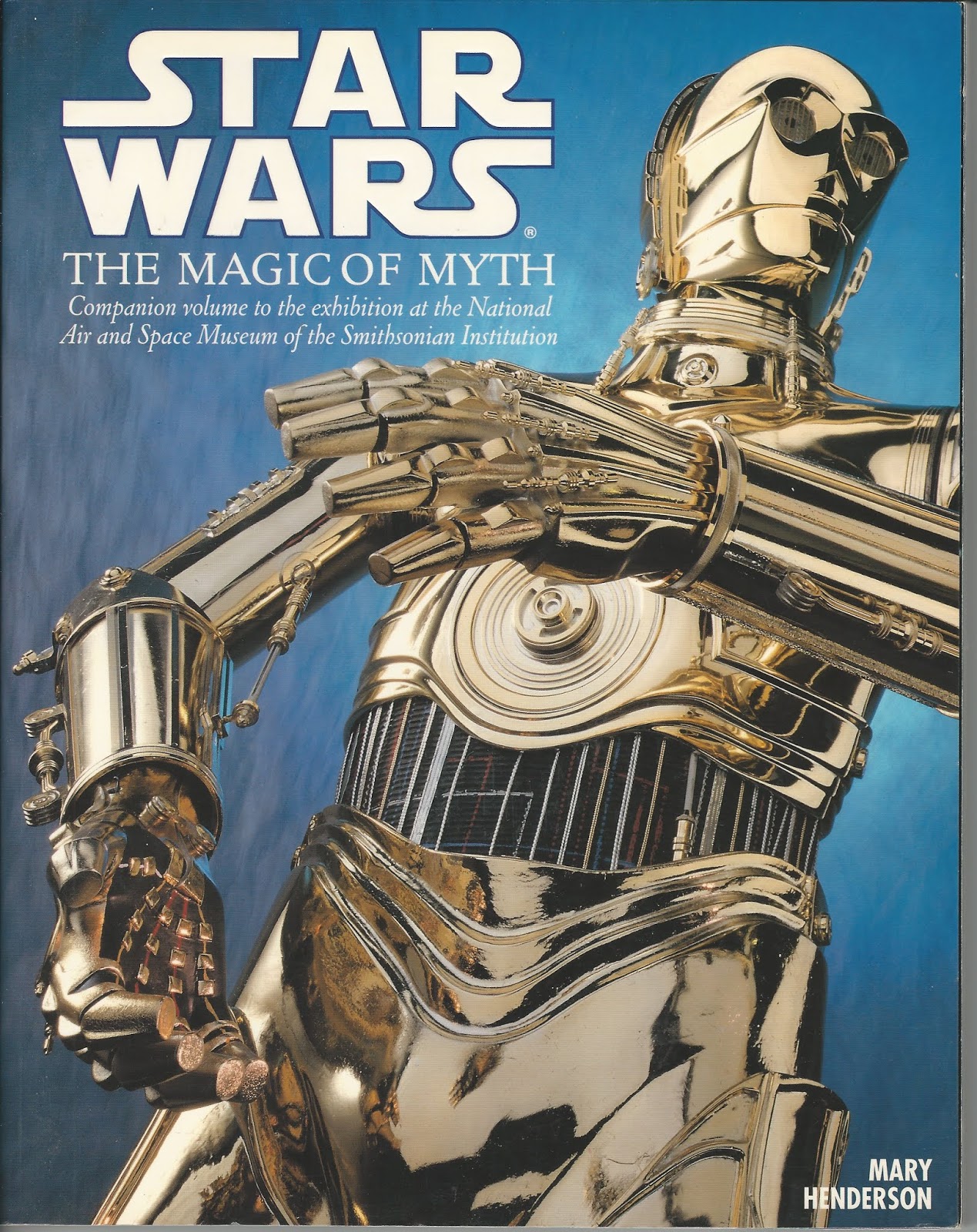
Star Wars: The Magic of Myth
by Mary Henderson
Bantam Books, 1997
Jospeh Campbell, Carl Jung, and more.
In The Virtues of Captain America: Modern Day Lessons from a World War II Superhero, Mark D. White argues for a continuity of character in The Captain despite the many authors who penned the narratives. Of course, he represents the best aspects of the nation he personifies. He does not just beat up bad guys – though he did a lot of that, and not much more, in the Silver Age of the 1960s. Nonetheless, he went to Vietnam twice, the second time to rescue a kind of Medecins sans Frontiers doctor. The Captain is honest, courageous, persevering, and loyal. Above all, he is honorable.

On the other hand, for many people, America is not inherently good; and, therefore, as its embodiment, The Captain is also flawed and perhaps evil. 

Captain America Complex: The Dilemma of Zealous Nationalism by Robert Jewett went through two editions (1973, 1984). It was reborn in 2003, co-authored with John Sheldon Lawrence, as Captain America and the Crusade Against Evil: The Dilemma of Zealous Nationalism. It garnered an accolade as a ForeWord Magazine Book of the Year Finalist. 

The Evolution of a National Icon: Captain America, Masculinity, and Violence by J. Richard Stevens also encircles The Captain with the negative energies of our culture. 

Despite their leftwing titles, both books are approximately objective, though selective, in teasing out the threads of a long-running story. What that story means depends on who you are.  
"We're not conquerors." 
The men in Washington are not impressed with the shield. 
They want The Captain to sponsor The Ameri-Gun.
Two scenes in the movie resonated with me. When Colonel Philips tossed out the dummy grenade, Steve Rogers threw himself on it. “Well, that’s what I’d do,” I said. “You would??” Laurel asked. It is not the sentiment of a Randian egoist. “Hand grenade comes into the foxhole, everyone’s dead anyway. You might as well do what you can to save the others.” It is not a rational decision but a heartfelt response. The other scene was the flag pole climb. I would not see the outside-of-the-box answer right away. I would have to sleep on it – which is why I am not a field commander or even a department manager-but it would be clear to me eventually that there is a better solution. 
The Captain was always man of his time 
Today, everything is complicated.
"An Allied superspy from World War II working with
a rogue Hydra cell. Now I really want to know what
went wrong on that mission."
(Man out of Time by Ed Brubaker, the longest-running writer.)


For one thing, though not 4-F, I was 1-Y in the draft. Like Sheldon Cooper and Leonard Hofstadter, I was never anyone’s choice to be in their squad in gym class. All I asked of my body was to carry my brain around. When I joined the Texas State Guard, my friends and family were surprised, if not shocked. I was never in favor of any of America’s military adventures. But the TXSG is not issued weapons; and we cannot be sent overseas. We are Texans serving Texas. The physical requirements are minimal but when I enlisted, November 22, 2014, having just turned 65, I found that I could do zero push-ups and zero sit-ups. Fortunately, I was always a walker. So, clearing the mile under time was the first win. Now, what I cannot do is 20 push-ups. This morning, I did 31 sit-ups. No serum. No vita-rays. Just the will to succeed and to do better the next time. That, too, is easy to find in the mythology of Captain America.

PREVIOUSLY ON NECESSARY FACT

Wednesday, March 14, 2018

President Trump to Meet Chairman Kim Jong-un

Donald Trump likely thinks of himself as a cut-throat negotiator, but Kim Jong-un has killed family members.

We often do not grasp immediately the consequences of capitalism, and peaceful coexistence is one of them. The age of reason and capitalism were causally connected. People do not kill or die for what they can sell or buy.
I am reminded of a line from The Right Stuff. I think that it was Trudy Cooper who was talking about a college reunion and how the other girls were going on about their husbands' careers "... on Wall Street and places like that. 'Dog-eat-dog competition' [she scoffs]. I wonder how they would feel knowing that there was a 25% chance their husbands would not come out of that board room." 
In Die Hard, Hans Gruber has no interest in corporate "green mail."
Million dollar negotiator Harry Ellis has no idea who he is dealing with.
We were watching The Edge starring Anthony Hopkins and Alec Baldwin. Hopkins plays Charles Morse a multi-millionaire in the fashion industry. (Seeking to run off with Morse's wife, Bob Green [Baldwin] tries several times to kill him.) They are on a photo shoot in the Canadian Northwest when their plane goes down, killing the pilot, leaving them stranded. (Great shot of Morse with his cell phone looking at an empty horizon.) Everyone flounders. Most of them die. But Morse is up for this. He is a voracious reader. When he spoke the line, "All my life I wanted to do one unequivocal thing." I said to myself in my head, "You ought to try landing a Cessna 185."

I learned to fly in the 1990s. Since 2014, I have been in a military unit working closely with the National Guard and Air National Guard. Many of them are combat veterans. Even the guy, who when you ask him, "What are you doing?" says, "Sharpening my bayonet and praying for war." is really a teddy bear: he cares about other people. He's a good soldier, a good leader. I would follow him into hell because he has already been there--three times. But that's the point: the horror of war made him a deeper person than he expected to become. That is true of all of them. No combat veteran I have met ever treated a subordinate with the callous disrespect that President Trump displays.

Donald Trump has never done anything of mortal consequence. His whole life has been one of very vocally making everything negotiable. That is why President Trump has no emotional understanding of Marshal Kim.

PREVIOUSLY ON NECESSARY FACTS

Sunday, December 3, 2017

THE FOREVER WAR

The combat veterans who recommended Joe Haldeman’s The Forever War to me spoke at length about a passing detail and failed to identify the important elements of the plot, the theme, or the setting. It is true that relativistic travel will transform you into a visitor from the past. As a soldier, you will be fighting with archaic weapons. But my officers provided more detail there than was found in the novel itself. And they left out the part where everyone in the future is gay.


“In my work, it always comes back to the jungle. Walking through the stillness with fear at your back but, paradoxically, the power of life and death in the chunk of metal in your hands. I’ve never been so weirdly alive, and everything I write is refracted through that lens of experience.” -- “Answering the Call,” by Joe Haldeman, Proceedings of the USNI, April 2011.

Haldeman was a combat engineer in Viet Nam. So, from the first appearance as a series in Analog in 1974, and through its republications, the story has been offered as being “about Viet Nam” and consequently “anti-war.”  It is true that the work was shaped by the author’s experience of war. It is also true that some of the elements of the war between Humans and Taurans reflect that earlier time and place. The Taurans are effective collectivists, willing to sacrifice large numbers in concerted actions. They do not invent new technologies but copy ours. Nonetheless, there’s a lot missing: the “bright shining lies” that victory is around the corner, that our local allies share our values, that our local allies are not as bad as or worse than the enemy; the dark truth that many of the people at home, and also many of the conscripts themselves, are actively opposed to the war. The easy wrapper is that the strengths and attractions of this story are transcendent of time and place.

The weaknesses are those elements that are inextricable from the author's own lifetime. In this future, soldiers are required to sleep in male-female pairs drawn by lot. The burden of orgy falls on the females. Although the army is half female, the only failures we see up close are theirs: one grunt panicking while trapped in rockslide; one officer whose command goes to her head. It is also true that you cannot fault the author for the book he did not write; and it is easier to see the future of 1974 from 2017.

PREVIOUSLY ON NECESSARY FACTS

Saturday, October 7, 2017

Make Every Day Special

Commandos, Green Berets, Rangers, SEALs,… military special forces are legendary. We look to them for lessons, as examples to follow, as paradigms for living. Businesses want their managers to be leaders worthy of the most dangerous and demanding work we can imagine in service to our highest values of nation and family, liberty and democracy. We would find it unusual, even unsettling, if military commanders exhorted their field officers to be profitable, productive, and thrifty.  (See “Choose Your Virtues” and “Shifting the Paradigm of Private Security” here.) The military is a model for business. The merchant ethos does not inform the military.

Spec Ops: Case Studies in Special Warfare
Theory and Practice
 by William H. McRaven
(Random House 1995; Ballantine Books 1996).
A SEAL commander, Admiral McRaven identifies the factors that make special operations different from ordinary combat. First is the relativity of their force superiority. Special forces may be two-man teams or 100-man battalions, but even the largest of special force attackers are necessarily numerically smaller than the forces of the defender. Nonetheless, they achieve relative force superiority with speed, stealth, and special weapons. Their mission plans are simple. While practicing their missions repeatedly, they keep their intentions secret.  To the fullest extent necessary, each man understands the mission; and regardless of their role, every man is committed to the achieving the goal.

These narratives are interesting on their own merits.  The German assault on the Belgian fort Eben Emael in WWII was pure blitzkrieg. Italian frogmen attacking the battleship Queen Elizabeth in Alexandria, and British midget submarines hitting the Tirpitz at Kaafjord, Norway, are almost science fiction. The American liberation of POWs in the Cabantuan camp in the Philippines and the failed mission at Son Tay, Vietnam, could have come from Hollywood. The Israeli raid to free hostages held by the PFLP at Entebbe in Uganda was retold in two movies and a TV series. Action and adventure aside, McRaven chose them and others to demonstrate his theory of special operations.


Not all of the missions exemplified the fullest use of all factors. The British raid on the Saint-Nazaire dry docks called for over 600 men, 18 attack boats, and a destroyer. McRaven labeled it a success because the primary target was achieved: the dry dock mechanical works were wrecked. However, the over-ambitious inclusion of many subsidiary goals only left a lot of men dead and a few men captured.

It is clearly a challenge, perhaps impossible, to bring a large force to the expert effectiveness of commandos. But there are lessons here for the individual.

You are a small unit. You have good internal communication. You can identify your own mission, create a plan, and exercise it. You know your mission, and you are dedicated to it. And you are authorized to improvise as needed in the face of contingencies.  You can plan and train in secret. You can do this every day.

Your skills may be common, but the full set of them is unique to you. How you put them to work is also special. Rather than blowing things up – though Austrian economists speak of “creative destruction” – most of us build, create, deliver, and maintain. It can still be special operations if  you bring that intention to your work.

PREVIOUSLY ON NECESSARY FACTS

Saturday, July 29, 2017

Do You Know Your Military?

The unremediated challenge is that only 1% of the population is in the military; only 2% ever has been. During World War II, that number was 10%. Up through the 1970s, the draft ensured that very many people either had military experience or lived (or worked) closely with someone who had. Today, even though the military enjoys broad moral support, few people actually know anything about it. 

Warriors and Citizens:
American Views of Our Military,
Kori N. Schake and James Mattis, editors
(Hoover Institution Press, 2016)
The extensive pair of surveys by Schake and Mattis examined attitudes within the general population and contrasted them with samples from within the military. The 200 pages of numerical results provide a treasury of salient facts. One of the reasons for the disconnect between the military and civilians is that the person in your family most likely to have served in the military is your father (39%), all the moreso, if you are between the ages of 45 and 64 (52%).  The geopolitics of military spending put most of the largest bases in the South and West. As a result, youngsters leaving high school from Georgia, Texas, Missouri, and California are more likely to enlist in the military, with Massachusetts and Connecticut  statistically under-represented.

In all, these three comprehensive surveys reveal a deep, broad, and rich array of opinions across political affiliation, race, gender, and income.  They also query the military itself, separated by rank, combat experience, and other parameters.  Overall, very few majorities exist and most of those are slim, closer to 50% than to 60%.  The minority views are most revealing. 
 
Our Army: Soldiers, Politics, and American
Civil-Military Relations
by LTC Jason K. Dempsey
(Princeton University Press, 2009)
Citing Schake and Mattis, it would be easy to report that 36.7% of those who self-identify as “very liberal” believe that the military gets more respect than it deserves. However, without also reporting that 27.9% of those who self-identify as “very liberal” believe that the military gets less respect than it deserves, that would be an incomplete characterization of the “very liberal.”

Comparing the Citizenship and Service Survey (2004) designed by Jason K. Dempsey and the National Annenberg Election Survey (2004), revealed strong self-identified minorities of liberals among West Point cadets (20%) and serving Army lieutenants (24%).

Dissertation by Col. Heidi Urben
Online here.

Discussing politics at work is always problematic. For her doctoral dissertation, Civil-Military Relations in a Time of War,  at Georgetown (2010), Heidi K. Urben found that, broadly, senior officers (major and above) who self-identify as Republican tend to speak up and speak out at work.  Liberals and Democrats (about 27% of the junior officers and about 47% of the enlisteds) tend not to speak up at work. That allows the easy assumption that the Army is Republican. However, it appears that affiliation with the GOP is not as strong as perceptions suggest. Democrats and liberals are more likely to wear a political campaign button (in civilian clothes) and also have a bumper sticker and also attend a political meeting. A minority of Republicans might do one of those three, but not more than one.

Perhaps the single defining statistic revealed by Schake and Mattis and their team is that across all sectors of America, only the “elites” believe that the military should share the same values as society at large. Most people across the political spectrum believe that the military has a different value system than everyone else in America – and this is good. In particular, the “elites” hold that a liberal education is important to good citizenship.  Behind that statistical fact is the definition of who those “elites” are. Schake and Mattis created their lists from Who’s Who, and similar inventories of known and self-identified social leaders. And overall the attitudes of those elites, while skewed to the left, include the fact that 52% of them believe that the military gets less respect than it deserves.

Complete set of statistical tables from the book Warriors & Citizens
Schake and Mattis (1)
Schake and Mattis (2)

I work in a military office. Our commanding officer is leaving. He is a combat veteran who earned a master’s in anthropology from Texas A&M. His replacement is a Ranger who completed his bachelor’s in philosophy at Princeton.  Numbers hide individuals.

ALSO ON NECESSARY FACTS

Saturday, April 29, 2017

Building a Team in Fact and Fiction

The Devil’s Brigade and The Dirty Dozen are two stories from World War II about creating a cohesive combat unit from differing, antagonistic, or hostile individuals. Both novels were adapted for cinema. The all-star cast and tighter plot of The Dirty Dozen made it the more memorable of the two. Arguably realistic, if not real, The Dirty Dozen was fiction, whereas The Devil’s Brigade is history.

The Dirty Dozen is iconic, but the movie was sanitized for Hollywood’s audiences.  I believe that the book could not have been published ten years before landmark Supreme Court cases on obscenity and pornography released literature from the confines of Puritianism. (See Jacobellis v. Ohio, 378 U.S. 184, 1964; and Citizen’s Guide to Federal Obscenity Laws here.) In addition, characters were renamed, and two characterizations were merged. The story remains compelling.  Like everyone, I knew about The Dirty Dozen as a movie. Having seen it a few times, I watched it again, and when the credits rolled, I saw the author’s name.  So I looked for the book and found it at the UT library.  It is very much different from the movie.  You can find an excellent synopsis comparing the book to the cinema production on the blog, From Novel to Film here. 

I saw Devil’s Brigade in the DVD stacks at the city library and figured that it was just a knock-off of The Dirty Dozen. I was pleasantly surprised.  And, more to the point, the credits listed the novel. Googling revealed the book, but finding it at a library was harder.  I finally ordered two copies in hardcover first edition (2nd printing) on Amazon.  After reading it (carefully), I gave them to two of my officers, one for Christmas, the other for separation.  Then, further digging on WorldCat revealed the U.S. Naval Institute edition; and I am a USNI member. So, I bought my own copy from them.
The Devil's Brigade by Robert H. Adleman and George Walton, 
(1st eds. Corgi 1968 (ppb); Transworld 1968). 
Naval Institute Press, 2004; ppb $21.95.  
(Not pictured: The Dirty Dozen 
by E. M. Nathanson (Random House, 1965).
“The first special service forces of World War II were known as the Devil's Brigade. Ferocious and stealthy combatants, they garnered their moniker from the captured diary of a German officer who wrote, "The black devils are all around us every time we come into line and we never hear them." Handpicked U.S. and Canadian soldiers trained in mountaineering, airborne, and close-combat skills, they numbered more than 2,300 and saw action in the Aleutians, Italy, and the south of France.  
“Co-written by a brigade member and a World War II combat pilot, the book explores the unit's unique characteristics, including the men's exemplary toughness and their ability to fight in any terrain against murderous opposition. It also profiles some of the unforgettable characters that comprised the near-mythical force. Conceived in Great Britain, the brigade was formed to sabotage the German submarine pens and oil storage areas along Norway's coast, but when the campaign was cancelled, the men moved on to many other missions. This World War II tale of adventure, first published in hardcover in 1966 and made into a movie not long after, is now available in paperback for the first time.” – USNI Press.

The salient difference between the two stories is that the twelve outlaws never gelled into a real team.  Although some did find redemption in death, collectively they never achieved the sense of brotherhood that makes one man give his life to save another. In my opinion, the movie version of The Devil’s Brigade overplayed the myth of transformation. These were not a bunch of American losers who were dragged upward to British standards. And the Canadians were not an amalgam. (They came from two different components with three – or four – different uniforms.) The fact that each of the soldiers was individually acculturated by previous training to the warrior’s ethos allowed the brigade to discover and exploit its internal strengths.  Finally, in both the book and the film, the commander’s solution was firmly rooted in laissez faire: he let them work it out; and they did. That, too, occurred in the movie version of The Dirty Dozen in the shaving scene, though the book was different.

In modern real life, military teams are built from the ground up, making each member always responsible for someone else.  But even as boot camp “tears you down to build you up” some ineffable factor of personality may be unalterable. The problem remains salient: some people never learn the important lessons. In the original Dirty Dozen the Georgia cracker, Archer Maggot, and the disgraced Black lieutenant from Louisiana, Napoleon White, never rise above their differences before being dropped together in an unresolved scene after the attack on the chateau.  In the movie version of The Devil’s Brigade, the Canadians and Americans find a common cause in a barroom brawl with some lumberjacks. After that, and one other leveling scene in the mess hall, the men find personal reasons to buddy-up across the components.  


Our component has been planning a complex exercise for over a year. To evaluate the actors and their actions, we have a white cell. When we met last weekend, two friends from different units were chatting.
“What are you working on?” 
“I’m on the white cell.”
“What’s that?”
“Do you remember The Dirty Dozen? I have George Kennedy’s role.”

PREVIOUSLY ON NECESSARY FACTS