Showing posts with label economics. Show all posts

Sunday, March 30, 2025

“Money Talks” of the American Numismatic Association

As a longtime admirer of the works of Ayn Rand, I hold money in high regard. The origin of money is in ritual gift exchange, rather than in economic calculation, which came tens of thousands of years of later. That being so, it remains that periodic innovations in economic calculation caused quantum leaps in prosperity and general welfare. People are unlikely to kill or die for what they can sell or buy. 

But I never joined any organizations for numismatics until after 1992. For one thing, I was never a serious collector and still am not. I attended a couple of lectures by Clifford Mishler, then the president of Krause Corporation, publishers of hobby periodicals and books, and later president of the American Numismatic Association. He said that all collectors, whether of coins, stamps, automobiles, vinyl recordings, wine or anything else, share four passions: Completeness, Condition, Rarity, and Value. Those are not my concerns. If I have one of something, regardless of its condition or value, I have an artifact about which there is a story to be told. Coins in particular are the often the most common artifact of any society. You have to be a serious collector to find a truly rare coin. 


In 1992, I started hearing the ANA “Money Talks” radio program in the mornings as I was waking up to get ready for work. The ANA says: 

In 1992, “Money Talks,” a radio program on the history and lore of money, began broadcasting across the country on several local radio stations. The “Money Talks” broadcasts were typically 2-4 minutes long and consisted of coin stories that were recorded to educate and encourage interest in the hobby of numismatics.


I submitted about 20 scripts, and about half of them were produced for broadcast. The ANA granted me a literary award for a couple of them. 

https://www.money.org/money-talks-radio-archive/


I went on to write more full-length features about Peace Dollars, Large Cents, and other products of U.S. Mint. I also edited a monthly column, Internet Connections, which spotlighted safe and informative websites for collectors, typically, national mints or museums, specialty clubs, and sometimes the websites of dealers who were serious researchers.  


 https://archive.org/details/bestofanamtpart1

https://archive.org/details/bestofanamtpart2


The ANA rebranded “Money Talks” as a series of lectures at the semi-annual conventions, and many of them have been recorded and placed in video archives such as YouTube. 

Pay Warrants of the Texian Navy

https://www.youtube.com/watch?v=EWGzivjlOUI

The Texas Navy on NecessaryFacts 

Mutiny Aboard the San Antonio  


IRELAND'S POET LAUREATE by Michael Marotta 


"Our coins must pitch and spin to please the gambler, and pack into rolls to please the banker." Those were the words of Nobel laureate William Butler Yeats. Yeats won the Nobel Prize for Literature in 1923 and was regarded as the greatest poet of his time. He was also in charge of the committee that designed Ireland's coins.


Yeats was born in Dublin on June 13, 1865. At that time Ireland was completely under the control of England. While working in England, Yeats joined other Irish patriots who eventually won independence for the Emerald Isle. A world-renown playwright and poet, Yeats was elected to the Irish Senate. He chaired the committee that chose the designs for the coins of the new Irish Free State.


Yeats had seen classical Greek coins while studying and writing in Italy during the late 1800s. He arranged for all of the artists on this project to receive ancient Hellenistic coins, so they could see for themselves the powerful images he wanted to bring to Ireland's coins.


For over seventy years, Ireland's coins changed little from the winning designs of Percy Metcalf, a young sculptor recommended by the British School in Rome and selected by Yeats' committee. The horse, bull, salmon, hound and other animals of Ireland's eight circulating coins were all joined by a common symbol of Ireland's poetic tradition: the Celtic harp.


William Yeats died on January 28, 1939, at the age of 73.


(Numismatist, historian, and jurist Theodor Mommsen, was granted a Nobel Prize in Literature in 1902.)


A.N.A. MONEY TALKS Transcript No. 1400 

ANCIENT HEARTS by Michael E. Marotta 

Look around . . . heart symbols are everywhere on Valentine's Day. 

Maybe even on a coin. 

The first heart symbols that appeared on ancient coins were produced 2500 years ago in North Africa. 

The town of Cyrene was founded in the 7th century B.C. by Greeks. 

Their town was eventually destroyed, but it was near what today is the city of Benghazi, along the coast of Libya. 

The city enjoyed modest prosperity . . . until its inhabitants 

discovered the silphium plant. (The plant is extinct now, but its closest 

living relative is a key ingredient in Worcestershire sauce.) Silphium was 

used as an herb. Its stalk was edible. Its pungent sap was the basis for cough syrups, and gave food an interesting flavor. But the most important use for silphium was as a contraceptive. 


Modern research suggests that silphium actually worked, and because of this, it was in great demand. Attempts to cultivate it in Syria and Greece were unsuccessful. It only grew near Cyrene--and, starting in 500 B.C., it became a steady source of income for the townspeople. By Roman times, silphium had been harvested to extinction. 

Over the centuries, the silphium plant came to symbolize Cyrene. The plant appeared on the town's gold, silver and bronze coins, starting around 500 B.C. Often the entire plant was shown. But sometimes, only the seeds of the plant were depicted. The silphium's seeds were heart-shaped, and those heart-shaped seeds that appeared on Cyrene's coins eventually came to symbolize love--a symbol that's still with us today. 


Today's program was written by Michael Marotta. "Money Talks" is 

a production of the American Numismatic Association in Colorado Springs, 

America's coin club for over a century. Take a tour of ANA's virtual Money Museum on the Web at www.money.org.


Transcript No. 1329                              November 6, 1997

THE MYSTERY OF THE MINT       by Michael Marotta     


Imagine a world without coins.  It isn't easy.  Coins and paper money are basic to our civilization.  Yet someone had to invent coins, and the truth is that we just do not know why coins were invented.     


Coins first appeared about 2,600 years ago in the ancient country of Lydia, in what is today western Turkey.  But people in the Middle East had already been using gold, silver, copper and other common trade goods as money for thousands of years, going as far back as perhaps 8000 B.C.E.     


From our modern viewpoint, the advantages of coinage are obvious. But those advantages were not so obvious to ancient peoples. Today, there are several theories to explain the invention of coinage. Many people think that merchants invented coins by marking nuggets and ingots of precious metals.  The marks were promises of purity and value. 


Another theory is that coins were invented to serve temples. After all, ancient coins have gods and goddesses on them.  Temples amassed wealth from donations and the temples might have issued the coins as rewards for good behavior. 


However, some scholars today think that the first coins were given to the mercenary soldiers of Greek towns.  These coins may have been like military campaign medals -- badges of honor that may not have been intended to be spent as money.


Whatever the origins of coinage, the idea spread rapidly.  Within a hundred years, almost every Greek town from southern Russia to eastern Spain had its own mint.  Today, people collect ancient coins for their historic value and artistic beauty.     


This has been "Money Talks."  Today's program was written by Michael Marotta and underwritten by Whitman Coin Products, a division of GoldenBooks, quality coin supplies at affordable prices.  "Money Talks" is a copyrighted production of the American Numismatic Association, 818 N.Cascade Ave., Colorado Springs, CO 80903, 719/632-2646, ana@money.org,http://www.money.org.


ANA: MT: Use of Mintmarks                                    

Transcript No. 1648                                                      January 27, 1999


USE OF MINTMARKS  by Michael E. Marotta


    If you look closely at coins, you will find that some of them have small letters indicating the mint at which they were struck.  Mintmarks go back to ancient times.  They were used to prevent forgery as well as to honor the mintmaster.


    Mintmarks date to about the year 400 B.C.  At the time, Greek towns elected their moneyers or mintmasters to annual terms of office.  These men ometimes were the actual die cutters, but usually they were officials who oversaw the cutting of dies and striking of coins.


    The mintmaster might engrave his whole name on a die, or just the first letters of his name.  Sometimes he made a "monogram."  The purpose was twofold.  It allowed praise for the man who did the work and identified the person responsible in case the coinage later proved to be of short weight or impure alloy.


   When the Roman Empire stretched across three continents, it operated more than 20 different mints with over 50 different mintmarks for a period of 300 years.  We have identified the mintmarks of London in England; Constantinople in Turkey; and Alexandria in Egypt.


    Today most nations have only one mint.  Larger countries often assign letters of the alphabet to identify mint cities, starting with the nation's capital.  On French coins, for example, the letter "A" stands for Paris. An "A" on a German coin, on the other hand, usually means "Berlin."


    Some nations contract out the production of their coinage.  On some British and Canadian coins, for example, the letter "H" stands for the "Heaton" company.


    In the United States, the main mint at Philadelphia typically did not use the "P" mintmark until recent decades.  Today, most American coins have either a "P" for "Philadelphia" or "D" for "Denver."  Usually you will see an "S" for "San Francisco" or "W" for "West Point" only on special coins and proof sets.


    This has been "Money Talks."  Today's program was written by Michael Marotta and underwritten by Whitman Coin Products, a division of Golden Books, the right choice for coin collecting books and supplies. "Money Talks" is a copyrighted production of the American Numismatic Association, 818 N. Cascade Ave., Colorado Springs, CO 80903, 719/632-2646, ana@money.org, http://www.money.org.


PREVIOUSLY ON NECESSARY FACTS


Accounting for Civilization 

Debt: The Seed of Civilization 

Robert Leonard’s “Curious Currency” 


Numismatics; History as Market 

Money as Speech and Peacemaking 

The Future of Money 

Mere Gold is Not Enough: Hayek’s “Denationalization” 

Numismatics: The Standard of Proof in Economics 


Scripophily 

The Art of Finance 

Challenge Coins 


Not Conned by Seghal’s Coined 


My Numismatic Bibliography (Partial List) 


Monday, December 23, 2024

Created Works and the Public Domain

Public Domain Day 2025 came up as a Google News item. I have given some thought to the traditions and laws about intellectual property and I have only questions. In other blog posts I commented on the contradictions, but I have no integrated proposal. 

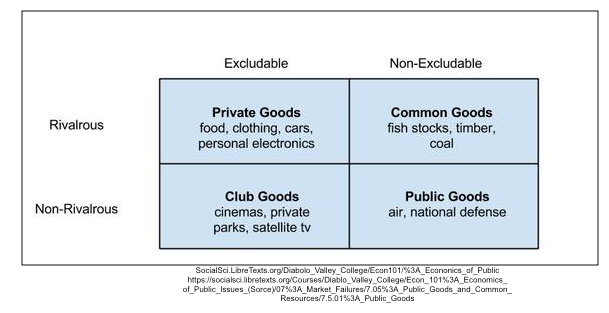
Common assumptions about property are rooted in the physical reality of land: it is impossible for two objects to be in the same place at the same time. Thus, land is rival and exclusionary: if an entity (person, family, etc.) possess it, then another cannot. Copyrights and patents attempt to include “ideas” into “lands.” However, intellectual property is metaphysically different from physical property. 

 Based on the definition that property ownership is rival and exclusionary, collectivist thinkers built a truth table to show Common Resources (excludable but non-rival) and Club Goods (rival but non-excludable). That is nonsense. 


Define Human as “rational animal” and the non-rational animal and rational non-animal remain not-human. So, too, are common resources and club goods not property. Non-A cannot be A. Nothing is not a different kind of something.


Contrary to the collectivist claims, freshwater, fish, timber, and pasture are all exclusionary and rival. You can’t have your fish and let your neighbor eat it, too.


What they call “club goods” are defined and limited by technology, not by metaphysics. Discussing radio broadcasting in her essay, “Property Status of the Airwaves” Rand correctly pointed that two broadcasters cannot share same frequency. But they can. Just not at the same time. And time-slicing allows two (or more) broadcasters to occupy the same wavelength. However, that does not change the fundamental principle that these timely-sliced increments are property. 


From Diabolo Valley College Econ101 linking from PennState,
College of Earth and Mineral Sciences.
"EBF 200 Introduction to Energy and Earth Sciences Economics:
Public Goods and Common Pools."
Also found in Investopedia and Quickonomics.

Common resources – non-excludable but rival (freshwater, fish, timber, pasture)

Common resources are defined as products or resources that are non-excludable but rival. That means virtually anyone can use them. However, if one individual consumes them, their availability to other consumers is reduced. The combination of those two characteristics often results in an overuse of these resources because demand exceeds the available quantity (see also the tragedy of the commons). Examples of common resources include freshwater, fish, timber, pasture, etc. -- https://quickonomics.com/different-types-of-goods/

 Club goods – excludable but non-rival (cable television, cinemas, wireless internet, toll roads)

Club goods are products that are excludable but non-rival. Thus, individuals can be prevented from consuming them (i.e., access can be restricted), but their consumption does not reduce their availability to other individuals (at least not until a point of overuse or congestion is reached). Club goods are sometimes also referred to as artificially scarce resources. They are often provided by natural monopolies. Examples of this type of goods include cable television, cinemas, wireless internet, toll roads, etc. -- 

https://quickonomics.com/different-types-of-goods/


It is true that you and I can both watch the same program on cable-TV. The hidden error was identified by Ayn Rand as “the blank out” and Rand identified its logical expression as the fallacy of the stolen concept. You and I can both watch the same cable-TV show – up to a point: we all know what happens when too many users overload a website. More deeply and cogently, for anyone to access television or the internet, physical goods must be produced. The perception of social largess as a “club good” blanks out on the previous non-existence of roads and theaters.  

We [the American Historical Association] encountered a similar experience in 2001, when the AHA decided to create a freely available online collection of Civil War newspaper editorials, utilizing two volumes originally published by the AHA in 1931 and 1942. AHA staff quickly discovered that no copyright renewal was ever filed for the second volume, edited by Harold C. Perkins, and it subsequently had entered the public domain. However, the editor of the first volume, Dwight L. Dumond, had renewed the copyright in his own name in 1959. Orphan Works Notice of Inquiry – 70 Federal Register 3739 (Jan. 26, 2005)

http://www.copyright.gov/orphan/comments/OW0676-AHA.pdf

To me, the error was the granting of the copyright to Dwight L. Dumond. As the editor, he was a hireling. His work rightfully belonged to those who paid him for it. The concept of a collective entity in law –what we call a “corporation”-- has roots in the Roman republic. Under Roman law, a flock of sheep was a collective entity: lose a lamb or gain a lamb, it is the same flock. On that basis, cities were taxed: the city was an entity that owed tribute to Rome, itself a collective entity. No one owned a city. Under American law, the American Historical Association as an entity can certainly be protected from theft by its employees. 


On or about the same day as the link about Public Domain Day, Google News offered a link to a story from GameRant.com about the Star Trek canon. Star Trek is owned by Paramount Global. (The July 2024 merger with Skydance may be challenged now through the FCC but that does not affect what follows.) Since 1966 many details of the continuing, expanding, and extending myth have been changed. Others remain constant. In this case, the legal owners changed an element of the canon - the physiognomy of the Klingons was altered in Star Trek: Discovery and the fans objected. (Klingons had changed once already but that was accepted.) Using a new storyline in Star Trek: Lower Decks, the owners offered some technical explanations for the change. 


To me, that is all good because myths change in the retelling. Mythology allows that: characters can merge or split; new characters can be entered while established characters leave. Star Wars: A New Hope is just the Wizard of Oz: Luke is Dorothy; R2D2 is Toto, … But in Star Wars, one aspect of the Wicked Witch (Darth Vader) is saved while the other aspect of the character (the Emperor) perishes. That begs the basic question: Who owns Star Wars or Star Trek or Harry Potter?  At what point does the creation of intellectual private property enter the public domain? Is there such a point? 


Back in the early 2000s, before the Atlas Shrugged movies were released, a Rand Fan created some Atlas Shrugged swag, a Rearden Steel trucker's cap, etc. The Ayn Rand Institute sent her a lawyer letter reminding her that the artifacts were based on the copyrighted works of Ayn Rand. So, as an Objectivist herself, she ceased and desisted. But we cannot imagine Paramount chasing down every "Beam me up, Scotty" bumper sticker. And personally, I think that the ARI should have just shrugged it off by labelling their gear "Official" the way that Major League Baseball does. 


https://web.law.duke.edu/cspd/publicdomainday/2025/

I have donated to the Internet Archive and the Wayback Machine. (Similar archives include the Hathi Trust and the Linda Hall Library.) Like the promoters of Public Domain Day, my comrades at the Internet Archive claim a moral high ground because they are offering the works for free and have no commercial interest in the use. To me, that argument is irrelevant. And it is falsified by several considerations. They do accept donations, and it is easy to assume that donors are users. Absent donors, the entity would not exist. So, they are in business. And in business for a profit because not-for-profit is only a matter of bookkeeping: owner's equity is called "net assets."


Long ago, writing in The Libertarian Connection, Skye d’ Aureus and Natalie Hall argued against Ludwig von Mises’s assertion that truth and beauty are not economic goods. Skye and Natalie pointed out that truth and beauty must be produced by human action.  

As collectivism grows in popularity, and as the nonproductive consider themselves increasingly entitled to the wealth created by the productive, Rand’s arguments in favor of intellectual property rights merit reinforcing not diminishing. -- "Ayn Rand's 'Patents and Copyrights'" by Marilyn Moore, posted May 28, 2019.  https://www.atlassociety.org/post/ayn-rands-patents-and-copyrights

Writing for the Atlas Society, Marilyn Moore (Director of Student Programs) parsed the difference between copyrights and patents and argued contrary to Rand that literary works should be patented while inventions should be copyrighted.  Moreover, Moore asserted, as a metaphysical fact, a discovery cannot be patented or copyrighted. First, the discoverer did not create the fact; and, second, once announced to the public, the discoverer cannot prevent other people from now knowing what they know. Third--and most consequentially--it is immoral to deny independent discovery and therefore independent invention. It is unlikely that two people will write the same book. It is well known that two people can create the same solution to a technical problem based on a shared (though independent) understanding of the facts of reality.


PREVIOUSLY ON NECESSARY FACTS

Copy Rights and Wrongs 

Objective Intellectual Property Law 

U.S. Patent Law Does Not Add Up 

Patent Nonsense: Intellectual Property Rights and Non-Objective Law 

Biohackers 


Sunday, December 27, 2020

Heller Coins of Medieval Hall in Swabia

For about 300 years, these small silver coins, nominally worth half a penny were an important medium of daily commerce in central Europe. They originated in the town of Hall in Swabia and were therefore called Häller (Haeller or Heller). 

In response to an advertisement from my longtime friends at Liberty Coin Service of East Lansing, I bought 12 medieval hellers to give out at Christmas. The 2x2 inserts from Liberty Coins say, “Silver Hand heller / City of Hall / 1189-1500.” Denied access to the University of Texas libraries because of Covid-19, I went looking online for references and found very little information. 


Five typical häller. 
Hands top center and bottom left.

The American Numismatic Society lists about two dozen, giving them all the same general descriptions, although their fabrics—diameter, weight, fineness—speak of historical complexity. The attributions depend on who worked the coins when they were donated to the ANS. The ones acquisitioned in 1927 are dated 1240-1437; the acquisitions of 1953 are dated 1300-1400. German haeller are catalogued from Württembergische Münz- und Medaillenkunde by Christian Binder (Stuttgart, 1846) because the free city of Hall in Swabia was entered into the Württemberg hegemony in 1802.


The Bohemian heller are listed in Beschreibung der sammlung böhmischer münzen und medaillen originally catalogued by Max Donebauer and then privately published by Eduard Fiala; Prague, 1888-1889. In each case, all häller are given the same catalog numbers. Clearly, the small half-pennies, lacking legends or inscriptions, easily with no mint control marks—little crosses or mullions, stars, etc.—are difficult to date or place. The 24 coins catalogued with pictures range in weight from 0.3 to 0.817 grams: median 0.525; modes 0.52 and 0.53; mean 0.546. The diameters all seem within 16.5 to 17.5 mm. Some of the coins are torn in the fields, a common flaw among Medieval coins which tended to be larger rather than thicker. 


Civic Coat of Arms

The American Numismatic Association provides even less data.  The ANA Numismatist has one entry for “Hall am Kocher.” (The river is often an identifier in German, for instance, to differentiate Frankfurt-am-Rhein from Frankfurt-am-Main). That citation is in an article from February 1961 by Dr. John Davenport: “European States Issuing Dollar Size Coins” clearly, not about the half-penny. More recently, Usula Kampmann’s “Around the World” column for September 2020 centered on the coins of Schwäbische Hall. Unfortunately, it was as light as the coin itself on facts. She said only that the heller was originally worth half a pfennig.


I attribute them to the rise of Friedrich Barbarossa.  Whether the western half of the Roman empire actually “fell” or “collapsed” can be debated. Clearly, many aspects of society had changed slowly, almost imperceptibly one generation after another. And just as slowly, the Holy Roman Empire became a new cultural context. Low points of chaos punctuated a general trend toward production and trade, technology, literacy, art, and (ultimately) science. 


Friedrich, the duke of Swabia, was the son of two powerful local families. Born in 1122, he died in 1190 on a Crusade. Friedrich inherited the title of duke of Swabia. Hall’s position as a center of exchange dated back to the salt trade of the Celts. 


Friedrich consolidated his central European realms and was crowned a king in 1152 and then Holy Roman Emperor in 1155. During his wars of expansion, Italians gave him the soubriquet “Barbarossa.” In his lifetime, he increased the royal mints from two to 28. 


Numismatists can often distinguish the genuine English pennies of good sterling silver (0.925 fine) from copies made elsewhere, such as the Papacy, which were also of sterling silver. To my knowledge, no one has attempted this for the haeller. The fact is that like English pennies, gold florins, and other popular issues, the haeller could have been copied in many places and likely were. That fact speaks to a fundamental principle of economics: trade crosses borders. As long as the coins were good, they were accepted prima facie.


By our modern measures, the nominal häller weighed 0.546 grams and were 0.545 pure silver. In their time, they were valued against the standard Köln (Cologne) mark which at 233.8 grams modern was about half a medieval (not ancient) Roman pound. Each unze was divided in to 32 pfennig. The haeller was accepted as half a pfennig or a twelfth of a schilling.  


The fact that it was debased to just over 50% pure is the reason why it survived in daily commerce: it had more utility as a coin in local trade, wherever it was used, rather than being exported for exotic goods. 


(Both images Wikimedia Commons)
The Hand is taken to be a sign of blessing, perhaps the Hand of God, according to some modern interpretations, epigraphic evidence being lacking. This is assumed to be the obverse. The Cross on the reverse is easy. However, some are the only element while others are within a Shield. Most are saltier crosses, often with at a pellet in two of the noches. In some the reverse exergue has pellets separated by bars. While these details can differentiate varieties, no numismatist has attempted to decode them. In the exergue of one coin that I had, two pellets are in one field and could look like the crossed bishop’s staffs known, for instance from the coat of Basel. But Hall was never a seat. So, if this coin was issued by a bishop’s mint, that was someplace else.


Into modern times, the word “heller” continued as a generic term for any small coin, whether or not it was a lawful denomination as a fraction, for example, of a silver thaler (“dollar”). The currency reform of Austria-Hungary in 1892 re-established the heller as 1/100 of a corona in Austria. (The Hungarian korona was divided into 100 filler.) Germany used the heller as a fraction (1/100) of a colonial East African rupie on the Indian standard of 1 rupee = 2 UK sterling shillings. Therefore the  rupie and rupee were about the same as 50 cents US silver of the time. So, the East African heller was about the same as half a US cent. The heller denomination was last struck by the former Czechoslovakia up to 1993. The separate Czech and Slovak republics kept the denomination – Czech plural haléřů; Slovak plural haliers. 

 In German, anything from the town of Hall would be a häller. The plural is the same word, rather than hällerer or hällern or hälleren. (In English we still have the archaic deer not “deers” for a plural.) The umlaut double-dots are a medieval convention to represent a little e over the a to show the vowel shift upward. So häller becames haeller and then heller.


Additional Sources:

I now wish that I had seen earlier this most excellent write-up Common Medieval Coins: Info Thread by Orielensis (Apr 23, 2019) on CoinTalk here:

https://www.cointalk.com/threads/common-medieval-coins-info-thread.337725/#post-3496344

“Frederick I Barbarossa and Political Legitimacy,” poster by Brian Sebetic; Faculty Mentor: Dr. Monique O’Connell; Wake Forest University online at http://history.wfu.edu/wp-content/uploads/Poster-Barbarossa-Brian-Sebetic.pdf

https://en.wikipedia.org/wiki/Cologne_mark 

https://en.wikipedia.org/wiki/Heller_(money)

https://en.wikipedia.org/wiki/Schwäbisch_Hall

https://www.wikiwand.com/en/Frederick_I,_Holy_Roman_Emperor

https://en.numista.com/catalogue/pieces72645.html

Previously on Necessary Facts

City Air Makes You Free 

The Cure for a Failing Empire 

Numismatics Informs Economics

Science in the Middle Ages 

Rescuing Aristotle and the Church 

Astronomical Symbols on Ancient and Medieval Coins 

Tuesday, May 28, 2019

At Oryana Co-op I Took my Change in Bay Bucks

Over the weekend of May 18, we were in Traverse City. After shopping on Front Street, we went to Oryana Community Co-op to buy snacks. We were members when we lived in TC. And at that time, I worked with the Bay Bucks planning committee. So, I took my change in community currency. 
Early Stage Concepts
  
A local currency provides an economic “cul-de-sac” that keeps wealth within a community. Local money tends to stay close to home. This means that profits do not get exported via chain stores and multinational corporations. Instead, people buy and sell goods and services among themselves, with the currency being an accounting tool. About 30 towns have tried the experiment, some with more success than others. 
[Portions of this article first appeared in the Michigan State Numismatic Society MichMatist where it can be found online here]

Late Stage Concept
10BB Pre-Production Proof 
In the summer of 2003, I heard a radio interview on WIAA-FM, Interlochen, in which two Traverse City community activists, Chris Grobbel and Natasha Lapinski, explained their plans for a hometown money. They sounded competent and intelligent and the project was compelling to me as a numismatist. I tracked them down by asking around at the Oryana Natural Food Co-op. I interviewed them (and others) for an article that ran in the November 13, 2003 issue of Northern Express hereI wrote a follow-up article for the June 9, 2004 issue here. 

For me, the rewards were in managing the design team. I found three design students at Northwestern Michigan College. Brendan O’Brien, Pauline Viall, and Thomas Loomis launched a model company (OVL Design) and signed off on a Statement of Work. I gave them samples of world currencies, a copy of Standish’s The Art of Money and links to websites for the International Banknote Society and the Paper Money Collectors. 

20BB as Pre-Production Proof
Seeking a printer, I found Deep Wood Press and Chad Pastotnik. (There was another alternative but now I cannot find her name.) Chad did everything he could to help them with their insufficient production budget. We abandoned intaglio printing, hemp paper, die cut corners to facilitate telling by touch, and other craft elements. The final version does have a foil security appliqué. Each note was to carry its own motto: “Regional Community Currency” (BB1); “Traverse Area Community Currency” (BB5); “Bread for Your Watershed” (BB10); and “In Community We Trust” (BB20). Instead all of the backs say "Trustworthy Tools for Local Exchange."

Patty Fabian, a designer with Peninsula Partners in Traverse City, developed a set of proposed logos to support the imaging and branding of Bay Bucks in store windows, on bumper stickers, and on the notes themselves.
5BB (Face) and 1BB (Face and Back)

The final version of the series consists of four notes: BB1, BB5, BB10 and BB20. Each represents an eco-system: Dunes (Dune Lily and Piping Plover); Wetland (Morrell Mushroom and Ringtail Raccoon); Farm (Cherry Blossom and Barn Owl); and Forest (Lady Slipper and Whitetail Deer). The Petoskey Stone pattern supplied the border of all four faces.  

The planning committee identified about 100 local businesses that could benefit from participating in “Bay Bucks.”  About 30 of them were considered early adopters. Oryana Community Co-op was central to the success of Bay Bucks. Among the other participants was the State Theatre, home of the Traverse City Film Festival, a joint effort of Michael Moore and the Chamber of Commerce.

RESOURCES AND READING
  • Bay Bucks here: http://www.baybucks.org
  • Launching Bay Bucks “Local Money Plan for Homegrown Currency has a Rich Past” Northern ExpressNovember 12, 2003, here.
  • “Passing the Bay Bucks: Local Currency Could Hit the Streets This Summer,” (Northern Express, 2004) here. 
  • Traverse Ticker (2018) “Yes, Traverse City Still has its own Currency” here.
  • Traverse Ticker (2019) “Could Bay Bucks go Digital?” here
  • “I Took My Change in Bay Bucks” on CoinTalk here.
PREVIOUSLY ON NECESSARY FACTS

Wednesday, April 25, 2018

Confiscation: Gold as Contraband

Confiscation: Gold as Contraband 1933-1974 by Kenneth R. Ferguson was a pleasure to read. Ferguson writes well. I met Ken Ferguson in person at a coin show here in Austin. He speaks as intelligently as he writes. Our time together was enlightening. 

Few people ever get past citing Executive Order 6102. Even when they do point to that document, they most often stop short of fully citing and discussing it. This book delivers the facts. Ferguson tells the whole story, going past 6102 to the subsequent orders and laws. He lays out carefully and logically the many relevant details that highlight this singular event. He also examines the public response. I was impressed with his explanations of how and why Britain, France, and Switzerland returned to striking gold coins after World War II, using dies from previous years. 

This book carefully explains the intentions and consequences of the rolling orders and laws that redefined the monetary policy of the American government in the 1930s. On the first level, obviously, the goal was to get gold into the U.S. Treasury in order to meet foreign obligations. Moreover, the revaluation of the dollar did more than expand the money supply, though it did that. When the official price of gold moved from $20.67 per ounce to $35 per ounce, all of the paper profits went to the Treasury. Citizens who turned gold in were paid at the face value of the coins (or the equivalent for bullion), $20 for a $20 double eagle, not $33.86. 

As for whether surrendering gold was necessary, Ferguson demonstrates from several perspectives why it was not. Other nations made similar changes – demonetizing gold, going off the gold standard – without confiscating the private property of their citizens. That is a theme that Ferguson returns to often as he dissects the events and laws. If gold is money, then Congress (not the President) is authorized to define how much goes into what coins. That happened in 1834, for example. If gold is private property, then its uses as money are irrelevant in that context. Moreover, and most insightful (and damning) Ferguson shows that (1) Treasury stocks were not greatly improved by this law (though the Treasury did profit directly), and (2) the reason why is that half the gold in private holdings in the United States remained with its owners. People just ignored the law, as they had Prohibition earlier.

In 180 pages, this book provides a close and yet conversational examination of Franklin D. Roosevelt’s executive orders and the related Congressional acts that became laws. Ferguson identifies and explains the half dozen presidential orders and parallel banking acts, the criminalization of gold ownership, and the exclusions left open to numismatists. Turning to the international theater, the presentation builds on the official purposes of the Bretton Woods accords to illuminate the history of the 1950s and 1960s.  It was that context which provided the impetus for President Gerald Ford to lift all of those restrictions in 1974. 

From there, Ferguson considers the modern world, whether and to what extent gold is money, whether and to what extent it is an investment, and the prospects for a repeat of the draconian laws of the 1930s. That last is too often a springboard for ideologues who sell gold coins to harry the public into buying them. As a professional dealer in numismatic rarities, Ferguson shows more aplomb. 

Ferguson earned his master’s degree from the Lyndon B. Johnson School of Public Affairs at the University of Texas at Austin. Since then, he was worked as a coin dealer. Those two facts explain why this book rests on careful research. His bibliography of 35 sources includes works by both John Kenneth Galbraith and Milton Friedman as well as authorities such as Q. David Bowers, John Craig, and Hans Schlumberger who are recognized within the numismatic community.

The weekend before, I attended a three-day seminar for authors on self-publishing. It was well worth the money. This book was published by the author and Ferguson did it right. The book is set in 11-point Garamond, which the user experience designers here in Austin assure me is the new standard in Roman (serif) fonts.  Of course, it is perfect bound. Ferguson told me that he turned for help to a professional editor. From the seminar I attended the weekend before, I learned how much he paid for the ISBN. It makes a difference in the professional presentation of any work that claims authority. Confiscation: Gold as Contraband 1933-1974 by Kenneth R. Ferguson adheres to that standard.

PREVIOUSLY ON NECESSARY FACTS