Showing posts with label creative thinking. Show all posts

Monday, September 1, 2025

AMERICAN LABOR DAY 2025: Why I Work

These quotations are from The Fountainhead by Ayn Rand, most of them spoken by the story's hero, Howard Roark. 

 “I have, let’s say, sixty years to live. Most of that time will be spent working. I’ve chosen the work I want to do. If I find no joy in it, then I am only condemning myself to sixty years of torture. And I can find the joy only if I do my work in the best way possible to me. But the best is a matter of standards—and I set my own standards. I inherit nothing. I stand at the end of no tradition.”  (Plume Edition, 1994. Page 16)


“An open car drove by, fleeing into the country. The car was overfilled with people bound for a picnic. There was a jumble of bright sweaters, and scarf fluttering in the wind; a jumble of voices shrieking without purpose over the roar of the motor, and overstressed hiccoughs of laughter; a girl sat sideways, her legs flung over the side of the car; she wore a man’s straw hat slipping down her nose and she yanked savagely at the strings of a ukulele, ejecting raucous sounds, yelling, “Hey!” These people were enjoying a day of their existence; they were shrieking to the sky their release from work and the burdens of days behind them; they worked and carried burdens in order to reach a goal—and this was the goal. (Plume Edition, 1994. Page 131)


 “… There will be thousands passing by your house and by the gas station. If out of those thousands, one stops and see it—that’s all I need.”

“Then you do need other people, after all, don’t you, Howard?”

“What are you laughing at?”

“I’ve always thought that you were the most anti-social animal I’ve ever had the pleasure of meeting.”

“I need people to give me work. I’m not building mausoleums. Do you suppose I should need them in some other way? In a closer more personal way?” (Plume Edition, 1994. Page 158)


DefCon 512 June 2013

“Why are you a good architect? Because you have certain standards of what is good, and they are your own, an d you stand by them. I want a good hotel, and I have certain standards of what is good, and they’re my own, and you’re the one who can give me what I want. I’m doing—on my side of it—just what you’re doing when you design a building. Do you think that integrity is the monopoly of the artist? And what, incidentally, do you think integrity is? The ability not to pick a watch out of your neighbor’s pocket? No, it’s not as easy as that. If that were all, I’d say ninety-five percent of humanity were honest, upright men. Only, as you can see, they aren’t. Integrity is the ability to stand by an idea. That presupposes the ability to think. Thinking is something that one doesn’t borrow or pawn. And yet, if I were asked to chose a symbol for humanity as we know it, I wouldn’t choose a cross nor an eagle nor a lion and unicorn. I’d choose three gilded balls.” – Kent Lansing. (Plume Ed., 1994. Page 321)


“I love doing it. Every building is like a person. Single and unrepeatable.”

(Plume Edition, 1994. Page 480)


“From different states, from unexpected parts of the country, calls had come for him: private homes, small office buildings, modest shops. … The story of every commission he received was the same: “I was in New York and I liked the Enright House.” “I saw the Cord Building.” “I saw a picture of the temple they tore down.” It was if an underground stream flowed through the country and broke out in sudden springs that shot to the surface at random, in unpredictable places. They were small, inexpensive jobs—but he was kept working.” (Plume Edition, 1994.  Page 533)

Austin Astronomical Society
13 October 2023


“Three quarters of them don’t know what it’s all about, but they’ve heard the other one-quarter fighting over your name and now they feel they must pronounce it with respect.  Of the fighting quarter, four-tenths are those who hate you, three-tenths are who feel they must have an opinion in any controversy, two-tenths are those who play safe and herald any new ‘discovery,’ and one-tenth are those who understand.” (Plume Edition, 1994. Page 536)


“One cannot collaborate on one’s own job. I can co-operate, if that’s what they call it, with the workers who erect my buildings. But I can’t help them to lay bricks and they can’t help me to design the house.” (Plume Edition, 1994.  Page 569)


American Numismatic Association
Rosemont (Chicago) 2019


“Roark got up, reached out, and tore a thick branch off a tree, held it in both hands, one fist closed at each end; then, his wrists and knuckles tenses against the resistance, he bent the branch slowly into an arc. “Now I can make what I want out of it: a bow, a spear, a cane, a railing. That’s the meaning of life. … Your work.” He tossed the branch aside. “The material the earth offers you and what you make of it.” (Plume Edition, 1994.  Page 577)


American Numismatic Association
Chicago Virtual 4 August 2020

“But first, I want you to think and tell me what made me give years to this work. Money? Fame? Charity? Altruism?... You see, I’m never concerned with my clients, only with their architectural requirements. I consider these as part of my building’s theme and problem, as my building’s material—just as I consider bricks and steel. Bricks and steel are not my motive. Neither are the clients. Both are only the means of my work. Peter, before you can do things for people, you must be the kind of man who can get things done. But to get things done, you must love the doing, not the secondary consequences. The work, not the people. Your own action …”  (Plume Edition, 1994.  Page 604)


PREVIOUSLY ON NECESSARY FACTS    

Money as a Crusoe Concept

Mutiny Aboard the San Antonio 

Recent Astronomical Observing 


Tuesday, August 18, 2020

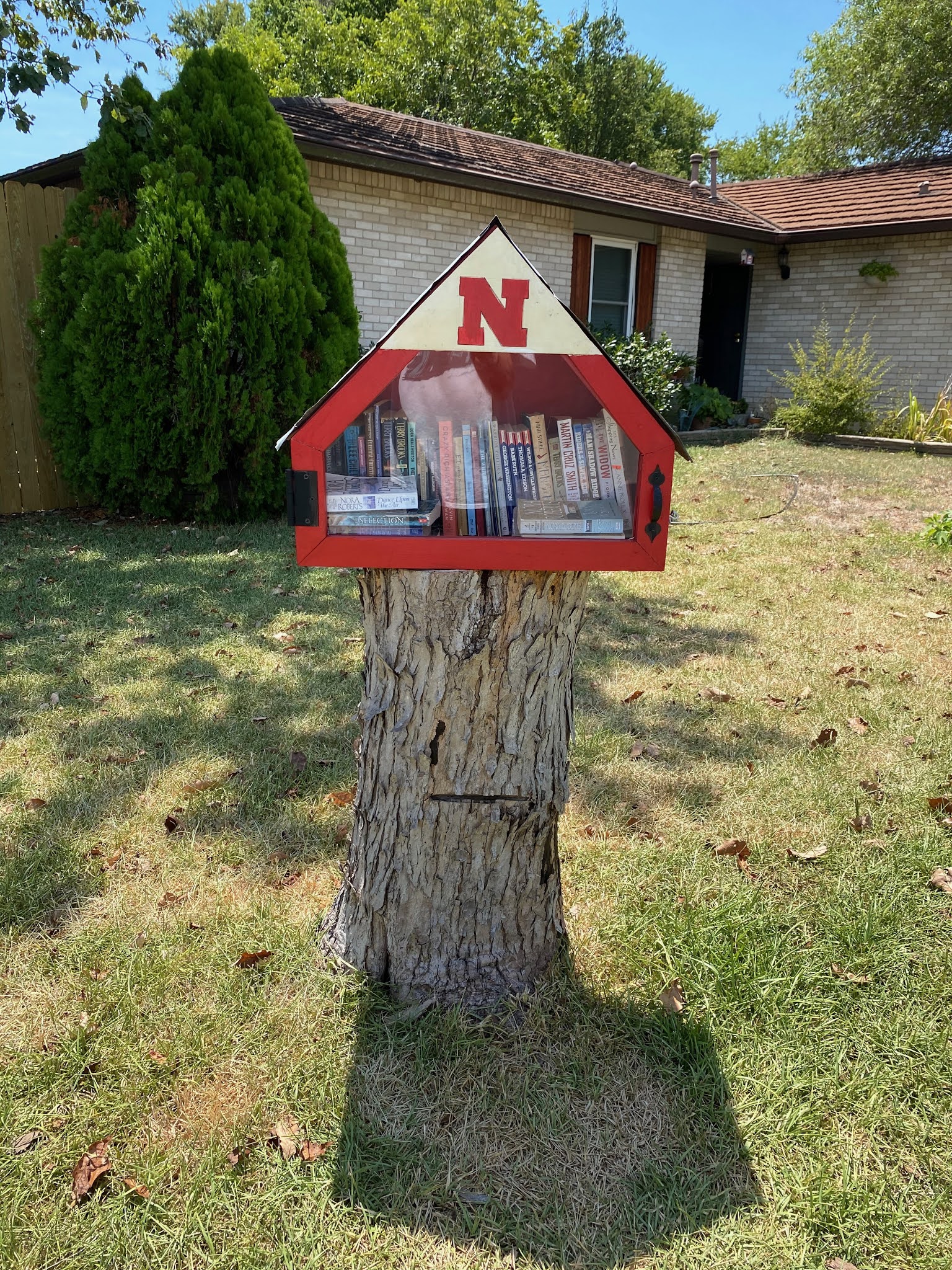
Neighborhood Book Kiosks

The first one in my neighborhood appeared in February and I thought that it was unique. I saw another one a bit farther from home. It finally occurred to me that this is a phenomenon. I like it as an example of spontaneous order, an axiom in Austrian economics. Reading on Wikipedia revealed that other people think the same way that I do. And not everyone else is happy with us.  

This is the one in my neighborhood.
It has four sides with two panels of books and it rotates.
(I don't know who owns the easement.)

From The Atlantic

U.S. -- The Danger of Being Neighborly Without a Permit

All over America, people have put small "give one, take one" book exchanges in front of their homes. Then they were told to tear them down.

Conor Friedersdorf

February 20, 2015

Since 2009, when a Wisconsin man built a little, free library to honor his late mother, who loved books, copycats inspired by his example have put thousands of Little Free Libraries all over the U.S. and beyond. ... 

I wish that I was writing merely to extol this trend. Alas, a subset of Americans are determined to regulate every last aspect of community life. Due to selection bias, they are overrepresented among local politicians and bureaucrats. And so they have power, despite their small-mindedness, inflexibility, and lack of common sense so extreme that they've taken to cracking down on Little Free Libraries, of all things.

https://www.theatlantic.com/national/archive/2015/02/little-free-library-crackdown/385531/


[Texans are a little more open to letting people do the right thing without permission from the government. Wells Branch is a neighborhood on the north side of Austin. Dell, HP, and others have campuses there.]


WBNA | Wells Branch Neighborhood Association

Little Free Library Boxes

Welcome to the Little Free Libraries Summer Scavenger Hunt!


Did you know there are currently 14 Little Free Libraries throughout Wells Branch?  LFLs are free book exchanges where anyone can “take a book, return a book.”  Join us in June for a LFL Scavenger Hunt.  You’ll have the opportunity to visit our neighborhood LFLs, find some great (free!) summer reads, and earn a chance to win a Barnes & Noble gift card.

http://wbna.us/community/library-boxes/


Posted to Nextdoor dot com serving our wider subdivision

[ I found out that the Little Free Library boxes were not the first of their kind. “Book Crossings” appeared about the turn of the millennium.] 


Leaving reading materials in public places when no longer needed has long been a silent means of communication and sociability amongst bibliophiles. Ron Hornbaker conceived the idea for what is now known as BookCrossing in March 2001[2] and enlisted business partners and co-founders Bruce and Heather Pedersen[3] to launch BookCrossing.com on April 21, 2001.[4]


After two years the website had over 113,000 members and by 2004 it was prominent enough to be referenced in an episode of the Australian soap opera Neighbours.[5] The same year it appeared as a new word in the Concise Oxford Dictionary,[6] although as of 2017 only Collins of the major online dictionaries retained it as a word.[7][8][9][10]

https://en.wikipedia.org/wiki/BookCrossing


On a busy backroad I take to the freeway.
It serves walkers well.
(Again, it seems to be on the property owner's
public easement.)

[From Wikipedia] Closely allied with the BookCrossing concept, the original public bookcases were conceived as artistic acts.[1] Very early examples are the creations of performance artist duo Clegg & Guttmann in 1991. Collections of bookcases were conceived as "free open-air libraries" in Darmstadt and Hannover in Germany in the late 1990s.[2]


Controversy and criticism[edit]

In 2003, BookCrossing was criticized by the astrologer and novelist Jessica Adams, who claimed that books were being "devalued" by the website as BookCrossing could lead to lower sales of books and, therefore, the reduction in royalties being paid to authors.[20] Most BookCrossers dispute this argument, however. They claim that the website introduces readers to authors and genres that they have not read before, that the website encourages more people to take up or reclaim reading as a hobby, and that some members, having read a book that they have enjoyed, will buy extra copies to distribute through BookCrossing.[21]


Another busy side road. 
You have to step up onto the property for this.

In March 2005, Caroline Martin, managing director of the publisher Harper Press, said in a speech that "book publishing as a whole has its very own potential Napster crisis in the growing practice of bookcrossing".[22] BookCrossers rebutted the link to Napster, saying that while music filesharing involves duplicating audio files countless times, BookCrossing doesn't involve duplicating books (and also does not involve violating copyright, as books can be sold or given away freely without permission of the publisher being needed). When BookCrossing was first launched, the founder of BookCrossing, Ron Hornbaker, originally wondered if people would make this comparison.[23]

https://en.wikipedia.org/wiki/Public_bookcase


[A related link on Wikipedia]

Give-away shops, freeshops, free stores or swap shops are stores where all goods are free. They are similar to charity shops, with mostly second-hand items—only everything is available at no cost. Whether it is a book, a piece of furniture, a garment or a household item, it is all freely given away, although some operate a one-in, one-out–type policy (swap shops). The free store is a form of constructive direct action that provides a shopping alternative to a monetary framework, allowing people to exchange goods and services outside of a money-based economy.


A neighbor told me about a different one.
I found this instead.
(Clearly on the front lawn.) 

[More from following the links in Wikipedia write-ups]

The anarchist 1960s countercultural group the Diggers[1] opened free stores which simply gave away their stock, provided free food, distributed free drugs, gave away money, organized free music concerts, and performed works of political art.[2] The Diggers took their name from the original English Diggers led by Gerrard Winstanley[3] and sought to create a mini-society free of money and capitalism.[4] Although free stores have not been uncommon in the United States since the 1960s, the freegan movement has inspired the establishment of more free stores.

https://en.wikipedia.org/wiki/Give-away_shop


Also on Necessary Facts

Money as Press and Speech 

Charles Lamb 

Frankenstein, Rayguns, and Bicycles 

Five Books About Books 


Monday, February 18, 2019

Book Review: Blink by Malcolm Gladwell

Intuition is underappreciated. We like reams of repeatable data and validated statistics. As important as those are, they are perhaps less than half of the cognitive processing that we bring to problem solving. Of course, intuition is developed over time by experience that is informed by reason and tested by measurement. However, for the expert, whether a museum curator attributing an archaic statue or Marine Corps general repelling an invasion, intuition brings success. 

We all use it every day, especially when reading each other’s faces. Gladwell calls that “mind reading” because your face reveals your feelings—even if you try to hide them. It is “mind reading” also because making the face of an emotion triggers the same processes in the mind that external events would cause.
Blink: the Power of Thinking without Thinking
by Malcolm Gladwell,
Little, Brown and Co., 2005

Intuition also fails when it is under-informed. The classic “Pepsi Challenge” of the 1970s and 80s supposedly demonstrated that in a blind taste test, most people prefer the taste of Pepsi over Coke. And they did. But we do not drink beverages in single sips with blindfolds on. More to the point, the very average consumers had no training in tasting. Gladwell introduces us to the world of professional tasters. Through long training, they develop vocabularies and sets of measures that are integrated into their percepts. They become deeply knowledgeable about food. For them, Oreos have ninety attributes of appearance, flavor, and texture. On a scale of 1 to 15, how slippery is your mayonnaise?

But experts can be wrong if their expertise is derived from the wrong measures. Professional audiences were unenthused with The Mary Tyler Moore Show and All in the Family.  Gladwell advocates for a musician named Kenna.  (You can find him on YouTube, of course.) Kenna can’t get air time. But people who know music want his. He burst into the nightclub scene, shot his own videos, and was pursued by producers. But his music does not fit the radio genres. I listened to half a dozen on YouTube, all very good and all over the map musically.

Intuition is not omnipotent. It will not overcome physical barriers of time and space. That is what leads to the continuing string of tragedies where the police over-react and kill an unarmed person who is not threatening them. Their intuition is destroyed by the high-speed chase, the words and actions of other officers. Alone, forcing themselves to stop, they perceive the small slices that say “this man is not dangerous.” In those cases of wrongful harm, the police more closely resemble the functional autistic who is more interested in a light switch than a face. They have shut down parts of their brain thus denying intuition the opportunity to inform.

Malcolm Gladwell is a very popular writer. I only found out about his works recently while re-watching episodes of NUMB3RS. His name and his book, Tipping Point, are dropped in the Season 1 story, “Sniper Zero.” He is clear, concise, conversational, and insightful. He is a synthesizer, drawing together different stories to create a new narrative.

That brings a caveat. The presentation is not rigorous. Cook County Hospital in Chicago treats hundreds to thousands of people each day, most of them indigent and therefore without good medical support. A common problem is the man complaining of a heart attack. It must be taken seriously, but often is not an infarction. Sorting them out takes resources and erring on the side of caution requires even more bed space (and expense). Dr. Brendan Reilly began creating a database of case histories to serve a guideline in diagnosis. Reilly based his work on a previous effort by Dr. Lee Goldman who developed a mathematical model for cardiac symptoms. But Reilly met resistance, of course, from the ER staff cardiologists who did not want to surrender their expertise to an algorithm. Says Gladwell, "The algorithm doesn't feel right." But is that not the point of the book? Why would their intuition be less authoritative? This is likely just a simple misstatement. But I take it as a signal that Gladwell is offering us an array of interesting facts united by a thematic hypothesis. 

On the upside, Gladwell takes a mechanistic approach to solving the problems of social discrimination. He tells of how women finally made it into the major symphony orchestras when blind auditions became standard practice. From another source entirely I learned that India uses this to preclude geographic, ethnic, and religious bigotry from interfering with university placement. Examinations are anonymized. This week, I will again be a judge in the Austin Energy Regional Science Festival. I think that the suggestion has merit but I am not sure how to implement it in our case.

PREVIOUSLY ON NECESSARY FACTS


Tuesday, July 28, 2015

Linguistics Debate: What Colors are Your Rainbow?

We too easily assume that our Paleolithic ancestors perceived the natural world of trees and sky the same way that we do. However, sensation is not perception. They may well have had the same physiological sensations, but their perceptions were necessarily different because language tells a person what they perceive. Between sensation and perception, the percept is an integration of two or more sensations. That integration is automatic. Percepts are self-evident. They are the basis of knowledge. However, concept-formation is volitional; it is not automatic. (See Introduction Objectivist Epistemology by Ayn Rand.)

“In Japan, people often refer to traffic lights as being blue in color. And this is a bit odd, because the traffic signal indicating ‘go’ in Japan is just as green as it is anywhere else in the world. So why is the color getting lost in translation? This visual conundrum has its roots in the history of language.

Blue and green are similar in hue. They sit next to each other in a rainbow, which means that, to our eyes, light can blend smoothly from blue to green or vice-versa, without going past any other color in between. Before the modern period, Japanese had just one word, Ao, for both blue and green. The wall that divides these colors hadn’t been erected as yet. As the language evolved, in the Heian period around the year 1000, something interesting happened. A new word popped into being – midori – and it described a sort of greenish end of blue. Midori was a shade of ao, it wasn’t really a new color in its own right.” (From The crayola-fication of the world: How we gave colors names, and it messed with our brains (part I) here.) 
“The color debate was made popular in large part due to Brent Berlin and Paul Kay’s famous 1969 study and their subsequent publishing of Basic Color Terms: Their Universality and Evolution by Brent Berlin and Paul Kay, Berkeley: University of California Press: 1969. Berlin and Kay also found that, in languages with fewer than the maximum eleven color categories, the colors followed a specific evolutionary pattern. This pattern is as follows:

  • All languages contain terms for black and white.
  • If a language contains three terms, then it contains a term for red.
  • If a language contains four terms, then it contains a term for either green or yellow (but not both).
  • If a language contains five terms, then it contains terms for both green and yellow.
  • If a language contains six terms, then it contains a term for blue.
  • If a language contains seven terms, then it contains a term for brown.
  • If a language contains eight or more terms, then it contains terms for purple, pink, orange, and/or gray.”
(See "Linguistic relativity and the color naming debate" in Wikipedia here.)
Those "rules" are debated.  One problem that Berlin and Kay faced was borrowing. People learn new ideas from their neighbors. To take a case in point, consider Hungarian.  Magyar has three native terms for color, but none of them is "red."
Red
piros
borrowed from “rosa”
Orange
narancs
borrowed from “aurum”
Yellow
sárga
native (sar is “mud, mire, dirt’ sarj is “shoot, sprout, or bud”)
Green
zöld
native
Blue
kék
native
Violet
lila
borrowed
Brown
barna
Borrowed
bor is wine; sör is beer


The problem of black and white speaks to growth in vocabularies by differentiation: hyper, hypo; super, sub; friend, fiend; divine, devil. Black and white in Hungarian are fekete and fehér. They are at root the same word, but changed slightly for meaning. We still have vestiges of that specifically with blank (Spanish blanco=white) and black.

ALSO ON NECESSARY FACTS


Friday, July 10, 2015

Language and Thought: As You Think, So You Speak

The primary purpose of language is thought. Communication is secondary. It is true that language evolved out of animal calls. Ravens have 30 calls in three dialects. Our grunts, coos, and growls are necessarily more complex. The origins of modern language are unclear and the purpose of language is largely misunderstood.

One way to think about this is by analogy to geometry. Practical geometry goes back 3000 years, perhaps. We know of clay tablets with cuneiform tables of Pythagorean triples.  But formal geometry began only about 300 BCE.  So, too, did language originate with animal calls, but now serves a more abstract and sophisticated purpose.

We largely trace our modern speech back to about 10,000 years to 8000 BCE. Nostritic is a  construct that unites all Afro-Asian languages, but is highly putative. Nonetheless, it is suggestive. Proto-Indo-European is on firmer grounds but is only 6000 years old.

In the 18th century, European intellectuals stumbled on the fact that the languages of India share deep roots with the languages of Europe. Words such as mother, father, and brother, the first ten numbers, and other basic vocabulary suggested a common origin. Words for “beech” and other clues indicated the ancestral home of the “Caucasians.”
These languages all evolved from a common ancestral tongue called Proto-Indo-European (PIE), spoken ca. 6,000 years ago by a people living (by "traditional" hypothesis) somewhere in the general vicinity of the Pontic Steppe north of the Black Sea and east to the Caspian -- an area that, perhaps not accidentally, seems to coincide with the land of the ancient Scythians, from the Ukraine across far southwestern Russia to western Kazakhstan – “Indo-European Languages Evolution and Locale Maps,” by Jonathan Slocum here. 
 It is easy to see that modern languages from Greek and Latin to German and English grew by differentiation.  We know the prefixes hyper and hypo, sub and super. They indicate some motion or distance away from you, or by extension some other reference, above or below.  Beer and wine were originally the same thing: fermented liquids, but we differentiated them, by their origins, grain or fruit.
http://www.ling.cam.ac.uk/li7/grimpie.gif

At the same time, long statements commonly understood were compressed by slang.  The word “nest” is a contraction for “nether sitten” because a nest sits down upon the branches. Today, we ask, "Wussup?"

Philologists could not ignore baby talk: we imitate our children, from “moo" for cow to “choo-choo" for train.

We all play with words. British slang calls a girl a “bird” but that is a transposition from “bride” just as the “butterfly” was originally the “flutter by.” 

No woman likes being called a whore. The rules of philology show that “whore” is the Germanic (die Hure) form of the Romance “cara” (dear).  In Italian, you can say “Cara mia” and get a kiss, but “meine Hure” does not work so well in German.  They are the same word at root.  The K in Latin becomes an H in German.  (centum = hundred; cortus = heart) That led some philologists to look for mountain ranges on the theory that those ancient ancestors aspirated their Ks while climbing uphill. The assertion did not stand up, but it does point to the kinds of ways that languages do change.

In our time, it is ROTFL and LOL, and the full range of emoticons from the simple smiley face to the inventory on your smart phone. 

The bottom line is that how you speak (or write) derives from how you think; and, conversely, how you think manifests itself in your speech (or writing). The two are different. I am often embarrassed, if not horrified, by my own vernacular speech. I take more care with my writing. OTOH YMMV.

The fact remains: what is in your head determines who and what you are. Language is the medium and means and mechanism of thought. Alone on an island, you would have no one to speak to, but the words in your head would predict your chances for survival, even as you imagine felled trees becoming a raft.


ALSO ON NECESSARY FACTS

Friday, May 22, 2015

Leadership

In my personal life and professional life I have always worked best alone, and second best as a supporter. I do not join many clubs.  When I am in a community group, if I choose to volunteer for office, I get elected as secretary or vice president.  I never let myself be made president. 

Lifelong experience taught me that no one accepts my suggestions.   I know what to do. I see a solution. I question everything, even my own ideas.  My solutions are heuristics, not algorithms; theories, not formulas.  By “theory” I mean the formal, scientific definition: a conceptual explanation of facts that allows prediction and falsification.  New facts may require a new theory. Not many people are comfortable with that.  

What everyone else does is common sense: it gets the job done, but is suboptimal. 


Informal leadership is chemical, like love.  The real leader of a club might be the vice president. If you gather all of a corporation's emails and graph the to: and from: fields - never mind the content - you will see the real organization chart. 
The military is all about leadership at a depth of commitment that the corporate world cannot understand.  Everyone from corporal to general is in charge of other people.  You do not go into leadership in a quantum leap.  Three grades separate the trainee, private, and specialist from the corporal who has earned responsibility for a group of four.   The army corporal is an E-4, Enlisted grade 4.  A command sergeant major is an E-9.  Above the 2nd and 1st lieutenants and the captain, is Officer grade 4, the major. The four-star general is an O-9.  It is all very granular. 

Customs and courtesies get complicated. Basically, enlisteds do not salute each other. We do salute officers.  Officers salute each other.  (Enlisted E-4 and above are “non-commissioned officers”; real officers are “commissioned officers.”)  Even though America was founded specifically and purposely as a democratic republic, the military follows the British tradition of a class-based society.  You address an officer as “Sir” or “Ma’am”, but they call you only by your rank.  Invitations to social events go out to “officers and their ladies, sailors and their wives.”  Just as in Animal Farm, our revolution left some of us more equal than others. 
 
Texas State Guard
Regional Basic Orientation Training
RBOT Class 009 graduation.
May 17, 2015

Customs and courtesies can get complicated. I am a petty officer third class in the Texas maritime regiment (TMAR), within the Texas State Guard, which is a component of the Texas Military Department, a state agency.  As an E-4, I am equivalent to a corporal. Teaching a class in computer operations earlier this month, I stood before a class of 14 people, from sergeants to captains.  I called attention, “Class… Ten…. Hut!” And they came to their feet.  I was in charge of the class.  It is common in the military for non-coms to train officers.  Unlike the corporate world and informal society, compliance does not depend on approval.

ALSO ON NECESSARY FACTS