Showing posts with label risk management. Show all posts

Sunday, February 21, 2021

Winter Happened

On Monday, 8 February, I saw an early honeybee on an early dandelion. On the 15th, temperatures were in the single digits. The state of Texas suffered a winter storm from the Panhandle to the Rio Grande. We were in one square mile that did not lose electrical power. However, by Wednesday night, the water quit. 

Fortunately, on Monday, we had filled kitty litter pails and put them in the bathrooms for flushing. (We keep them for household moves because they store electronics, glassware, etc., very nicely.) But by Friday, when it warmed up, I refilled them all with roof runoff, again for flushing. We had enough bottled water. We keep 10 gallons in glass and refill six heavy plastic gallons for daily use. We have two Brita filters, one caraffe and one for the faucet. And we still have plenty of dry, packaged, and frozen food. Gratefully, we did lose power, though we could have put the refrigerated and frozen food outdoors for a few days, as other people did. And we have a barbeque grill and five bags of charcoal in the garage.

2004 Kingsley, Michigan, Halfway to the North Pole (45 N)
Roof rakes for when then snowfall threatens the structure.

We expect the "boil water" notices to be lifted in a couple of days. Just in case, though, I started tap water boiling on the stove.

Emergency preparedness is a state of mind and a lifestyle habit. I was fortunate to have worked a project for the Texas Department of Public Safety Division of Emergency Management in 2014 and then go from there to a project at the Texas Military Department which took me into the Texas State Guard, which included 15 or 20 online classes from FEMA, and half a dozen live exercises, culminating in three deployments. Aristotle called deep learning "second nature."

Hurricanes, tornadoes, floods, wildfires, snowstorms, my nightmare scenario is that the Permian Basin is going to sink 500 feet and become a lava field.

Previously on Necessary Facts

CERT: Community Emergency Response Team 

Hurricane Tejas 

The Next Hurrican Harvey 

Volunteering in an Emergency: What to Expect 


Sunday, October 8, 2017

What is Cost?

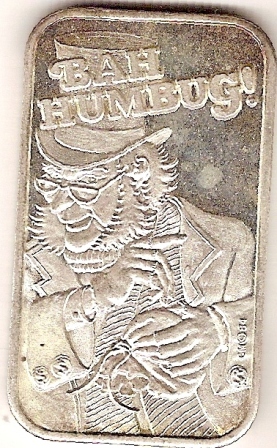
We generally accept the dollar price of something to be its cost to us. The truth is more complicated. Accountants and economists know “opportunity cost,” the hidden tally of what you must give up in order to obtain what you get. I suggest that an “inverse opportunity cost” is represented by blackmail: what you would give up not to lose a thing. Insurance and safety precautions are among those measurable costs.
1-ounce silver bar
celebrating
Ebenezer Scrooge

We know retail prices, wholesale prices, and producer prices, salvage value and replacement cost. Many people who are successful traders believe that if they sell you something for $700 and discover later that you would have paid $1000, then they just lost $300. They call it “leaving money on the table.”

This avenue of inquiry was opened for me just over 40 years ago by R. W. “Bill” Bradford when he owned Liberty Coin Service of East Lansing. Soon after the precious metals run-up (or paper money collapse, depending on your view), he retired to Port Townsend where he followed his true calling, publishing Liberty magazine. He always admired H. L. Mencken and saw himself in that role. I was happy to see Liberty on the newsstands next to Reason. Bill passed away too young in 2005. (Wikipedia here.)  I learned a lot in Bill’s coin shop, mostly from the questions he asked. I often could not answer them; and he never did, leaving the work to the student.
 
Plastic tokens from bars and taverns
(US Quarter center for size.)
He asked three rapid-fire questions: “Is a thing worth what you paid for it?  Is it worth what you could sell it to someone else for? Is it worth what it would take to replace it?” 
Collectors pay 60% to 100%
over the spot price of silver
for these common coins.
"The market is always right."

Those were all cogent and obvious, even from my side of the counter. The inherent inflation caused by government deficits was driving up the prices of collectible numismatics which normally would have been insensitive to those markets. When the price of silver went to $50 per ounce because of the Hunt Brothers, coin stores were tossing otherwise “rare” items, such as U.S Mint and Proof sets into shipments bound for smelters. Many collectible silver coins would be replaced at higher prices later, after the collapse of the silver futures market.

PREVIOUSLY ON NECESSARY FACTS

Monday, May 15, 2017

ANOC: Advanced Non-commissioned Officer Course

On the weekend 10-12 March 2017, I completed the Advanced Non-Commissioned Officer Class (ANOC) of the Texas State Guard. Although the J-7 (Joint Training directorate) at headquarters likes to maintain the fiction that their orders and guidance ensure that training is the same for everyone, in fact, it depends a lot on who commands in the classroom.

My third class, BNOC, was dedicated to us: we were all BNOC. However, the second class I completed, Primary Leadership Development (PLDC), was, like this one, held in a joint force, cross-component environment. We did not train with them; but we all socialized after hours. So, I benefited from the opportunity to compare and contrast this ANOC with a previous session for another group. The courses were compatible, but not identical.

We all studied the meaning of Leadership, the principles of Supervision, and the application of Leadership Behavior. We all had lessons in Counseling and Mentoring. We all engaged in exercises in applied Creative Thinking. We placed all of that into a narrative of Teamwork based on Management Principles, tempered by Risk Management. The specifics of the PowerPoint slides and the practical exercises were different for us.

Our ANOC instructor was a Marine. Only about half of us in the TXSG are prior federal military. (I am not. ) While Marines can be found in the Medical Rangers, the Air Component, and the Army Component, most of them are (of course) in the Maritime Regiment. Technically, that is the uniform that I wear. However, I am not in TMAR; I am a clerk in the command group. But I knew our instructor. And in real life, he is a high school mathematics teacher. So, this class went well for me.

Non-commissioned officers are the backbone of the military and the reason our military is the best trained, most professional, and most respected in the world. First-line supervisors execute the day-to-day operations with precision whenever and wherever duty calls. Foreword, Army FM  7-22.7

One of our lessons was on the Abilene Paradox. No one really wanted to go to Abilene, but each of them thought that everyone else did, so they each went along with what they misperceived the consensus to be.

In the other ANOC that I observed the new high-ranking sergeants directed us lower non-coms in close order drill. In this class, the instructor called the commands. However, his lessons included several ways to achieve those troop movements. He even taught us “counter march, right about” which, rolling caissons or not, is not a proper command – but is cool to do and see done.

PREVIOUSLY ON NECESSARY FACTS


Saturday, May 28, 2016

The Fourth Star

“Even those who learn from history are surrounded by those who are doomed to repeat it.” – Chuck B. on Twitter, April 12, 2016.

The Iraq War tested four four-star generals: John Abizaid, George Casey, Jr., Peter Chiarelli, and David Petraeus. This is their story. (The Fourth Star: Four Generals and the Epic Struggle for the Future of the United States Army by David Cloud and Greg Jaffe, Random House, 2009.) Each of them had a correct view of the challenges and answers. However, without being able to work together, their efforts could not support and reinforce each other. They were not in conflict against each other. Rather, their assignments – and their acceptances of those roles – left them distanced in space and time from each other. Beyond the specifics of the Second Gulf War, this is a book about leadership, leadership styles, and the natural limits to the complete fulfillment of our goals. The narratives here are richly detailed. The writing is tight and active. The authors were the Pentagon correspondents for the Wall Street Journal, the New York Times, and the  Washington Post.

Each of these four generals is an outside-the-box creative thinker. Each is competitive, driven, focused and intelligent. All hold advanced university degrees. Though Petraeus and Casey are connected by family ties within the military general staff, Abizaid and Chiarelli came from blue collar homes. Whereas Casey and Abazaid graduated from West Point, Chiarelli and Petraeus earned their commissions through ROTC. On their way to the top, each took detours within the military. Chiarelli and Petraeus taught in the social science department at West Point. “Sosh” is a fraternity of strategic planners and political thinkers whose connections in the Pentagon allow them to help younger peers get their careers back on track with assignments to combat brigades. Interestingly, Lt. George W. Casey, Jr. first met Lt. David Petraeus through their mothers. Casey’s father was a two-star general. That put Elaine Casey in the same social set as Peggy Knowlton, also the wife of a general, and George Petraeus’s mother-in-law. When Casey was finishing Ranger School, his mother called him and told him to introduce himself to Petraeus who was headed to the 509th Parachute Infantry, the unit Casey had just left. (page 21) 

USA Today
Ethnically Syrian, Gen. John Abizaid is a second-generation American whose foreign language in school was French. He learned Arabic later, completing his MA from Harvard in Middle Eastern Studies with a year at the University of Jordan in 1979-80. In 1985, Major Abizaid was assigned to a UN mission during the Israeli occupation of Lebanon. His experiences gave him an understanding of the problems that the US would face in Iraq. He believed that sectarian divisions, discord, and violence are endemic to the Middle East: no military solution is possible. He accepted the Powell Doctrine: crush the conventional forces of a conventional opponent and get out before you get bogged down in another Vietnam. As the commander of CENTCOM, Abizaid was responsible for the work of the other generals who were charged with delivering a successful conclusion to the invasion of Iraq.

Gen. George W. Casey, Jr. earned his BS in International Relations at Georgetown in 1970. An ROTC student, he expected to repay the army with four years and then go to law school.  Instead, he followed his father, Brig. Gen. George W. Casey, Sr., who was the commander of the 1st Air Cavalry Division when he was killed in Vietnam. (His father also attended Georgetown, earning an MA in international relations in 1958 before completing an MBA at George Washington in 1965. Much more in Wikipedia, of course.) Casey, Jr., went on to complete his MA in international relations at the University of Denver in 1980.  “George had become an expert in navigating the middle ground between his Georgetown friends and his family. He generally supported the war [in Vietnam], but wasn’t the kind of person to get in arguments or begrudge his friends their opinions. Neither was his dad.” (pp. 6-7)

NBC News
Serving in Kosovo in 2000 was Casey’s experience in peacekeeping and counterinsurgency. Having labored to broker a ceasefire for one village, he saw the truce shattered when rifles and hand grenades were found in the home of the village mayor who had been on the negotiating committee. It taught Casey that the US military cannot keep the peace in a country that does not want the peace. But, like all soldiers, he served those who called.  “Just three months before the invasion [of Iraq] he assembled a small group of active and retired officers that was rushed to the Middle East to deal with electricity generation, clean water, and other expected postwar problems.” (p. 162)

Tasked with restoring the nation while fighting the insurgency, Casey’s plan was to draw the resistance into the government to defuse them, to make them part of the solution, and let them hassle out their problems within the structure of the government. That, too, failed.

Western political theory accepts majority rule that is always limited by constitutional law and tradition. That did not apply in Iraq. The authors do not mention that Saddam Hussein ruled like other strongmen by balancing his opponents against each other, while also favoring his power base. That meant oppressing the majority Shiites and minority Kurds, and giving power to the Sunnis. The fall of Saddam Hussein left the Sunnis at the mercy of the merciless Shiites who now controlled the government of Iraq.

Also here, the reader today can see the roots of the ISIS Caliphate. Back then, moderate Sunnis united with the Shiite authorities to fight radical Sunni Islamists from Al Qaeda who were making life hell for everyone. But it was too little, too late.

Conservative Treehouse
Peter Chiarelli earned his BS in political science at Seattle University where he did his ROTC. (He later completed a master’s in public administration at the University of Washington in 1980. He was granted an MA in national security strategy from Salve Regina University. Wikipedia.) Rejected three times for law school - poor at standardized tests, apparently - he entered the army. Sent on orders first to earn the master’s, Chiarelli was tapped for the social science department at West Point. He loved the challenge of teaching. He did not have to take a position personally in order to advocate it. In one class, he said that the US invited the attack at Pearl Harbor by encircling the Japanese and threatening them. Disagree as they did, the cadets were only allowed to argue back with facts. It was good training, both for them, and for him. 

Chiarelli’s goal in Iraq was to win the war by rebuilding the economy. Instead of big-ticket projects to highly-placed defense contractors like Bechtel, Chiarelli wanted many small projects paid for immediately to clean the streets of garbage, to restore electricity to neighborhoods, and to distribute clean water.  He was successful. Sunni fighters left their guns behind to do the simple and dirty work of civil engineering in their neighborhoods. When the money stopped, they went back to being insurgents, and life got worse for everyone. The Sunni grievances were real. Shiite death squads under the cover of government legitimacy as police and security forces pushed the Sunnis out of mixed neighborhoods. The government closed the only bank in Sadr City, forcing Sunnis to travel through deadly Shia territory. Gen. Chiarelli’s rebuilding faltered.

The Telegraph (UK)
General Petraeus was the most conventional of them though his winning strategy was contrary to the wisdom of the time. (Petraeus completed his doctorate from Princeton while he was teaching in the social science department at West Point.) Petraeus pushed for the deployment of 21,000 additional troops – called “The Surge” – to bolster the failing occupation. However, rather than stationing them in huge bases with swimming pools, and a BX the size of a Walmart, he placed them in 120 small detachments close to the civilians. They also worked as advisors and supporters to the Iraqi police and army who were tasked with keeping the peace. The first advantage was that the Iraqi people, civilians and military both, would stop seeing the occupying force as distant and aloof, but in and of them as collaborators. Moreover, the soldiers would come to know the people, not only gaining valuable intelligence, but also becoming less likely to stereotype the locals. More to the point, the strategy came with an exit policy: eventually, the US forces would minimize, and the Iraqi role would strengthen. The first happened. The second did not.

In the Middle Ages, military authority and civil authority were identical. As Europe reawakened, the military was subordinated to civilian control. Ever less often did dukes, kings, and emperors lead their troops into battle.The capture of Napoleon III at Sedan in 1871 was the dunce’s after school lesson. And military dictatorships are notoriously unsuccessful. So, the modern army carries out the orders it is given. The Second Gulf War was not just winnable: it was won. The fifth largest army in the world melted and evaporated. We then met them again in a new fog of war, a war that could not be won. Sometimes, being brilliantly intelligent is just not enough.


PREVIOUSLY ON NECESSARY FACTS

Sunday, November 23, 2014

YOUR STATE DEFENSE FORCE

Right now, 20 states have active defense forces. Their organizations and responsibilities vary, but, generally, they serve as technical and operational support for the state national guard. They provide response to public emergencies such as weather or man-made disasters.  They cannot be federalized; and they do not [usually] carry weapons. -- [edited 15 March 2017]
Green states have their own units
(March 2017: Oregon, Arizona, Louisiana, Alabama, 
Connecticut are all inactive.  Massachusetts is a
ceremonial honor guard only.)
From oko.ohmr.ohio.gov
 While prior military service is common in the ranks, it is not a requirement for enlistment.  Ohio is exceptional in conducting annual physical fitness tests, including  push ups, sit ups, a one mile run, and measurement of waist-to-hips ratio, for active deployment.  Here in Texas, you can join at 65 and serve until you are 70; and you can be extended by special orders.

Maryland recently created a cyber defense unit.  In addition to a medical regiment, Maryland volunteers can work in engineering, finance, information technology and communications, legal, religious, and logistics and supplies.  Some Maryland Defense Force civil affairs cadres work as interpreters. 
 “The Ohio Military Reserve is a component of the Ohio Adjutant General's Department and serves under the governor as commander in chief. Its primary mission is to provide a fully-manned and mission-ready civil support and sustainment brigade to support the state's Emergency Support Function 6 (mass care) and Emergency Support Function 7 (logistics and resource support) during natural or man-made disasters or other threats to homeland security. In order to accomplish this mission, OHMR units are trained in medical support, volunteer reception and management, shelter management and logistics support in addition to basic soldier skills. Our core competencies are training to National Incident Management System (NIMS), Military Emergency Management Specialist (MEMS), and Federal Emergency Management Agency (FEMA) standards.” -- http://ohmr.ohio.gov
Several states, such as Ohio and Maryland, point to old traditions of citizen militias.  Ohio became a state in 1803.  The Maryland Defense Force claims roots in the 17th century.  (Their website does not mention the war with Pennsylvania.)  However, the modern state defense forces are identified with the Militia Act of 1903 (Militia Efficiency Act or Dick Act), which reorganized the state national guards and defined more closely when they could be federalized. 

U.S. Code Title 32 Chapter 1 Section 109 (1916) empowered the states to create their own guard units commanded by the state governor. The Federal government activated the Maryland National Guard to the Mexican border in 1916, along with the national guards of Massachusetts, New York, Iowa, Texas, Arizona, and New Mexico.  World War I brought federal mobilization of all the national guards, creating the need for the home units. (Wikipedia “State Defense Force” here.  Also US Code archived at Cornell Law School and with attributing footnotes at Versus Law.)

“The Dick Act prohibited states from retaining their own militia systems. Ohio was one of the states that chose not to follow the federal mandate and [chose to] maintain such a force. A principal reason for the continuation of the Ohio Militia was the desire to protect Lake Erie. There was no Naval National Guard.” http://oko.ohmr.ohio.gov/join/info_about.php
As in many other states, here in Texas, our state guard  is under the adjutant general’s office, along with the Army National Guard and the Air National Guard.  The Texas State Guard Air Component is primarily a weather service, and also trains for a wide range of other duties. Unlike the other branches - Maritime Regiment, Army Component, and Medical Rangers – the Air Component [often] drills with their active guard counterparts.  


The Texas Maritime Regiment operates dive teams and boat operations for search and rescue and other tasks.  They serve along the salt water coast (367 miles) and the river waterways (4400 miles of major bodies and perhaps that many more lesser rivers, streams, lakes, ponds, and bayous).
The Maritime Regiment specifically embraces the unique structure and traditions of America’s Naval and Marine forces in preparing troops to carry out  duties related to Texas’ land, marine, littoral and riverine environments. In the interest of creating the most effective response team, TMAR has forged working relationships with various groups such as the U.S. Coast Guard, Texas Parks and Wildlife, Texas Forest Service, and the Lower Colorado River Authority.  The Regiment‘s members are true volunteers who willingly accept military discipline, orders and training to answer the call to meet urgent human needs in times of peril or crisis.”
Generally, across the states, you are a volunteer and cannot be required to deploy. Most states ask for a commitment of a weekend a month. Here in Texas, the promise is at least three years of 200 hours per year. Some drills are only one day. If you are prior military (about half of those enlisted or commissioned), you usually bring your last grade with you. Civilians usually have supervisory experience and often a college education.  Grades ("ranks" private through general), are assigned at first on that basis. 

The TSG operates evacuation and sheltering centers
in times of natural and man-made disasters. 
Among the missions of the Texas State Guard are:
Mass care/Functional needs care 
Emergency communications 
Special needs evacuation tracking 
Wide area damage assessment
FACT SHEET here


As a volunteer, you are not paid to drill and train. You supply your own standardized and specified uniforms and equipment. Here in Texas, when deployed for an emergency, all personnel receive $121 per day, sometimes with a food allowance of $35 per day, regardless of component, grade, or rank.

[Subsequent to the July 16, 2015, terrorist attacks in Chattanooga that targeted soft military sites - a recruiter and a supply depot - the Adjutant General of Texas was not alone in applying state law and allowing concealed carrying of firearms for those who are so licensed.  You cannot display any weapon you were not issued, but you can have a concealed firearm subject to a permit. Here in Texas, only a magistrate or a peace officer (defined in the state constitution) can ask if you are armed and ask to see your permit.]

Wednesday, August 8, 2012

The Remarkable Story of Risk

Against the Gods: The Remarkable Story of Risk by Peter L. Bernstein explains that the modern world was created by the mathematics of chance.  Earlier times had traders, bankers and merchants.  Our capitalist culture is special because of the mathematics of risk invented by Fermat and Pascal.  Those tools within the Renaissance cultural context allowed the idea that we could - and should - discover and control the future. 
 “The revolutionary idea that defines the boundary between modern times and the past is the mastery of risk: the notion that the future is more than a whim of the gods and that men and women are not passive before nature.” (pg 1 ppb)
I first reviewed this book for the Objectivist Living discussion board hereOver the years I alluded to it occasionally there and on the Rebirth of Reason website. My copy has dozens of Post-its.  Looking through the book again, I made still more notes. Perhaps it is my own ignorance, but hardly a page lacks something important worth marking for future reference. 

These facts, insights, observations, and assertions reflect more than shopping at a supermarket.  After all, von Mises called his work Human Action, not People at the Grocer’s.  “Fear of harm ought to be proportional not merely to the gravity of the harm, but also to the probability of the event.“ (Attributed to the Port Royale Logic.) In criminology, we say that punishment must be “swift, certain, and severe.”  Statistical evidence shows that only certainty seems to prevent crime.

The development of risk theory has deep roots.  Astragalus “knuckle bone” dice are known from Egyptian tombs of 3500 BCE – and pharaoh’s dice were loaded.  But the ancient world had many of the artifacts we assume are modern from accurate astronomy to steam-powered mechanisms.  True enough, the arithmetic was cumbersome, but something else far more consequential was lacking.

“Up until the Renaissance, people perceived the future as little more than a matter of luck or the result of random variations and most of their decisions were driven by instinct.  When the conditions of life are so closely linked to nature, not much is left to human control. As long as the demands of survival limit people to the basic functions of bearing children, growing crops, hunting, fishing, and providing shelter, they are simply unable to conceive of circumstances in which they might be able to influence the outcomes of their decisions.  A penny saved is not a penny earned unless the future is something more than a black hole.” (pg. 18)

From there, Bernstein covers the expected territory of probability theory and statistics: Pascal, Fermat, Graunt, Galton...  Allusions and examples from the American stock markets abound.  While an impassioned capitalist, he is not perfectly consistent in an Objectivist sense, admitting to the need for some government regulation of the financial markets.  However, lowercase-o objectivism runs throughout this work, as it must in any exploration that supports facts with theories and that validates hypotheses with evidence.  Bernstein quotes Chicago economist (and Nobel laureate) Harry Markowitz on diversification: “Diversification is both observed and sensible; a rule of behavior which does not imply the superiority of diversification must be rejected both as a hypothesis and as a maxim.” (pg. 252).

Also my Randian comrades will find it curious that John Maynard Keynes could be quoted as an objectivist: “When once the facts are given which determine our knowledge, what is probable or improbable in these circumstances has been fixed objectively and is independent of our opinion.” (A Treatise on Probability, 1921; cited pg 226.)

Peter Lewyn Bernstein (January 22, 1919 – June 5, 2009) shared his passion for markets with Robert Heilbroner (The Worldly Philosophers) with whom he attended both primary and secondary school, as well as Harvard College. (Biography on Wikipedia here.) Bernstein is also associated with the efficient market hypothesis which says that current prices reflect all the information that is generally available and out-performing the market is impossible without taking on more risk. (See Investopedia here and also Wikipedia here.) [edited 11 Feb 2021.]

Bernstein was the first editor of The Journal of Portfolio Management. He authored several books including Capital Ideas: The Improbable Origin of Modern Wall Street.  Bernstein published five of his ten books after he was 75 years of age.

Business Week’s reviewer, Peter Coy, call the theme of risk management “The Closest Thing to a Crystal Ball” (here)  “Bernstein brings Against the Gods up to the present with an account of how some skeptical researchers--beginning with the Israeli-born psychologists Amos Tversky and Daniel Kahneman in the 1950s--trashed the classical model of rationality by exploring how people actually behave in risky situations. The bottom line: People behave irrationally, even when they know they are doing so. Bernstein relates an anecdote about a distinguished Soviet professor of statistics who showed up at an air-raid shelter during a German bombardment. Until then, he had scoffed at the prospect of being hit. What changed his mind?  “Look,'” he explained. “There are 7 million people in Moscow and one elephant. Last night, they got the elephant.”