Showing posts with label laissez faire. Show all posts

Saturday, December 12, 2020

Turing Never Said That

“I think that sometimes it is the people who no one imagines anything of who do the things that no one can imagine.” The line is spoken twice, first by Knightley qua Clarke and then by Cumberbatch qua Turing. But they never said it. It should be attributed to a different genius, the screenwriter, Graham Moore.

I never accepted the quote as genuine, but it came up again when a colleague used it in their signature block. I wanted to warn them about that; so I did another Google search for an authoritative reference to debunk the false citation. I found the work of Sir John Dermot Turing.  

Dermot Turing – like his celebrated uncle Alan Turing – was educated at Sherborne School and King’s College, Cambridge. After doing a D.Phil in Genetics at Oxford, he concluded that scientific research was not for him, and moved into the legal profession. … His specialism was financial sector regulation, particularly the problems associated with failed banks, and financial market infrastructure.  -- More at https://dermotturing.com/about/dermot-turing/

In a blog on his website, Sir John explains: “Fake quotes - July 30, 2019 - We all know about fake news, but only recently I discovered fake quotes. I was asked where Alan Turing’s famous quotation ‘Those who can imagine anything can create the impossible’ had come from. After a lot of digging, the answer was ‘It didn’t.’ Not in his broadcasts. Not in his published papers. Not in his unpublished speeches.” 

The statement is insightful, powerful, and empowering. It deserves repetition and popularization. The author was Graham Moore. Moore received an Academy Award and a Golden Globe for his screenplay of Imitation Game. He understood Turing. 

“I had been this huge computer nerd my entire life. I went to space camp and computer programming camp. I was that kid. From a very young age, I knew about the legend of Alan Turing - among awkward, nerdy teenagers, he is a patron saint. He never fit in, but accomplished these wonderful things, as part of a secret queer history of computer science. And so I always dreamt of writing something about him, and I thought that there had never been a proper narrative treatment of his life, that he deserved. I by chance met the producers of the film at a party, and one of them told me they had optioned a biography. When I asked who it was, they said, 'it's a mathematician that you've never heard of.' When they told me it was Alan Turing, I almost tackled them, and I told them I'd do anything to write this film, I'd write it for free. It was all about luck and passion. That is how it started, and I felt that everyone else involved was just as committed to the story.” -- Graham Moore via IMDB at https://www.imdb.com/name/nm2441699/


Dermot Turing has developed an interest in his uncle’s work, publishing several books about the wartime projects at Bletchley Park. I bought two of them through Amazon UK. For myself, that was evocative on several levels. 


First, I am a globalist and I love global commerce. Unlike my conservative comrades who have fallen into the abyss of nationalism, I find an overarching  vista in Ayn Rand’s warnings against the Balkanization of western society. (See the Ayn Rand Institute here.) To be able to buy a product from across the Atlantic ocean with a few clicks is a tribute to human ingenuity in a open market.  

Second, my money was exchanged from dollars to pounds automatically and at a trivial cost. On the one hand a global society needs a global currency. On the other hand, an open market allows a plethora of monetary media. Friedrich A. Hayek called gold “the wobbly anchor.” (On NecessaryFacts here.) At the American Numismatic Association convention in Chicago in 2019, I spoke on the future of money and predicted a world coming soon with personal currencies. (See a version on Necessary Facts here.) During the Middle Ages, bankers rationalized the variegated fabric of local coinages with an abstract system of “pounds-shillings-pence”; and when they met at great fairs, using the new Arabic numbers and algebraic methods, they cleared their books without ever touching a coin.


Third, the transaction was secured with public key cryptosystems. Software agents shook hands and established trust in order to safely carry my money and order the transport of the seller’s product. 


A final note on Turing from Turing: “One scene in the movie which had puzzled me is the one where a young Alan Turing is pinned beneath the floorboards at his boarding-school and jumped on by his schoolmates. That’s bizarre, in many ways, not least because there is no evidence that Turing was bullied at school, and certainly none in Hodges’s book. Oho, it turns out that this scene is lifted from another book altogether – A Madman dreams of Turing machines, a novel by Janna Levin. So what started as fiction has been recycled as biography.” – Sir John Dermot Turing.


PREVIOUSLY ON NECESSARY FACTS

A Successful Imitation of Alan Turing 

Turing’s Cathedral 

Variations on Enigma 

BASIC: Turing’s Truth 

The Code Book 

Coins and Codes 


Sunday, September 28, 2014

WHEN OLD TECHNOLOGIES WERE NEW


I reasoned that there must have been telegraph hackers and sought to find them in the written history.  The telegraph came first.  Before hams broadcast in the ether, long before the telephone was regulated by the Federal Communications Commission, before Hermann Hollerith founded IBM, there must have developed prototypes of the things we take for granted in computing. 

Originally published online 4-SEP-1990 via USENET and Fidonet.  VERSION 0.75 August 26, 1990 -- A History of Early Cyberspace by mercury@well.sf.ca.us = MERCURY@lcc.edu (c) 1990 by Michael E. Marotta. published by The World GRID Association, P. O. Box 15062, Lansing, MI 48901 USA. You can copy this.
Box cover for VHS tape showing two teenagers at a computer about 1982.

Consider an anti-Western Union song from the July 20, 1883 meeting of the Brotherhood of Telegraphers at Clarendon Hall, in New York City that boasted, “We've left our keys...Let Jay Gould walk the floor...The wires are full of bugs...”(1) Though the term "bug" later referred to a semi-automatic sending key, the context is clear.  I had always accepted the story of Grace Hopper scotch-taping an errant fly into her log book.

Today's keyboarder suffers from carpal tunneling and a telegrapher would get a "glass arm" from too much sending.(1)

Box cover for DVD movie showing two teenagers above a computer screen with a scullThis summer [1990] we saw Mitch Kapor and Steve Wozniak invest their money in the Electronic Frontier Foundation, in part to aid the defense of hacker Craig Neidorf. The Strike of 1883 was supported by Thomas Edison who gave $300(1) or $700(2) at Clarendon Hall. 

Telegraphers were generally regarded as intelligent, clean, and quiet; and women worked as equals to men -- equal in ability, though not pay.(1,2,3).  And there was turnover. "Boomers", operators who hopped a train for the next horizon, filled in for boomers who had just left for the next horizon.  One major difference is that Western Union enjoyed a monopoly that would be the envy of IBM.

Some similarities are too obvious.  The computer, according to Carolyn Marvin, is a telegraph with a prodigious memory.(3)  There is no doubt that the early electric age presaged our own.  Experts defined their own status, “users” were abused with jokes about their ignorance of technology, and preposterous predictions about the complete and permanent improvement of humanity were superabundant.(3)

So where are the hackers?  Thomas Edison was the foremost telegrapher, the ultimate hardware hacker, duplexing and quadriplexing messages on the same wire.  Telegraphers played checkers and pursued romances, though, it is asserted, "not on company time". During the Strike of 1883, union loyalists within the company used the lines to keep members nationwide informed.(1)  They used a secret code,(1) though it is obvious that an operator could send anything at all in the presence of Jay Gould, whose skills lay in other areas. 

Sources:
(1) The Telegraphers: Their Craft and Union,Vidkunn Ulriksson, Public Affairs Press, 1953.
(2) The American Telegrapher: A social history, 1860 - 1900, Edwin Gabler, Rutgers University Press, 1988.
(3) When Old Technologies Were New, Carolyn Marvin, Oxford University Press, 1988.

Notes:
  • "Of all the marvelous achievements of modern science, the Electric Telegraph is transcendentally the greatest and most serviceable to mankind.  It is a perpetual miracle, which no familiarity can render commonplace.  This character it deserves from the nature of the agent employed and the end subserved.  For what is the end to be accomplished, but the most spiritual ever possible?  Not the modification or transportation of matter, but the transmission of thought.  To effect this an agent is employed so subtle in its nature that it may more properly be called a spiritual rather than a material force." -- Charles F. Briggs and Augustus Maverick The Story of the Telegraph and a History of the Great Transatlantic Cable, Rudd & Carleton. New York: 1858.
  • "Redeeming Charles Babbage's Mechanical Computer" by Doron D. Swade, Scientific American, February 1993.  (A successful effort to build a working, three-ton Babbage calculating engine suggests that history has misjudged the pioneer of automatic computing.)
  • "The Electric Telegraph" a poem, anonymous. from Chamber's Papers For the People.  Long.  The chorus is "Sing who will of the Orphean lyre/Ours the wonder-working wire."   And much more of the same on this and other topics.  (Telephones for the poor... do wireless transmissions harm operators... does use of the telephone cause deafness in the left ear...)
ALSO ON NECESSARY FACTS


Saturday, September 13, 2014

There is no John Galt - and that's worse

There is a destroyer loose who is shutting off the motor of the world, slowing the engine of creation, tapping out the extra power of invention.  But it is not one person whose name is a question.  What you tax you get less of; and what you subsidize you get more of.  The brightest people in the world are making video games; and no one is on the Moon.  It did not take a genius to figure this out: it is a universal law of human action.


No law, no regulation or ruling says what a computer is or who is qualified to program one.  In a lifetime, we have gone from no computers to over a billion of them.  The poorest people in the world have cellular telephones; and they trade online minutes as an ad hoc monetary medium.  It is truly wonderful, a perfect demonstration of the power of open markets.  When criminal hackers seek to violate your financial security, they do not need supercomputers chilled with liquid nitrogen: they use gaming computers whose powerful processors outstrip anything planned by university consortiums. 

However, to be a civil engineer or a mechanical engineer, you need to attend a government approved college, take a government licensing examination, serve an industry mandated apprenticeship, and, as a professional, buy a ton of liability insurance.  Since 1945, on the advice of MIT's Vannevar Bush, the government has actively subsidized as many research projects as we, the people, (and our grandchildren) could afford.  So, we have the same roads, the same railroads, the same internal combustion engines and steam turbines as we did 100 years ago.  They are, indeed, better, but not different.  The jet engine is 70 years old.  So is nuclear power.  We have nothing better.  

All work is an act of philosophy.  
They subsidized education, but never bothered to measure learning.  Torrents of federal money only bloated the administrations of universities without rewarding the faculties or incentivizing the students.  They subsidized healthcare, but never investigated life extension.  The medical monopoly pursues a cure for cancer like 19th century doctors fighting consumption caused by miasmas. 

We all get along somehow...  

And that allows the lawmakers, the regulators, and taxers, and tax-eaters to believe that their actions have no effect, no deleterious consequences. They believe that human action - and human inaction - is impervious to reality, that the physical laws of the universe do not apply to their decisions.  They see the tax-revenues coming in. They spend the money going out.  They never discover the unbroken window.

Frederic Bastiat's famous analogy of the broken window is a law of the universe. As best as we can imagine from science fiction, any sentient, self-aware, rational being must of necessity act and respond just as we have. There is no escape.  Every decision of the government must be an economic loss because the basis of that decision is for power not for profit.  Economic losses are not impersonal: they take the food off your table.  You do still have food, for the moment, but you do not know what you do not have because it was not invented or discovered.  


Not everyone wants to be a video game designer.
What do you do if you cannot do what you love? 

But if obeyed, nature can be commanded.  New sources of energy will power the extension of humanity into new frontiers. We know from historical evidence that new arts can be invented and new artists will flourish.  We could  live longer and smarter, and more prosperously. To achieve that in every endeavor, we must only do what we have done to create the video game industry: nothing.  Laissez nous faire.  Leave us alone.  

Previously on Necessary Facts
Atlas Shrugged Opening Show (2011)
Love, Loss, and Redemption in Atlas Shrugged
The Influence of Ayn Rand's Objectivism
Atlas Shrugged Part 3

Tuesday, May 27, 2014

Alongside Night to run in Austin; Author to Appear


J. Neil Schulman will be in Austin for the screening of his film, Alongside Night on June 18.  We will meet him for dinner at the Dog & Duck (17th & Guadalupe) the next evening, Thursday, June 19, from 5:00 PM to 7:00.  After dinner we will go to Brave New Books (1904 Guadalupe, just north of MLK) for autographs.

 With a cameo by Ron Paul, Alongside Night is the story of the final economic collapse of the United States. We see it through the eyes of 16-year-old Elliot Vreeland.  Elliott searches for his father, a Nobel laureate economist who was targeted for arrest because he consulted with the Europeans to create a gold-based currency that effectively destroyed all confidence in the U.S. dollar.  Inflation is rampant.  The federal government has issued emergency scrip; and vending machine tokens circulate as a convenience.  As shortages and rationing spread, thousands of activists and protestors are rounded up.  Hundreds are held in a secret prison called “Utopia” – Nowhere.


Alongside Night
Wednesday, June 18 7:30PM - 9:25PM
in Austin, TX at
AMC-14 Barton Creek Square Mall
Tickets $11.00 at

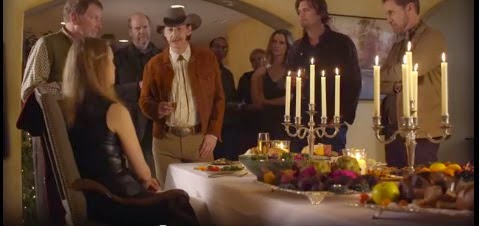
Starring Kevin Sorbo (Hercules: The Legendary Journeys), Mara Marini (Recreation), Susan Smythe (Lady Magdalene), Jake Busey (Contact and Starship Troopers), Star Trek: Voyager's Tim Russ and Garrett Wang as well as up-and-coming actors Christian Kramme, Reid Cox, Kyle Leatherberry, Rebekah Kennedy, Charlie Morgan Patton, and Eric Colton. Cameo appearances by Dr. Ron Paul, David D. Friedman, and Adam Kokesh.
Actor Kevin Sorbo plays economist Dr. Martin Vreeland in the film, "Alongside Night"
Kevin Sorbo as Dr. Martin Vreeland,
Nobel Laureate economist

Fan Trailer

Internet Movie Database

Longer Official Trailer
https://www.youtube.com/watch?v=sTZ8vn45Cds
Find us on Facebook: 
Alongside Night in Austin here
Author's websites:
http://www.alongsidenight.net/
http://www.alongsidenightmovie.com/

Graphic novel from Pulpless.com still available via Amazon.
Kindle edition of graphic novel available via Amazon

Jake Busey plays the President of the United States
The Wikipedia entry:

PREVIOUSLY ON NECESSARY FACTS

Saturday, June 16, 2012

Laissez-faire Criminology

Of the many theories of crime, none is based on doing nothing. Every theory assumes that someone has a duty to act to punish wrongs or remediate harms or save the sinner. Traditional studies of victimology come closest to a laissez faire theory that problems in our social environment are only analogous to problems in our physical environment: we protect ourselves from the elements; but we do not seek to punish storms, either for their own good or as general deterrence to any other bad weather.

Altruism informs criminology. Even more than the golden rule, the parable of the Good Samaritan tells us all that we are our brother’s keeper. And no one is kept better than someone in prison.

When Sir Robert Peel formed the London Metropolitan Police Service in 1829, crime was a political problem outlined by morality based in religion. Today, criminology resonates within sociology. A hundred years ago, Marxists criticized Max Weber in particular and sociology in general for being concerned only with church, family, and state. Today, those critical sociologists and critical criminologists control the content of most university programs: racism and sexism are caused by capitalism; end of story.

Even libertarians and objectivists who generally do not care what you smoke or with whom you sleep insist on the enforcement of property rights specifically as the punishment of those who violate the rights of others. Within those circles, self-identified “anarcho-capitalists” engage in long arguments with advocates of constitutionally limited government (“minarchy”) attempting to prove that a completely free market in protection and adjudication would still bring justice in the form of punishments to wrong-doers. That should seem peculiar. It is self-contradictory to claim that you are completely responsible for your own life, but someone else must be punished for your losses.  A completely consistent criminology based on individualism is centered on victimology: understanding your risks in society and taking preventive and preparatory actions to avoid losses.

Altruism has a range of definitions. Objectivists and libertarians cite the inventor of the word, Auguste Comte, and take him literally. Comte was a political Platonist who advocated for a secular civic priesthood to rule a common humanity that was united in complete concern for others – and no concern for self. Comte was explicit. Later philosophers softened this. After all, Jesus commanded us to love our neighbor as we love ourselves. Self must come first before benevolence can be extended to others. Today, altruism is mere politeness and civility, common grace, and simple decency. That seems harmless enough.

But what happens when that fails?

I am a fan of public transportation and ride one or more buses to work or play most days. “Pardon me”, “excuse me”, and “sorry” are important acknowledgements of small harms. Criminal justice is based on the expectation of larger and more complicated apologies for harms of greater consequence.

We generally understand others as extensions, projections, reflections, or reiterations of ourselves. “Do unto others as you would have others do unto you” assumes that others share your values. More deeply, it assumes that others think as you do – even that they think at all. Our propensity for copying the behaviors of others runs far deeper than “monkey see, monkey do.” In point of fact, researchers found that given a puzzle and a ritual, and later shown the short-cut, chimpanzees abandon useless actions, while humans repeat them for no apparent reason. Thus, everyone seems to be able to learn how to drive a car (or ride a bus), use a computer or a cell phone, and learn a foreign language. So, when you are harmed by someone else, you assume that (like you) they had no intent of harm; and having committed a transgression they are remorseful: they cannot be content until they have rebalanced themselves with some propitiation.

Why?

And if that other person has no such inner needs, where do we find the motivation (“political right”) to redirect that person’s body, mind, and soul?

Why do we feel differently about losses caused by other people than we do about losses caused by storms?  If we protect ourselves from nature, why do we not also protect ourselves from human nature?

Design of a "speed bump" (USA) or "sleeping policeman" (UK)
MORE RECENTLY ON NECESSARY FACTS