Showing posts with label women in STEM studies. Show all posts

Tuesday, March 30, 2021

MARIA MITCHELL QUARTER DOLLAR CIRCULATING COMMEMORATIVE

Maria Mitchell deserves to be honored on the newest series of U.S. circulating commemorative quarter dollars, 2022-2025. She was the first American woman to be a professional astronomer, and one of the first American astronomers acknowledged by both European and American academic communities. An informally educated autodidact, she became the first professor of astronomy at Vassar. The spotlight of fame fell on her when she was the first person in history to discover a comet using a telescope. The year was 1847. She was 29 years old. For her work, she won the gold medal offered by the King of Denmark. 

Her name is pronounced “ma-RYE-ah” (like the wind in Paint Your Wagon). Born on August 1, 1818, she was raised on Nantucket where her father was a naturalist and banker. Her parents, William and Lydia (Coleman) Mitchell, were Quakers and her commitment to social equality was aligned to their faith. Largely self-taught, she attended classes at local schools, one of them run by her father. She studied mathematics (of course) and also learned astronomy, surveying, and navigation. One of her father’s occupations was setting the chronometers of whalers and other ships that harbored at Nantucket, and she did the work when he was away on the mainland, often at Harvard College.[1]


Annie J. Cannon
commemorative 
dollar coin 2019
 When she was 12, she and her father calculated an exact position of their home by measuring the Great Solar Eclipse of February 12, 1831. Two years later, she was setting chronometers for ship captains. When her father won a contract to work for the US Coast Survey, she accompanied him. 


Mitchell owned a Dollond-style achromatic ship’s telescope (3-inch aperture; 46-inch focal length).[2] In 1847, the family lived in the Pacific Bank Building on Main Street in Nantucket because her father was the head cashier there. She observed from the roof. On October 1, she saw a faint star that was new to her; and she soon verified that it was not listed in the tables and charts. Tracking it, she determined that it was a comet publishing her calculations of its orbit in Silliman’s Journal of Yale (later known as the American Journal of Science). That helped to secure her claim to primacy of discovery and the winning of the gold medal.[3] 


Email to the Board of the American Astronomical Society
recommending the Maria Mitchell Quarter.
(As with several others to astronomy leaderships, no replies have come.)

Later, she moved briefly to Boston and computed the orbit of Venus for the US Nautical Almanac [1]. She served as the librarian of the Boston Athenaeum and then toured Europe on her own, meeting with John Herschel, George Biddle Airy, and other astronomers. She returned to the States, and in 1865 she was appointed professor of astronomy at Vassar College, which, ironically enough paid her less than other professors, though not for her lack a university degree. She took her students to observations of the transit of Venus and solar eclipses (1869, 1878, and others) in Nebraska and Colorado. 

20 Prominent American Women To Be Honored On US 2022-2025 Quarters

Public Law No: 116-330 (01/13/2021 here 

at https://www.congress.gov/bill/116th-congress/house-bill/1923/text.

The Circulating Collectible Coin Redesign Act of 2020

“(C) SINGLE PROMINENT AMERICAN WOMAN ON EACH QUARTER DOLLAR.—The design on the reverse side of each quarter dollar issued under this subsection shall be emblematic of the accomplishments and contributions of one prominent woman of the United States, and may include contributions to the United States in a wide spectrum of accomplishments ...

Nominations for women to be honored on the new series of coins are being curated in part by the Smithsonian Women’s History Initiative (https://womenshistory.si.edu and WomensHistory@si.edu).


Notes 

[1] The Maria Mitchell Foundation biography here: https://www.mariamitchell.org/about-maria-mitchell

[2] https://en.wikipedia.org/wiki/Maria_Mitchell (of course; but follow the footnotes)

[3] “Maria Mitchell at 200: a pioneering astronomer who fought for women in science, “ Richard Holmes, Nature, 26 June 2018, here:

https://www.nature.com/articles/d41586-018-05458-6

Other Resources
“A Woman in Eclipse: Maria Mitchell and the Great Solar Expedition of 1878,” by David Barron, here: https://undark.org/2017/08/17/wilo-maria-mitchell-astronomer-eclipse/
“This Month in Astronomical History: Maria Mitchell,” History of Astronomy Division, American Astronomical Society, here:
https://aas.org/posts/news/2020/09/month-astronomical-history-august-2020


PREVIOUSLY ON NECESSARY FACTS

She’s Such a Geek! 

Females and Women 

Bringing Philosophy to Athens: Aspasia of Miletus 

Hypatia of Alexandria 

The Madame Curie Complex 


Saturday, January 11, 2020

The Madame Curie Complex

I relied on this book for facts about the women computers at the Harvard Observatory in the late 19thto mid-20th centuries. (That article was for the Sidereal Times newsletter of the Austin Astronomical Society here see p. 6-7. ) Despite the helpful inventories of names and thumbnail biographies about women in astronomy at Harvard and physics at Los Alamos, this book is largely what the author denies that it is: a victimology. And it is true that women have been victims of discrimination. Who has not? 

Not one of the professors who gave me the A grades that resulted in my summa cum laude baccalaureate would write a letter of recommendation for me for graduate school. They did not like my political views. As it was, I slipped in by taking a blended 500/400 class which put me in the graduate school while I was a senior. So, my MA in social science and BS in criminology are from the same alma mater, Eastern Michigan University.

The Madame Curie Complex:
The Hidden History of Women in Science
Feminist Press, 2001.
Des Jardins opens the book by telling of her failure to overcome math anxiety, even though she had been an arithmetic prodigy as a child. She opted out of calculus class in high school and never even considered majoring in biology in college, despite having an obvious passion for science. I understand. I should not have taken calculus and physics, but I did, for C+ grades in high school. In college, I failed Calculus I. I just took it over for a C+. Then, I earned an A in a short course in computer programming for calculus. I took freshman physics three times (at three different schools) until I got an A in it. I liked physics. It was just hard to do. So, I have no sympathy for Julie Des Jardins. I do respect her reporting—most of it.

Des Jardins never identifies the Madame Curie Complex. She does write around it. From that, her definition of the problem is that women are at once required to approach science as men would – cold, dispassionate, detached, working long hours—and yet are forced to accept their cultural roles as wives and mothers, keeping the home running for her husband and their children.  Moreover, women are expected to be passive in social settings, allowing administrators and peers and sometimes subordinates to exploit them. I would never argue against so obvious  a truth. 

I would put it in context. In Nelly Hanna's biography of Isma'il Abu Taqiyya, Making Big Money in 1600 (American University of Cairo Press, 1998) she tells of a Bosnian slave woman, living in Cairo, who sued in court three men who attempted to cut her out of a deal she brokered for her master. Hanna points out that no noble woman in London or Paris of 1600 could be a plaintiff in a court of law. It is not that women today would be better off under Islamic law. The salient fact is that by 1800, in the wake of the Enlightenment, the status of women in the industrialized nations was changing. In fact, everyone’s status was changing. Capitalism brought equality of opportunity.

She cites the opinions of Kant, Rousseau, Newton, Descartes, and Locke who claimed that women naturally lack the rational disinterest required of science. On the other hand, Herbert Spencer argued otherwise. But Spencer is disliked by academics. Some sociologists cite his later opinions after his intellectual prime, but they do so just to underscore the inherent injustice of capitalism. 
 
"... transgess the domestic sphere..."

The book is spiced throughout with the buzzwords of postmodernism. Des Jardins apparently failed to see the humor. Even as I agree about the social problems cited in Thomas Kuhn’s history of science, I would never “transgress the boundaries” of anything, nor "give voice" to "nuance"; and I would not "privilege" [as a verb] a sociological "space." Calling the book a hidden history is another postmodernist strategy. Hidden by whom? Hidden from whom? And how was it so easy to uncover? Of necessity, the book is about some women in some science occupations. Des Jardin chose her narratives.

 
"... transgress the bounderies of female behavior..."
Des Jardins contrasts the stories of women torn between the male roles of physical science (often as underpaid helpers) and their social roles as wives and mothers with the narratives of Jane Goodall, Biruté Galdikas, and Diane Fossey who left traditional family and home life far behind to take on grueling, debilitating, dangerous work in isolation. Moreover, the “Trimates” owed their opportunities to Richard Leakey, a man who loved women. Perhaps he loved them in the collective abstract. He seemed to have loved several of them in the particular concrete. In any case, Leakey receives praise here pointedly not granted to Edward Pickering of the Harvard Observatory. Beginning in 1879, Pickering created jobs for women, some of whom published in peer reviewed journals. 

Explaining the works of the “Trimates” Des Jardin readily accepts the innocence of the apes. She does not identify the fact that they can be duplicitous. Deception may be an inborn strategy. Certainly, some apes give evidence of purposeful misdirection. Des Jardin does not follow that path. 

Des Jardin never states her premise. She never says clearly what she thinks the ideal social situation would be. Des Jardin apparently believes that a woman should not have children. Or if she does, someone else should raise them. She also seems to believe that if a woman chooses to raise her own children, she should be employed for wages and be promoted in salary whether or not she actually shows up in the laboratory or office. 

Des Jardin also does not identify what female traits she considers genetic, cultural, or chosen. Throughout, she calls women's work intuitive and collaborative. Echoing Evelyn Keller's biography of Barbara McClintock, women have a “feeling for the organism” even if the organism is a stellar nebula or an atomic nucleus. For her, it is unfair that women are forced to practice science in a dispassionate, objective, and, she insists, therefore manly mode. 

Des Jardin makes much of McClintock's seeming sexlessness. The same lack of physicality hallmarked Sir Isaac Newton, of course, but also other men. (See The Man Who Loved Only Numbers reviewed here.) Maybe she did not know about those men, or maybe she did not care, or maybe (I believe) those data contradicted her theory.

She does praise Richard Leakey for taking over household duties so that his wife could write and publish. I agree that marriage is the kind of relationship where 50-50 is the failure mode because both partners need to give 100%. I never expected either wife (serially, not in parallel; please) to be the downstairs staff. Through the ‘eighties and into the ‘nineties, I was Mr. Mom. “He washes dishes. He washes clothes. He’s so ambitious, he even sews. But no regrets, folks. That’s what he gets, folks, for making whoopee.”  That song was written in 1928. The times they were a-changin’ …

I heard Isaac Asimov speak at MIT on my spring break from the College of Charleston, March 21, 1968, on “The Coming Disappearance of Women.” He said that he could have called it “The Coming Disappearance of Men” but likely no one would have been interested enough to show up. When he called the typewriter a great liberator, he was  booed. The women who were displeased did not want to be kept down as secretaries. And he agreed. But he pointed out that office work requires few muscles and a lot of brains. Women would seem to have an advantage.

Des Jardin does not appreciate the fact that while the women of the Harvard Observatory worked in their offices and sometimes from their own homes, the men were on frozen mountaintops. Someone had to take those astronomical photographs. Men are just natural born hearty and hale hunters. Send them. No one then cared about the inequality of sex roles when the men’s nuts were freezing. Today, of course, arctic gear comes in all shapes and sizes. So, everyone gets to go. 

PREVIOUSLY ON NECESSARY FACTS


Tuesday, March 29, 2016

The Scientific Method

On the Galt’s Gulch Online discussion board, I went around with one of my Objectivist comrades on whether or not publication is required. I understand the “Crusoe Concept” – you do not need other people to engage in reasoned discovery.  That is why I assert that “publication” begins with your own notebook. More to the point, it should not end there. Sir Robert Boyle argued for publicity as the avenue of replication over 350 years ago in The Sceptical Chymist.

May-Britt Moser
Nobel Prize in
Physiology /Medicine
2014
However you formulate it, the goal is to discover truth. It requires curiosity, insight, and bravery – the willingness to be wrong.  Richard P. Feynman was adamant about not fooling yourself. His commencement address, Cargo Cult Science, is a classic admonition against creating pseudo-science.

These statements of the scientific method show a range of expression, from astute to concrete-bound.  Some are from universities, one is  from a business, and the rest are from interested amateurs. It is most succinctly stated in three steps by the biology department of the University of Cincinnati.  The last presentation from an environmental action group is a bit on the "Zen" side, but can be useful as a guide. 

"Science Buddies" 
§  Ask a Question
§  Do Background Research
§  Construct a Hypothesis
§  Test Your Hypothesis by Doing an Experiment
§  Analyze Your Data and Draw a Conclusion
§  Communicate Your Results
www.sciencebuddies.org/mentoring/project_scientific_method.shtml

University of Rochester (New York)
Marie Curie
Nobel Prizes in
Physics (1903)
and
Chemistry (1911)
1. Observation and description of a phenomenon or group of phenomena.
2. Formulation of an hypothesis to explain the phenomena. In physics, the hypothesis often takes the form of a causal mechanism or a mathematical relation.
3. Use of the hypothesis to predict the existence of other phenomena, or to predict quantitatively the results of new observations.
4. Performance of experimental tests of the predictions by several independent experimenters and properly performed experiments.
http://teacher.pas.rochester.edu/phy_labs/AppendixE/AppendixE.html

University of California Riverside
 1. Observe some aspect of the universe.
2. Invent a tentative description, called a hypothesis, that is consistent with what you have observed.
3. Use the hypothesis to make predictions.
4. Test those predictions by experiments or further observations and modify the hypothesis in the light of your results.
5. Repeat steps 3 and 4 until there are no discrepancies between theory and experiment and/or observation.
http://phyun5.ucr.edu/~wudka/Physics7/Notes_www/node6.html

Clermont College, University of Cincinnati
  • Observe 
  • Question 
  • Test
http://biology.clc.uc.edu/courses/bio104/sci_meth.htm

Biology-4-Kids
  • Hypothesis
  • Experimentation
  • Refine the Idea
  • Experimentation
  • Final Statement
http://www.biology4kids.com/files/studies_scimethod.html

From Norman Wilson Edmund, the founder of Edmund Scientific, arguably the premier mail order retailer of scientific supplies to the general public.
Steps or Stages of the Scientific Method
1. Curious Observation
2. Is There a Problem?
3. Goals & Planning
4. Search, Explore, & Gather the Evidence
5. Generate Creative & Logical Alternative Solutions
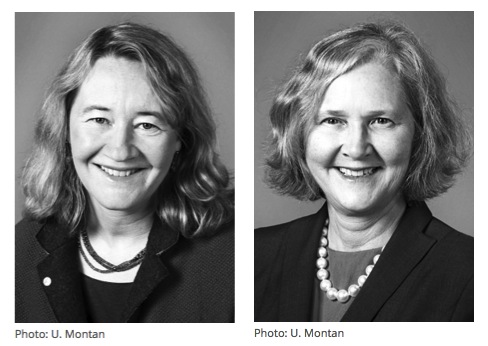
Carol W. Greider (L) and Elizabeth H. Blackburn (R)
Nobel Prize in Chemistry 2014
6. Evaluate the Evidence
7. Make the Educated Guess (Hypothesis)
8. Challenge the Hypothesis
9. Reach a Conclusion
10. Suspend Judgment
11.Take Action
Supporting Ingredients
 12. Creative, Non-Logical, Logical & Technical Methods
 13. Procedural Principals & Theories
 14. Attributes & Thinking Skills
www.scientificmethod.com
Edmund Scientific Corporation was a company based in Barrington, New Jersey, USA that specialized in supplying surplus optics and other items via its mail order catalog and Factory Store. During four decades from the 1940's to the 1970's Edmund Scientific was virtually unique in its offerings to scientific hobbyists.
-- Wikipedia: http://en.wikipedia.org/wiki/Edmund_Scientific_Corporation
Southeastern Louisiana University 
1. identification of problem
2. hypothesis
3. deductive reasoning- decide on procedure: what would be observed if hypothesis was true? how can it be tested?
4. data collection and analysis
5. derive conclusion: never prove a hypothesis-- confirm or fail to confirm
http://www2.selu.edu/Academics/Education/EDF600/Mod3/sld001.htm
Dorothy Crowfoot Hodgkin
Nobel Prize in Chemistry
1964

From the Intel International Science and Engineering Fair
  • Be curious, choose a limited subject, ask a question; identify or originate/define a problem. It is important that this question be a 'testable' question - one in which data is taken and used to find the answer. A testable question can further be identified as one in which one or more variables can be identified and tested to see the impact of that variable on the original set of conditions. The question should not merely be an 'information' question where the answer is obtainable through literature research.
  • Review published materials related to your problem or question. This is called background research.
  • Evaluate possible solutions and guess why you think it will happen (hypothesis).
  • Experimental design (procedure). In designing the experiment, it is critical that only one variable - a condition that may effect the results of the experiment - is changed at a time. This makes the experiment a 'controlled' experiment.
  • Challenge and test your hypothesis through your procedure of experimentation (data collection) and analysis of your data. Use graphs to help see patterns in the data.
  • Draw conclusions based on empirical evidence from the experiment.
  • Prepare your report and exhibit.
  • Review and discuss the findings with peer group/ professional scientists
  • New question(s)may arise from your discussions.
http://www.sciserv.org/isef/students/scientific_method.asp

National Center for Ecological Analysis and Synthesis 
  • Make a guess.  Hypothesis.
  • Take a look.  Observations.
  • Write it down. Data.
  • Make it a picture.  Graphs.
  • Decide what it means. Conclusions.
http://www.nceas.ucsb.edu/

PREVIOUSLY ON NECESSARY FACTS

Sunday, April 26, 2015

Hypatia of Alexandria

Two events are sign posts along the 1000-year history of ancient Rome: the death of Cato the Younger, and the death of Hypatia of Alexandria.  They point to the collapse of the republic and the waning of the empire.

Marcus Porcius Cato the Younger took his own life at Utica rather than surrender to Gaius Julius Caesar.  That act of defiance was rediscovered when Britons relearned classic literature in the Renaissance.  Cato became a symbol for British republicans John Trenchard and Thomas Gordon in the early 18th century.  The name was rejuvenated by the Charles G. Koch Foundation at the suggestion of Murray N. Rothbard to create the Cato Institute.

Two actresses, one old, the other young.
Helen Mirren and Rachel Weisz: Hypatia Re-imaged
We have no Hypatia Institute.  Hypatia is a journal of feminist philosophy.  A type font from Adobe also carries the name.  Nonetheless, the roots of Hypatia’s life story ran long and deep before her flower blossomed in the 19th century.  Like Aspasia of Miletus, she was rediscovered and then reinvented.  Artists painted her in dramatic vignettes.  Most recently, a 2009 cinematic account of her final year was created by director Alejandro Amenábar working with writer and director Mateo Gila and a team of producers headed by Fernando Bovaira.  Justin Pollard was the historical advisor. In that film, Rachel Weisz played Hypatia. However, the most reliable floruit suggests Helen Mirren as a better choice.  We agree that Hypatia died in 415. Depending on the clues you accept, she was born between 350 and 370.

Book cover shows profile of stately middle-aged Greek woman from ancient times
"Although this outrageous crime has made Hypatia a powerful symbol of intellectual freedom and feminist aspiration to this day, Deakin makes clear that the important intellectual contributions of her life’s work should not be overshadowed by her tragic death." – Hypatia of Alexandria: Mathematician and Martyr by Michael A. B. Deakin. (From the publisher’s website.) 

The facts of her life come mostly from three sources: The Ecclesiastical History by Socrates Scholasticus, a fifth-century writer in Constantinople; the Chronicle of John of Nikiu, a Coptic bishop of about 696; and the surviving letters of Synesius of Cyrene, a wealthy intellectual of the fifth century.  Synesius was a pupil of Hypatia. 

Deakin asserts – and it seems accepted – that the version we have today of Ptolemy’s Almagest is the work that Hypatia edited.  Developing his story only from English translations, Deakin also attributes commentaries on the works of Diophantus, Apollonius, and Euclid to her. The commentary on Euclid was perhaps a continuation of the edition begun by her father, Theon.

Roman, Greek, and Russian alphabets with numerals in elegant, tall type face
Hypatia type font created
by Thomas Phinney of Adobe
In addition, Hypatia probably constructed or had built for her several complex mechanisms.  Whether they were for computing time (water clock) or some other purpose (hydrometer for specific gravity) is not clear.  She apparently did create an improved astrolabe. 

In the recent movie, we witness Hypatia edging toward the heliocentric model of the solar system and even speculating that the orbits may be elliptical.  It is tempting to build sand castles on bedrock.  The blog Armarium Magnum, which is dedicated to books about ancient Western cultures, took the movie apart in a lengthy complaint. We also had a brief discussion on Rebirth of Reason.  Unfortunately, the official movie company website was taken down. Of course, you can find trailers and more on YouTube.

ALSO ON NECESSARY FACTS

Tuesday, September 30, 2014

Lovers Offline


Lovers Offline
Anonymous, Telegraphic Journal, January 15, 1875.
(written by a telegraph clerk on the back of a message form)

In times that are over, full many a lover
Was won by the power of electrical fire;
There was working; then sporting -- conversing, then courting,
And letters by post followed wooing by wire.


Telegraph Vignette uncredited from
A Brief History of Communications
by IEEE Communications Society, 2002. 

The couples then mated are closer related,
And many a one who was helped in his work,
By patience, attention, and care beyond mention,
Has found a kind helpmeet in his fellow clerk.

But, now, things are changing, stern rules are estranging
The workers, and striving all likings to baulk;
Lest people should choose them, and Government lose them,
"The Staff, on the wires, are forbidden to talk!"

Odd moments of leisure, once given to pleasure,
Are spent in dull idleness through the day;
And kept thus asunder, can anyone wonder
If patience, at times quite exhausted, gives way?

It is so annoying, one might be enjoying
The cosiest chat with the nicest of friends;
But there's always the fear now that somebody's near now,
And "taking us down from the slip" at both ends.

ALSO ON NECESSARY FACTS

Thursday, December 26, 2013

Ma Kiley: Railroad Telegrapher

Thomas C. Jepsen’s biography, Ma Kiley: the Life of a Railroad Telegrapher (Texas Western Press, University of Texas at El Paso, 1997) comes from Mattie Kuhn’s autobiography, “The Bug and I: Parts 1-4,” Railroad Magazine, April-June 1950.  Jepsen took his lead from the narrative and tracked down the records that substantiated the story.  Just as we have usernames, so did telegraphers; and Mattie Kuhn called herself Ma Kiley for 40 years, actually some years after she began working.  Her first message was on the death of Queen Victoria, January 22, 1901.  She had learned to send and receive some months before, desperate to earn a living after leaving the first of several husbands.

By that time, women were a visible minority, first in railroading (from 1832), then in telegraphy (from 1846).  Jepsen’s introduction and his annotations to Mattie Kuhn’s story provide footnotes to sources.  At the end of the book, he cites Carolyn Marvin’s When Old Technologies Were New (1989) to substantiate some of the parallels between women in telegraphy and women in computing. The computer is, after all, only a prodigious telegraph; and the roots of ASCII are in Morse Code.

When not a boomer pounding brass, Kuhn also waited tables, drew water, and even sold life insurance.  She knew nothing but hard work and hard fortune when not making money as a telegrapher, though she did break down and cry when another telegrapher bought her dinner and a train ticket; and slipped five dollars into a magazine - as much a gesture of camaraderie as any deference to her womanhood. Usually, she rode free: her pins for the Commercial Telegraphers Union of American and the Order of Railroad Telegraphers were her pass. 

They were different lines of work.  Railroads were 20 years slow in figuring out that they could manage and control trains with the only thing that traveled faster.  In addition, commodities brokers, hotels, banks, and many other enterprises also needed telegraphers.  Mattie Kuhn worked for both.  So, she belonged to both unions. 

The telephone impacted telegraphy but did not finally make it obsolete until 1940.  The telegraph was generally more reliable when accuracy and precision were at a premium. Paper tapes for recording messages went out of common use in the 1850s, but still were installed when legal issues demanded a recording.  Compared to that, a telephone call was mere hearsay.

Mattie Kuhn worked until 1942.  Encouraged by a published author she met, she spent eleven days typing up her narrative. She sent her story to Railroad Magazine, as did many veterans.  The age of steam was passing.  The telegraph was gone.  “I can find no one who speaks my language,” she wrote.  It is not known when Mattie Kuhn taught herself to type.  Telegraphers owned their own typewriters, as they owned their own “bugs” - Vibroplex sending and receiving keys.  

The telegraph and the typewriter were both machines that liberated women by rewarding their intelligence while granting no privilege to men’s strength.  The first female telegrapher was Sarah G. Begley in Lowell, Massachusetts, in 1846.  Elizabeth Cogley was the first woman employed as a railroad telegrapher, in 1852, for  the Ohio and Atlantic Telegraph Company. (Railroads and commercial companies found a hand-in-glove relationship with the railroads providing rights-of-way, and telegraph companies providing operators who also worked as station clerks.)

Typically, women were paid less, on the assumption that they would soon marry, though this seems statistically not at all true.  Mattie Kuhn eventually demanded and got the wages she wanted wherever she worked, but that was based on a long string of references for both railroad and commercial offices – and her own strength of character.  She was willing to walk away from a deal she did not like.  The telegraph was the medium by which operators sent out inquiries, just as software developers use the Internet.  Like today’s programmers, telegraphers also had to know hardware.  Mattie Kuhn passed ad hoc examinations in the wiring of switchboards, the maintenance of circuits and batteries, and the proper grounding of her own direct current device.

She never recovered from the death of her second child.  She left him at an orphanage, apparently with money for his care, but she returned to find him unconscious from fever and he never woke up.  It was a long time before she could cry. 

She herself missed three months of work because of typhoid fever.  Suffering from appendicitis, she was given an array of concoctions before paying for her own transportation and surgery. 

The book runs 138 pages, notes and all.  It is dense with feeling, insight, and expression. 

ALSO ON NECESSARY FACTS

Saturday, October 20, 2012

She's Such a Geek!

“What does it feel like to be a female in a male-dominated industry? I have nothing to compare the experience to, having never been a female in a female-dominated industry or a male in any industry at all.” – Devin Kyle Grayson.

She’s Such a Geek! Women Write About Science, Technology, & Other Nerdy Stuff, edited by Annalee Newitz and Charlie Anders (Seal Press, Avalon Publishing, 2006) delivers 24 autobiographical vignettes about growing up, working, and living as a woman noted for, and often defined by, her relationship to one or more STEM studies: science, technology, engineering, and mathematics.  The editors (who also contributed) selected these stories from among 200 entries. 
Annalee Newitz and Charlie Anders, editors.

The editors note that in 2001, “56% of bachelor degrees in science and engineering went to women, but women hold only 25 percent of jobs in science and engineering. More women than men are graduating in the sciences but a hostile job market and chilly graduate programs are keeping them from achieving their goals.” 

That correlates well with blind studies reported on this blog, October 2  showing that in university science laboratories, even women managers discriminate against women applicants.  Moreover the male attitudes that have not changed include a deeper problem of condescension, the old-fashioned gentleman’s insistence on protecting a woman from physical work and physical risk.  (“The Dress,” by Diana Husmann.)

Nonetheless, the plural of anecdote is not data; and the plurality of anecdotes here may call the data into question.  Each story is unique.  Draw your own generalizations. 

For myself, I see that the private sector rewards what the university does not. (See “The Making of a Synchotron Geek,” by Corie Ralston, and “Suzy the Computer versus Dr. Sexy,” by Suzanne E. Franks, and “Geek Interrupted” by Jean Shreve.)  Small universities and liberal arts colleges appreciate what Big Name Research Institutions do not.  (“Professor in a Circuit Board Corset,” by Ellen Speritus.)  Life often takes you places you did not imagine when your focus was on the SATs.  (“Job Security,” by Kirsten Abkemeier, “Universe: the Sequel,” by Aomaya Shields, and “All Our Boys go to the IT Industry in America,” by Roopa Ramamoorthi.) 

Yet within each of these 24 narratives are many more commonalities and differences, any of which could be used to draw thin conclusions or question broad generalizations.  That, to me, is the ultimate lesson here: statistics about populations hide the realities of individuals.  

Be that as it may, within the complex array is a core reality: “Females have made up nearly half of the science classes I’ve taken ever since [high school], right up through graduate school.” But although 40% of her peers are women only two of the grads and post docs who deliver seminars are women. “Here’s what really made me feel awful: I didn’t notice this lack of women speakers for over a year. … If I’ve interacted with women working in science across the world, across cultures, and religions, how could I fail to notice their absence right here at home?”   The answer(s) might be highly nuanced.

My wife is not the girl I married.
This story opens with her on vacation with family friends for her thirtieth birthday. They ask about her work. (Doctorate studying nucleosomal proteins).  They ask if she has a boyfriend. (No.) “It’s because you’re too smart.” (“Sex and the Single (Woman) Biologist,” Nina Simone Dudnik.)  Of course, this theme repeats in several other stories: boys don’t like girls who are too smart; or the ones who do are other nerds in engineering; sometimes even they do not.  Even so, this cannot unify all of the narratives because several of the women are lesbians; and others simply are not challenged or perplexed by their relationships with men - whether professional or romantic (or both).

Four biographies come under the rubric "Geek Interrupted" including an eponymous entry by Jean Shreve.  Here, too, is a core reality that cannot explain more.  Kristin Abkemeier's passion for art granted higher status to her physics until she worked for a dysfunctional company that ultimately (as we say) "extended her opportunities."  She closes with this: "As I sat down and began my own drawing, I smiled. I'd seen these shapes before in many physics problems I'd solved. their symmetries representing repeating cells or wires or atomic nuclei.  But today, those shapes were the building blocks of my new life as an artist."  (Actually, in that, she is not alone.  Several others in this anthology also embrace fine arts.)  Elizabeth Severson drew an undergraduate advisor who did not help her plan for graduate school and from the subtext Severson had some other problems.  The final tally finds her at an insurance company.  "I'll always be a math geek because I'll always be proud of what I learned and excited to learn more,  and I'll always want to share that pride and excitement with anyone who'll stand still long enough to listen."  Aomawa Shields was on a trajectory for a doctorate in astronomy until she hit a neutron star of a professor who told her that she should consider another career... which she did... and then by another path, she returned to blend in her passion for acting and skills with computers to work at the Spitzer Space Telescope.

The last seven sketches come from the far side of STEM and the mainstream of nerd: gaming and comics.  Perhaps even more than the others, these offer multidimensional projections of gifted, talented, and motivated (read:  driven) people. 

Quinn Norton (“Dreaming in Unison”) discovered that sleeping with several members of her guild only gave them all a reason to ask her to leave.  But she found a LARP (live action role playing) club.  As “Chaot” the vampire, running the streets, she thought she heard her playmates.  She climbed a tree to a second story garage where two families stood by their cars, children running about while the grown-ups reviewed the movie from which they had just come.  She leapt the barrier.
“I, in all my weirdness, appeared out of nowhere and walked quickly by them.   The parents never noticed me, but the kids did. They looked at where I’d come from, and then at me. They crouched closer to their parents and clutched one another. I looked over at them, opened my eyes wide, and gave them a slightly snarled smile.
“They followed me with their eyes as I walked down the stairs. They never saw Quinn; they never even saw Quinn playing Chaot.  All they ever saw or knew was Chaot, mad vampire, coming from and going to nowhere.  With a mysterious grin, Chaot had given the lie to the boring world their parents described, where everything stays the same in the dark as it does in the light.”