Showing posts with label Cargo Cult Science. Show all posts

Tuesday, March 29, 2016

The Scientific Method

On the Galt’s Gulch Online discussion board, I went around with one of my Objectivist comrades on whether or not publication is required. I understand the “Crusoe Concept” – you do not need other people to engage in reasoned discovery.  That is why I assert that “publication” begins with your own notebook. More to the point, it should not end there. Sir Robert Boyle argued for publicity as the avenue of replication over 350 years ago in The Sceptical Chymist.

May-Britt Moser
Nobel Prize in
Physiology /Medicine
2014
However you formulate it, the goal is to discover truth. It requires curiosity, insight, and bravery – the willingness to be wrong.  Richard P. Feynman was adamant about not fooling yourself. His commencement address, Cargo Cult Science, is a classic admonition against creating pseudo-science.

These statements of the scientific method show a range of expression, from astute to concrete-bound.  Some are from universities, one is  from a business, and the rest are from interested amateurs. It is most succinctly stated in three steps by the biology department of the University of Cincinnati.  The last presentation from an environmental action group is a bit on the "Zen" side, but can be useful as a guide. 

"Science Buddies" 
§  Ask a Question
§  Do Background Research
§  Construct a Hypothesis
§  Test Your Hypothesis by Doing an Experiment
§  Analyze Your Data and Draw a Conclusion
§  Communicate Your Results
www.sciencebuddies.org/mentoring/project_scientific_method.shtml

University of Rochester (New York)
Marie Curie
Nobel Prizes in
Physics (1903)
and
Chemistry (1911)
1. Observation and description of a phenomenon or group of phenomena.
2. Formulation of an hypothesis to explain the phenomena. In physics, the hypothesis often takes the form of a causal mechanism or a mathematical relation.
3. Use of the hypothesis to predict the existence of other phenomena, or to predict quantitatively the results of new observations.
4. Performance of experimental tests of the predictions by several independent experimenters and properly performed experiments.
http://teacher.pas.rochester.edu/phy_labs/AppendixE/AppendixE.html

University of California Riverside
 1. Observe some aspect of the universe.
2. Invent a tentative description, called a hypothesis, that is consistent with what you have observed.
3. Use the hypothesis to make predictions.
4. Test those predictions by experiments or further observations and modify the hypothesis in the light of your results.
5. Repeat steps 3 and 4 until there are no discrepancies between theory and experiment and/or observation.
http://phyun5.ucr.edu/~wudka/Physics7/Notes_www/node6.html

Clermont College, University of Cincinnati
  • Observe 
  • Question 
  • Test
http://biology.clc.uc.edu/courses/bio104/sci_meth.htm

Biology-4-Kids
  • Hypothesis
  • Experimentation
  • Refine the Idea
  • Experimentation
  • Final Statement
http://www.biology4kids.com/files/studies_scimethod.html

From Norman Wilson Edmund, the founder of Edmund Scientific, arguably the premier mail order retailer of scientific supplies to the general public.
Steps or Stages of the Scientific Method
1. Curious Observation
2. Is There a Problem?
3. Goals & Planning
4. Search, Explore, & Gather the Evidence
5. Generate Creative & Logical Alternative Solutions
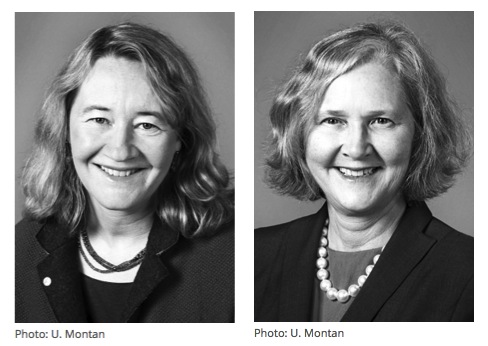
Carol W. Greider (L) and Elizabeth H. Blackburn (R)
Nobel Prize in Chemistry 2014
6. Evaluate the Evidence
7. Make the Educated Guess (Hypothesis)
8. Challenge the Hypothesis
9. Reach a Conclusion
10. Suspend Judgment
11.Take Action
Supporting Ingredients
 12. Creative, Non-Logical, Logical & Technical Methods
 13. Procedural Principals & Theories
 14. Attributes & Thinking Skills
www.scientificmethod.com
Edmund Scientific Corporation was a company based in Barrington, New Jersey, USA that specialized in supplying surplus optics and other items via its mail order catalog and Factory Store. During four decades from the 1940's to the 1970's Edmund Scientific was virtually unique in its offerings to scientific hobbyists.
-- Wikipedia: http://en.wikipedia.org/wiki/Edmund_Scientific_Corporation
Southeastern Louisiana University 
1. identification of problem
2. hypothesis
3. deductive reasoning- decide on procedure: what would be observed if hypothesis was true? how can it be tested?
4. data collection and analysis
5. derive conclusion: never prove a hypothesis-- confirm or fail to confirm
http://www2.selu.edu/Academics/Education/EDF600/Mod3/sld001.htm
Dorothy Crowfoot Hodgkin
Nobel Prize in Chemistry
1964

From the Intel International Science and Engineering Fair
  • Be curious, choose a limited subject, ask a question; identify or originate/define a problem. It is important that this question be a 'testable' question - one in which data is taken and used to find the answer. A testable question can further be identified as one in which one or more variables can be identified and tested to see the impact of that variable on the original set of conditions. The question should not merely be an 'information' question where the answer is obtainable through literature research.
  • Review published materials related to your problem or question. This is called background research.
  • Evaluate possible solutions and guess why you think it will happen (hypothesis).
  • Experimental design (procedure). In designing the experiment, it is critical that only one variable - a condition that may effect the results of the experiment - is changed at a time. This makes the experiment a 'controlled' experiment.
  • Challenge and test your hypothesis through your procedure of experimentation (data collection) and analysis of your data. Use graphs to help see patterns in the data.
  • Draw conclusions based on empirical evidence from the experiment.
  • Prepare your report and exhibit.
  • Review and discuss the findings with peer group/ professional scientists
  • New question(s)may arise from your discussions.
http://www.sciserv.org/isef/students/scientific_method.asp

National Center for Ecological Analysis and Synthesis 
  • Make a guess.  Hypothesis.
  • Take a look.  Observations.
  • Write it down. Data.
  • Make it a picture.  Graphs.
  • Decide what it means. Conclusions.
http://www.nceas.ucsb.edu/

PREVIOUSLY ON NECESSARY FACTS

Saturday, May 12, 2012

Criminalistics: Science or Folkway?

Ahead of my May 8 talks to the forensics classes in the science department at Westwood High School in Round Rock, Texas, the teacher, Susan Seale, distributed a questionnaire of my own design.

Three intentions informed the instrument.  I wanted to prepare the classes to think about the science of crime scene investigation.  Second, how well could they correlate knowledge in general and about forensics especially. Also, I was fishing for an answer I did not have about the actual value of forensic psychology.

To take the last first: “In which cases did psychological profiling predict (or narrow the possible range) of the next victim and enable the capture of the criminal?”  The questionnaire (appended here), left this area blank. Any answer would do.  Of the 93 students, only one offered an answer not provided: “John Duffy (profiled by David Carter).” 

That sent me to the Internet. I discovered the case of John Duffy and David Mulcahy, the “Railway Killers” (or “Railway Rapists”), profiled by David Canter. (Dr. Canter’s website is here.)  In fact, Dr. David Canter only profiled Duffy. (“Much was made of the psychological profile constructed by Canter after the trial, as Duffy fitted 13 of the 17 observations made about the attacker's lifestyle and habits. Such profiling became immediately commonplace in policing thereafter.” – Wikipedia here.)   In fact, psychological profiling did nothing to capture George Metesky, John Duffy, or anyone else.  Psychological profiling is folkway masquerading as science. 

The students did a good job of identifying George Metesky, James Brussels, Fred Zain, and Joyce Gilchrist.  They also gave good summaries for the Daubert Test.  That said, though, they overwhelmingly believed that fingerprints, ballistics, and other perceptions are scientific.  In truth, only DNA meets the Daubert test.  

Kary Mullis received a Nobel Prize
for inventing PCR:polymerase chain reaction
which makes DNA typing cheap and reliable.
His website here.
It may well be true that a ballistics expert can match a bullet to a weapon. The methodology has never been statistically validated, or subjected to peer review, including the challenge of falsifiability. That holds true for fibers, hair, footprints, tire prints, or other evidence.  (Not only do you have have different kinds of hair all over your body - eyebrows, eyelashes, forearms, legs -  you have different kinds of hair on your head.) It may well be true that a perpetrator’s shoe can be matched to a print left at a crime scene.  But to what degree of matching? And how many other shoes would also match?  The reliability of fingerprinting remains the biggest lie in prosecutorial evidence.

I grant fully that I apply no scientific test to identify my wife. When I come home, I do not mistake her for a cousin of hers. Intuitive evidence is real.  But it is only evidence, not proof. And in a court of law, we demand more than gestalt feelings of lifelong familiarity.   

Now faith is the substance of things hoped for, the evidence of things not seen. Hebrews 11:1 ( Ἔστιν δὲ πίστις ἐλπιζομένων ὑπόστασις, πραγμάτων ἔλεγχος οὐ βλεπομένων.)

Tallies.  These are raw scores. I accepted most close answers. In some cases, the respondents missed the essence, for instance identifying correctly Joyce Gilchrist’s 3000 criminal cases and 20 years of service, but leaving out the charges of misconduct. Three caught my error in listing ”Fiber evidence” twice.

Take Home Survey
Prepared for Forensics classes at Westwood High School
By Michael E. Marotta, BS, MA.
May 8, 2012

Instructions: Do not put your name on this paper. It is an anonymous survey for statistical reporting.

Identify these:

George Metesky
92
James Brussels
91
Fred Zain
89
Joyce Gilchrist
77
Daubert Test
84


In which cases did psychological profiling predict (or narrow the possible range) of the next victim and enable the capture of the criminal?
George Metesky and/or James Brussels 75
Fred Zain 4
Joyce Gilchrist 15
Other Correct (Duffy/Canter; but others also generally correct) 9
Blank no answer 9 (No way to know if blanks indicate that the student believes psychological profiling to fail the Daubert Test. As Ellen Johnson famously noted: "The invisible and the non-existent look a lot alike.")
Other Incorrect 9

Which of these is an example of a scientific crime scene investigation method?
       Hypnosis          9
       Fingerprints      87
       DNA    87
       Hair Identification         87
       Fiber Identification        87
       Graphology 38
       Fiber Identification        (N/A)
       Shoe prints       80
       Tire prints         83
       Ballistics matching         83

Sunday, December 4, 2011

Inconvenient Questions about Global Warming

Al Gore’s An Inconvenient Truth (Paramount Classics, 2006) suggests many questions about basic facts. 

From about 20 minutes in to about 25 minutes in, the presentation faltered from confusions of color and graphics. At about 00:20:34 the former US Vice President showed a graph of “temperature” over the past 650,000 years in Red.

I assume that this is Earth’s average surface temperature, but that was not explicit, nor was it explained how he knew. How CO2 was determined is also not clear. During the middle of the Pleistocene there was no US Weather Bureau to read thermometers. So, how do they know, perhaps from fossil trees or maybe from coal or peat bogs? I agree with the apparent fossil record, but it includes huge extinct beasts like the megatherium and glyptodon and little evidence of hominids and their campfires. What caused the end of the previous ice age if not anthropogenic global warming.

The first graph shows CO2 in blue. It gives Temperature in degrees F, showing a dramatic increase. The scale is 0, 0.5, 1.0 and the line rises from 0.0 to above 0.5.

Then the legend changes. The color scheme inverts. At about 21:00 minutes, the display shows 650,000 years of CO2 in Red. Temperature is in blue.

At about 00:21:35 the uncalibrated temperature over 650,000 years is shown together with with CO2. Then from 00:22:34 to 00:22:49 the Red CO2 at our current measure or level or amount goes up and off the scale but the blue Temperature does not. Should not the temperature have increased dramatically by half a degree or more?

If CO2 is increasing at alarming rates, that can only be important to us if temperature is also increasing, melting the ice caps, bringing citrus to Michigan, and so on. Apparently that is not the case. Even if atmospheric CO2 is increasing, Earth’s nominal average surface temperature seems not to be.

Tuesday, September 13, 2011

Why Evidence is Not Enough

Generally, people rated authors as experts when the views coincided with their own. Kahan and his team created three authors and their books. All three had the same high level of academic standing. (Doctorates from major schools.) In every case, two different, opposing views were written for each author and randomly shown to subjects. The topics were gun control, nuclear power plants, and global warming.

Originally published by the Yale Law School as "Research Paper #205: Cultural Cognition of Scientific Consensus by Dan M. Kahan, Hank Jenkins-Smith and Donald Braman." The paper can be downloaded from the site of our comrades at Mother Jones who offer it here.

This is really just another arithmetic validation of what we know as the "confirmation bias" and the "attribution fallacy." Richard Feynman warned young scientists about the need for ruthless honesty in his famous speech on "Cargo Cult Science." (Available from the CalTech Engineering and Science Library here.)

In short, we tend to agree with and thereby validate experts who agree with us. When presented with facts opposed to our commitments, we denigrate the status of the provider. This ties in with another theme: The Big Sort by Bill Bishop. Over the past generation, Americans have come to socialize only with those who agree with them politically. In the 1960 Presidential election, Kennedy won over Nixon by about 1 vote per precinct, and largely, it was just that: a nation mostly divided narrowly near the middle. Now, precincts tend to be overwhelmingly Republican or Democrat.

It is not just gerrymandering (though there is that), but the fact that people choose to live among those whose political values already mirror their own. The research data show that this correlation is strongest among those with more education. The guys on the bowling team might disagree and still hang out; their bosses on the golf links do not.

Today, perhaps more than a third of working American adults hold bachelor degrees, with the master's being the new bachelor's. University education apparently failed to achieve the lofty goals of Karl Popper and Mark Van Doren two generations ago for a society open to ideas, whose participants benefited from a liberal education embracing literature, mathematics, science, and fine arts.

The blog OrgTheory is written by sociologists of economics, Brayden King, Fabio Rojas, and others. On April 11, 2011, Brayden King posted "When Evidence Isn't Convincing." It summarized research by Daniel Kahan and his colleagues.  Reading that and following the links to the original paper, I posted an earlier version of this blog article to the Objectivist site, Rebirth of Reason.

ALSO ON NECESSARY FACTS
Republican Rebels
Workers Paradise Promised an End to Money
Unlimited Constitutional Government
That Goddam Ayn Rand Book