Showing posts with label F. A. Hayek. Show all posts

Friday, August 15, 2014

Liquid Assets

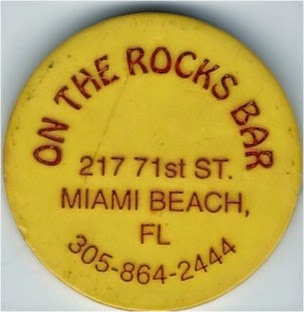
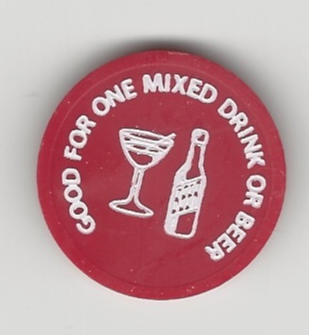
You can monetize anything.  Despite the insistences of conservatives, libertarians, and objectivists that only gold is money, in fact, as F. A. Hayek suggested, money is whatever people accept as money.  


Still in business. 10 people in the bar right now.


Right now "18 or 20 people" in the bar.


Halfway between the U.P. and Minnesota, there eh.
But no longer open, apparently.


Lots of friendly places in New Ulm,
even "kid-friendly"
but this is not one of them...

Also on NecessaryFacts

Sunday, October 27, 2013

Money Without Banks and Governments

The Stock Market Crash of 1929 marked the onset of the Great Depression, but it took 30 months for the banks to fail. After all, the stock market had crashed often, sometimes twice in a decade. While the effects were not to be ignored, they were negligible in an agrarian, frontier society.  More than two years of government intervention were required before total economic collapse occurred. And even so, all that was missing was money. Most people had the same assets and liabilities that they held the day before and would hold the day after. What they needed was a medium of exchange. So, the Howell Board of Commerce issued "stamp scrip." In fact, perhaps 12,000 separate communities across the USA and Canada created a plethora of emergency currencies.


The First National Bank in Howell was placed in conservatorship on February 13, 1933. (Michigan governor William Comstock issued a midnight order to close all the banks, lest Henry Ford withdraw his money. Full story on Necessary Facts here.)  The Howell Trade Dollar was issued on February 22. Within two weeks, all 5000 notes were in circulation. This is telling because in order to get one, you had to spend $5. Some people bought automobiles in order to acquire many of them. Other people paid off accounts three years old. The notes circulated for 6 months and were widely regarded as having been successful.
Back of Howell Trade Dollar with Stamps

What made this scrip special and subject to study on the national level is that it depended on the "velocity" of money. The holder of a note had to spend it every three days. When the note was spent, a 2-cent stamp was affixed to the back. After 52 transactions, the note was redeemed by the Howell Board of Commerce for a real dollar. (If the note was not spent, the holder still had to buy a 2-cent stamp.) The idea was to keep this money in circulation.  Stamp scrip in particular and alternative currencies in general were a special interest of Irving Fisher, the creator of the Chicago "monetist" school of economics championed by Milton Friedman.   


The back of this Fostoria, Ohio, scrip has a simple bank endoresement

The notes had a natural tendency to accumulate in the shops of retail merchants. Therefore, they were sold to businesses, school boards, etc., at a 5% discount. Citizens Insurance of Howell was one of many businesses to pay wages in Howell Trade Dollars.

Some of the details of how the scrip was actually used are no longer clear. Some issues show some kind of tally. It is not likely that these are final evaluations, since about half the places are still open. Many of the stamps have double zeroes written across them. The tallies could represent the whole dollar value of the purchase which necessitated the stamp. If so, the 00 would indicate that the stamp was bought as a penalty for holding the note without spending it.

Also, according to the legends on the back of the note, stamps were required every 10 days. The notes seem to have been intended to circulate from July 25, 1933 to December 6, 1934, a total of 509 days, 519 allowing for a 10-day period before the first stamp was due.


During economic depressions, people invent new forms of money to fill the gaps. Two from the 1990s were Time Dollars and Bone Money.

Ithaca, New York, has developed a local currency called "Time Dollars." People there trade services in units of an hour with an hour being worth about $10 more or less. The idea of Time Dollars has been copied by other communities in both the United States and England. As of this moment, Ithaca Hours are alive and well, celebrating over 20 years of continuous use. (See their website here.)


During the Autumn of 1993, people in Berlin saw the arrival of so-called Bone Money, "Knochengeld". The paper notes originated in the Prenzlauer Berg district. This neighborhood is popular with young artists and writers, similar to New York City's Greenwich Village or the Left Bank of Paris.


They called it "bone money" because the numbers were designed in the form of bones. Neighborhood retailers and restaurants accepted these notes. The experiment ran for three months. Then, the remaining notes were sold at an auction to raise money for charity.

Time dollars and bone money may not take the place of the coins and bills you carry, but they have certainly earned their place in history along with wooden nickels, prosperity scrip and Hard Times tokens which were invented during other economic recessions.

This work was taken from these previously published articles.
"The Howell Trade Dollar" by Michael E. Marotta,  Michigan Token and Medal Society Junkbox, Winter 1995
"Homegrown Currency has a Rich Past" from The Northern Express.
"Passing the Bay Bucks" from The Northern Express.
"Creating a Local Currency" the MSNS Mich-Matist, Summer 2004

PREVIOUSLY ON NECESSARY FACTS

Friday, October 12, 2012

Money is Speech

For over 2000 years, money has been a medium – sometimes the medium – of communication, especially political speech.  The German Democratic Republic honored Karl Marx on its 100 DM notes from 1971 until 1990.  On the other hand, the privately-owned Clydesdale Bank of Scotland issued a ₤50 note celebrating Adam Smith. 
In Bahrain, the half-dinar coins featuring the Pearl Monument have disappeared from circulation, as the government denies repression of dissidents.
Bahraini Half-Dinar (www.the-war-diaries.com)
In the Roman republic and empire, coins were common instruments of communication.  Julius Caesar boosted his political career by advertising his priesthood on the coins he and his allies issued.  The “Ides of March” denarius of Caesar’s assassin, Marcus Junius Brutus, is highly sought at auction today.  Over 2000 years ago, money was political speech in a life and death struggle for power.

Ides of March Denarius. Harlan J. Berk. Wildwinds.
The coins and paper of the American colonies, states, and central governments carried a host of political messages, from “Mind Your Business” to “We Are One.” 
In the 1790s, British merchants met the need for small change with an astronomical array of tokens.  They advertised their shops, touted their towns and made bold political statements.

  In 1794, the shoemaker, Thomas Hardy, was the secretary to the London Corresponding Society.  His outspoken support for the French Revolution – including his association with a play called "La Guillotine: or, George’s Head" brought him from his shop at 161 Fleet Street to Old Bailey Prison on charges of sedition.  He was acquitted by his peers; and his lawyers struck a token to celebrate their skill and his good fortune.  Today, it is catalogued as Dalton and Hamer Middlesex 204, and you can own one in uncirculated grade for about $150. 
Much Gratitude Brings Servitude
We Were Born Free and Will Never Be Slaves
Another British merchant token from the same time showed a spaniel: “Gratitude brings servitude,” it warns. We were born free and will not be slaves.”
            The abolition of slavery was one of the many topics in the popular series of “Hard Times Tokens” from the Jacksonian Era.  “Am I not a Man and a Brother” was first a British merchant token and then it and “Am I not a Woman and a Sister” were remade as American tokens. Other partisans heralded or lampooned Jackson – bluntly cartooned as a jackass – Webster, Van Buren, and Benton.  Such tokens are easiest to find in circulated grades because for ten years they were passed from hand to hand in daily commerce. 
            Civil War tokens fall into two broad categories: store cards and politicals.  These private issues filled a gap in commerce and carried strong messages.  Perhaps the most famous political token of the Civil War shows an American flag: “If anyone dares to tear it down, shoot him on the spot” 
That American federal government money now carries the message, “In God We Trust” comes from this same period.  It appeared first on the two-cent coins of 1863, then, on the Silver Certificates of 1954, as a thrust against the godless communists of the USSR.  Among the other political messages on our coins today are Liberty and E Pluribus Unum, with a slew of others courtesy of the 50 State Quarter Program.  Any denomination of current American paper money carries about 20 different phrases, sentences, and word sets.
Stored-value electronic card with non-political message
For over 30 years, privately-issued silver art bars have broadcast a wide array of political messages, starting with Watergate and continuing to the Clinton Impeachment and current war the on terrorism. 
According to University of Texas scholar, Denise Schmandt-Besserat, writing evolved from the use of clay tokens to keep track of livestock, beer, and other farm goods.  The tokens go back to 7500 BCE.  Eventually, the tokens were impressed on clay containers into which the tokens themselves were stored.  Cuneiform writing evolved about 3500 BCE from these symbols.  The oldest known writing on clay tablets are inventory lists and promises to pay.  The oldest known epic, the Gilgamesh, is dated to 1000 years later.  All of this is explained in How Writing Came About by Denise Schmandt-Besserat, which can be ordered from the University of Texas Press for less than $20. 

The Bank of England also commemorated Adam Smith on a ₤20 issue.  Founded in 1694, the Bank was nationalized in 1946, but achieved nominal independence in 1997.  Its governors and directors are appointed by the crown, making it much like the American Federal Reserve, a nominally private entity with close government supervision.  What would Adam Smith or Karl Marx have said about that?

ALSO ON NECESSARY FACTS
Accounting for Civilization  (Babylonian clay tokens and the origin of writing)
Debt: the seed of civilization (Further reflections on accounting)
When Writing Met Art (The structure of contracts ordered the narrative of art.)


Capitalist Culture (The business of coffee in Cairo 1600 AD)
Workers' Paradise Promised an End to Money (May Day!)
Valentine's Day: Love and Money (Contraceptives and Heart Shapes)


Tuesday, September 11, 2012

ELI THE ICE MAN: Science and Technology

In this Presidential election year, the major party candidates drop hints about creating jobs by fostering technology and innovation.  Sociologist Anthony Giddens defines and delimits their thinking when he cites “innovation centers” near universities such as Cambridge.  Former Secretary of State Condoleezza Rice even mentioned Austin as a magnet for people from around the world with advanced university degrees.  But it is at once more complicated and simpler than that.  Basically, the nature of innovation defies planning, a harsh reality for all the planners running for political office.

Electrical technicians know the mnemonic ELI the ICE man.  In an inductive (L) circuit the measured voltage (E) sine wave precedes the measured current (I): E Leads I.  In a Capacitive circuit, the sine wave of current (I) precedes the measured sine wave of voltage (E): ICE.  Thus, Eli the Iceman.  So, too, with technology and science, does one or the other lead to simplify the analysis.  In fact – in reality for both non-trivial circuits, as for economic systems – isolating one or the other is a convenience of analysis.  No formula exists for creating innovation centers or every town with a college or university could boast of having one. 

It is a principle of Austrian economic theory that entrepreneurship is ineffable.  Yes, it helps to know accounting, and marketing, and organizational development, and to have motivation, being willing to work hard for 18 hours a day, and to know how and when to delegate responsibility, and all that and more.  Ultimately, the pieces do not add up.  The whole is greater than the sum of its parts.  Case studies show people who fail despite having all of these, and others who succeed despite lacking one or more of them.

“Laissez nous faire!”  According to historical legend, the phrase stems from a meeting in about 1680 between the powerful French finance minister Jean-Baptiste Colbert and a group of French businessmen led by a certain M. Le Gendre. When the eager mercantilist minister asked how the French state could be of service to the merchants, and help to promote their commerce, Le Gendre replied simply "Laissez-nous faire."  Wikipedia here. 

If you examine the broad history of science and technology from the steam engine and thermodynamics through electricity and its opening up the physics of quantum mechanics, to the atomic age, the space age, the post-industrial revolution of the information age, and the immediate promise of 3-D printing and nanotechnology, it is obvious that government programs to “create” high-technology centers can only (at best) replicate the successes of the previous generation.  Note that according to Moore’s Law a “generation” in technology is 18 months, not 30 years. 


Sometimes, so-called “pure science” does lead to new inventions. The theories do not grow out on their own, but only explain known facts.  From the medieval siege weapons and clock towers that were explained with the theory of “impetus” through Galileo, to Newton, Watt, Henry, Marconi, Einstein, and to our own time each invention made possible a better understanding which was expressed as a theory.  But the “theory” that was accepted was only a replacement for a paradigm.  Each paradigm at first suggested new inventions and then was discarded when further discoveries could not be explained in those terms.

Previously on "Necessary Facts"
The Structure of Scientific Revolutions
Great Scientific Experiments
Browne on Kuhn
Is Physics a Science?

Sunday, September 2, 2012

Coins Without Realms

Hayek suggested an end to monopoly banking and an open market in monetary media.  The national governments of the world did not take his advice - at least not directly.  However, innovation continues, of course. Bitcoin is well-known today as the latest in line of development perhaps originating with cryptographer David Chaum, as public-key cryptosystems such as RSA and PGP made it possible to validate anonymous transactions.

Americans have an uneasy love affair with money.  Benjamin Franklin's Way to Weatlh (available here) was quoted at length by Max Weber in The Protestant Ethic and the Spirit of Capitalism.  If we had kept to the capitalism of Benjamin Franklin and Adam Smith, Ayn Rand could not have written Atlas Shrugged

When polled on the paper dollar versus dollar coins, Americans overwhelmingly decline the coin and demand paper.  This is nothing new.  For an entire generation, men's wallets have lacked coin purses.  That is why this item from Gizmodo about a portable safety razor, the "Carzor" startled me.  Perhaps a European, this man's wallet is bulging with coins. 

The Carzor fits into your wallet 
but coins may not ... or need not...
Today, even though Americans demand paper, the US Mint strikes dollar coins, currently, the Presidents series. Congress directs the Mint.  The result is in your wallet (or maybe not). 

This past April, the Royal Canadian Mint asked developers to submit proposals for "MintChip" a digital currency.  Responses were thick and the Monnaie Royale Canadienne quickly closed its request.  Forbes commentator Jon Matonis cogently noted: "The point of digital currency, and especially free-market digital currency, is to broaden the avenues for issuance and adoption of alternative nonpolitical monetary units. Most electronic cash systems already expand and revolve around the State-issued currencies although they don’t have to." (Article here.)  
Be that as it may, the winners of the Mint Chip Challenge (Le Défi Cybermonnaie) will be announced September 12, 2012. (Link in English here au en francaise ici.) 

The Royal Canadian Mint has been pushing the limits of its products and markets for over 20 years.  They launched a commemorative 25-cent coin program which the US Mint copied.  The MCR offers coins in 5-Nines gold, .99999 pure, which the US Mint does not copy.   So, their testing the markets for digital currency perhaps indicates the maturity of this medium.  

Cryptographer David Chaum suggested digital currency in the early 1990s, as an application of public key cryptosytems.  Despite - or perhaps because of - interest by IBM and other large entities, nothing came of that.  However, less formally, over the past 20 years e-gold and flooz also appeared and then collapsed, both, in fact, as a result of law enforcement investigations.  While e-gold was ad hoc, flooz actually seemed like a dot.com possibility.  I sold essays on numismatics to a libertarian website.  They paid me in e-gold which I used to buy a facsimile of Noah Webster's 1828 Dictionary of the American Language from a Christian bookseller.  Before my next transaction, the markets were closed.  

One form does seem to have be working.  People do use their iPods to transfer money.  I have seen people buy coffee at Starbucks.  When I mentioned this to a co-worker majoring in physics at the University of Texas, he said that his bank let him transfer money to a friend's credit card when they were out to dinner.  

My interest in numismatics only came late in life and as a direct consequence of my having read Atlas Shrugged long ago.  I have been a member of the Michigan Token and Medal Society (Mich-TAMS); and I have exhibited both coal mine tokens and Bay Bucks community currency at conventions of the Michigan State Numismatic Society.  Hayek only called on governments to recognize that competitive markets in monetary media always have existed and only will continue to evolve. That said, I factor in a memorandum of caution.  Chatting in a coin store, a Mich-TAMS officer reminded me that one foot outside the doorway of a video game parlor, my video game tokens would be deeply discounted.  In other words, theories are nice, but reality is more conservative.   So, with digital cash, we must wait and watch.


Also on Necessary Facts
Numismatics: the Standard of Proof in Economics
Money as a Crusoe Concept